- Home
- Beaches In Malta & Gozo
- Malta Rock Beaches
7 of the Best Rocky Beaches & Swimming Spots in Malta and Gozo
What Rocky Swimming in Malta Is Really Like
Malta is surrounded by a rocky coastline, but a “rocky beach” here does not necessarily look like a traditional beach. It might be a flat limestone platform, a small natural inlet, a rocky cove or simply a stretch of coast where swimmers enter directly from the rocks or use steps or ladders where available.
Swimming directly from the rocks is also a very normal part of Maltese coastal life. Around places such as Sliema, Qawra, St Paul’s Bay and Marsaskala, locals regularly find a spot on the rocks, put down a towel and head straight into the sea.
Rocky swimming spots often offer clear water, good snorkelling, and quicker access to deeper water, but they are not right for everyone. Sea entry can be uneven, shade may be limited, and some places are unsuitable for young children, weaker swimmers or anyone with mobility difficulties. Our seven choices below are not a strict ranking: each offers a different balance of swimming, scenery, access and local character.
Table of Contents
- Rocky Beaches & Swimming Spots in Malta
- Għar Lapsi
- St Peter’s Pool
- Fond Għadir & Sliema Rocky Coast
- Delimara & Kalanka Bay
- Rocky Beaches & Swimming Spots in Gozo
- Mġarr ix-Xini
- Wied il-Għasri
- Xatt l-Aħmar
- Special Mention: Blue Hole at Dwejra
- Rocky Beaches vs Sandy Beaches
- More Rocky Beaches Worth Knowing
- What to Know Before Visiting a Rocky Beach
- Rocky Swimming Safety
✍️ Written by Albert and Benjamin Magro, Malta locals sharing practical advice from living in and exploring the Maltese Islands.
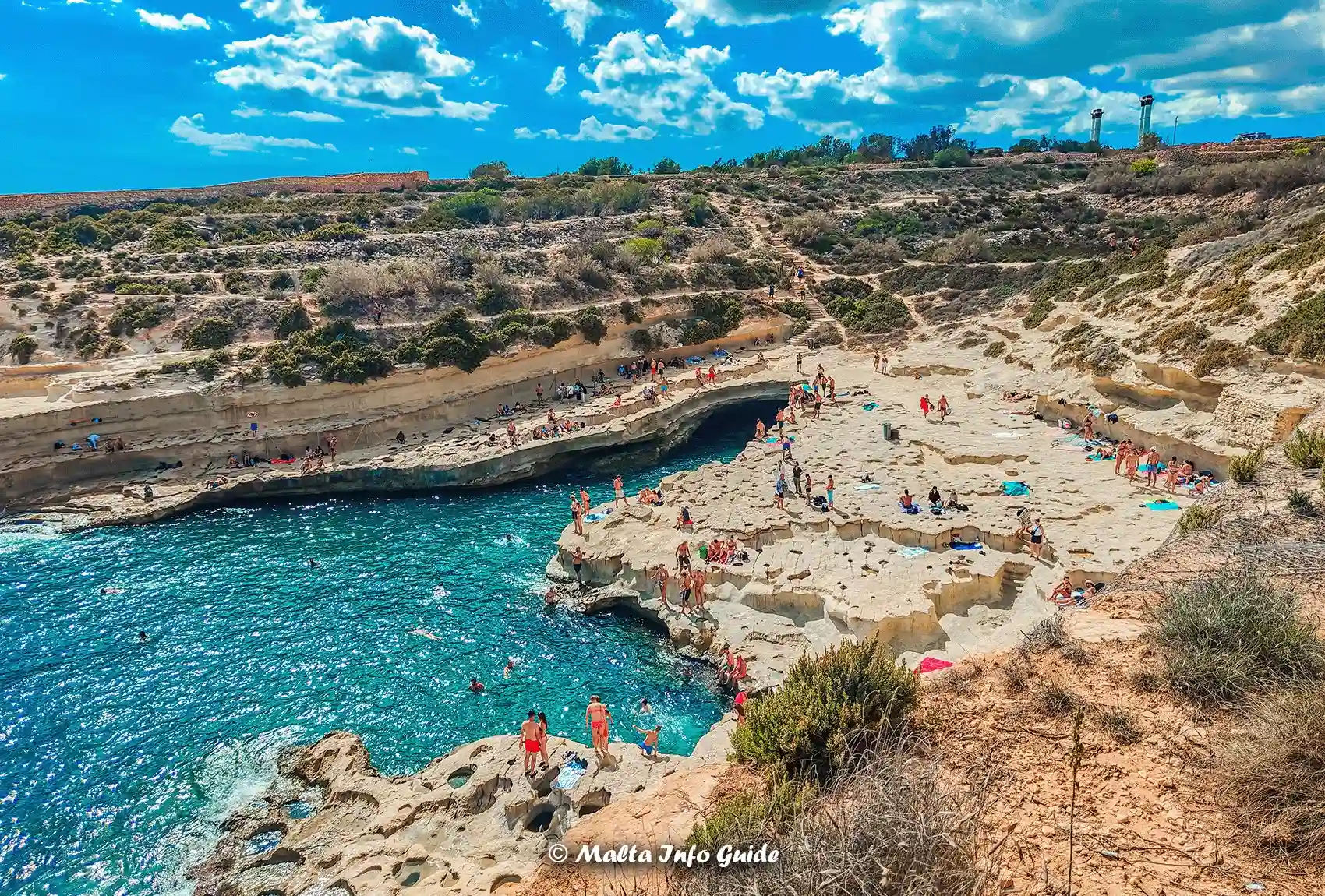 Swimmers at St Peter’s Pool
Rocky Beaches & Swimming Spots in Malta
Malta offers a wide range of rocky swimming spots, from easy urban spots to quieter natural coves. Our four main choices below suit different types of swimmers and beach days.
Għar Lapsi
Għar Lapsi is our strongest all-round rocky swimming recommendation, combining clear water, beautiful scenery and the feel of a traditional local swimming inlet. It is particularly good for swimming and snorkelling when sea conditions are calm, with steps and ladders making entry easier in parts of the bay.
The swimming area is fairly small and can become busy in summer and at weekends. Visitors should also be comfortable walking across uneven rock, so it is less suitable for anyone with significant mobility difficulties.
Best for: Swimming, snorkelling, scenery and local character
Keep in mind: Limited space when busy and uneven rocky access
St Peter’s Pool
St Peter’s Pool is one of Malta’s best-known natural rocky swimming spots, with clear, deep water surrounded by limestone. It is particularly good for confident swimmers, snorkelling and anyone who enjoys a more rugged coastal setting.
It can become very busy in summer; there is little shade, and the usable space around the water is smaller than photos sometimes suggest. Access also involves uneven ground, so we would not make it our first choice for very young children or weaker swimmers.
Best for: Deep-water swimming, snorkelling and dramatic limestone scenery
Keep in mind: Summer crowds, limited shade and awkward access
Fond Għadir & Sliema Rocky Coast
Fond Għadir is one of the easiest ways to experience Malta's rocky swimming culture, with flat rock areas and established sea access along Sliema's long coastline. Unlike Malta's more remote coves, you swim right beside a busy urban area, with cafés, restaurants, shops, and public transport nearby.
It lacks the wild scenery of places such as Għar Lapsi, but that is exactly what makes Sliema different: it is a typical local spot to head down to the rocks and swim. Take extra care when the sea is rough.
Best for: Easy urban swimming, convenience and local atmosphere
Keep in mind: Deep water and rougher conditions when the sea changes
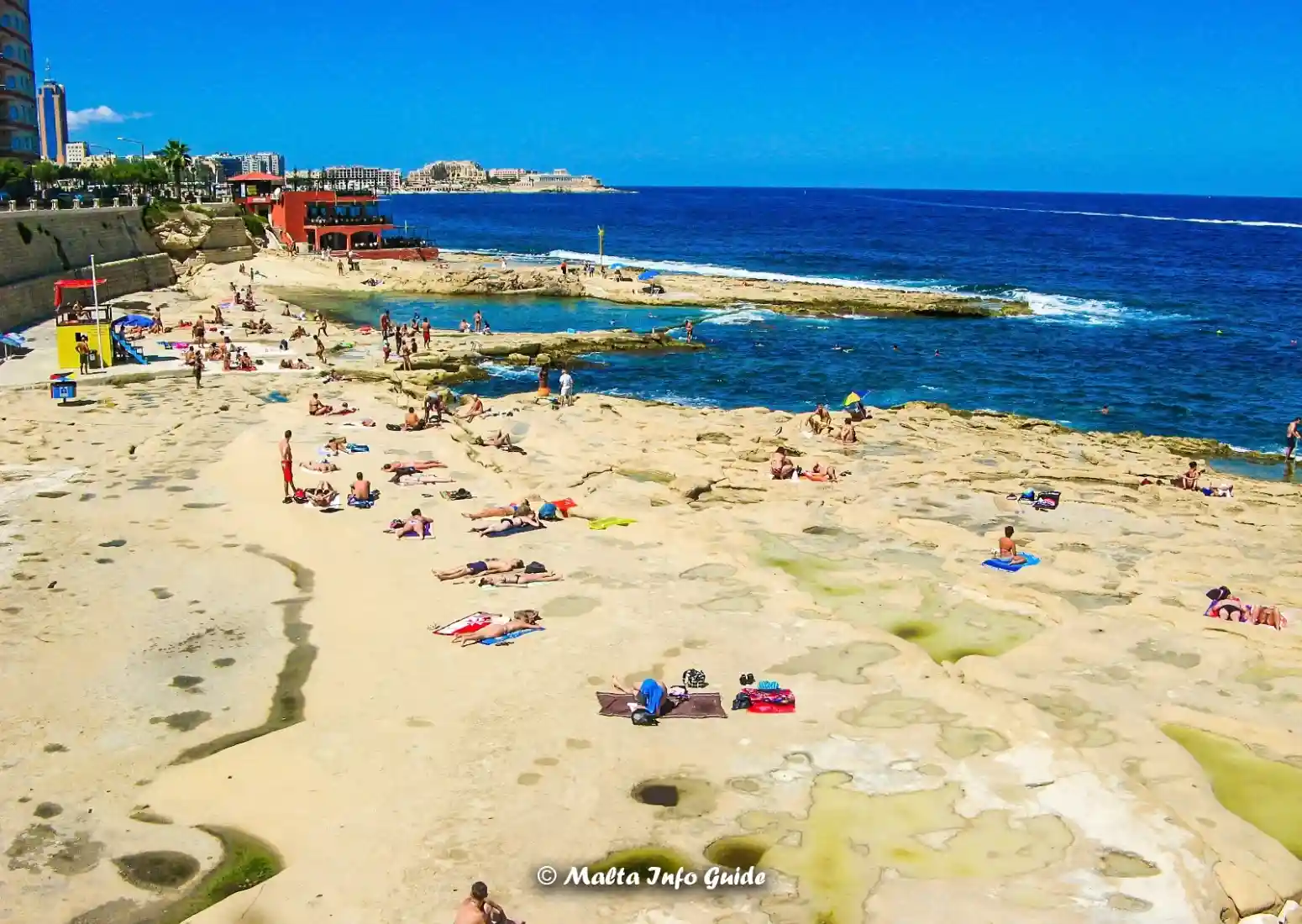 Rocky swimming area along Sliema
Delimara & Kalanka Bay
At the tip of the Delimara Peninsula near Marsaxlokk, Kalanka Bay is a natural rocky swimming spot with clear water and smooth limestone around the inlet. It is a good choice for swimmers and snorkellers who prefer a quieter, less developed coastal setting.
The appeal here is mainly the water and natural surroundings, not the facilities. There are no major beach services, so bring water and anything else you need. As with other exposed rocky swimming areas, avoid entering when the sea is rough.
Best for: Clear water, snorkelling and a natural rocky setting
Keep in mind: Limited facilities and a more remote location
Rocky Beaches & Swimming Spots in Gozo
Gozo has excellent rocky, natural swimming spots, from sheltered inlets to quieter stretches of open coastline.
Mġarr ix-Xini
Mġarr ix-Xini is one of our favourite all-round swimming spots in Gozo, set inside a narrow natural inlet surrounded by steep countryside. The small shoreline is mainly pebbly and stony rather than sandy, while the clear water makes it particularly good for swimming and snorkelling.
The bay feels much more natural and peaceful than Gozo's busier resort areas. The final road down is narrow and winding, and parking can be difficult when the bay is busy. Water shoes can also be useful on the stones and rocky shoreline.
Best for: Swimming, snorkelling, scenery and a peaceful Gozo setting
Keep in mind: Pebbly shoreline, narrow road and limited parking when busy
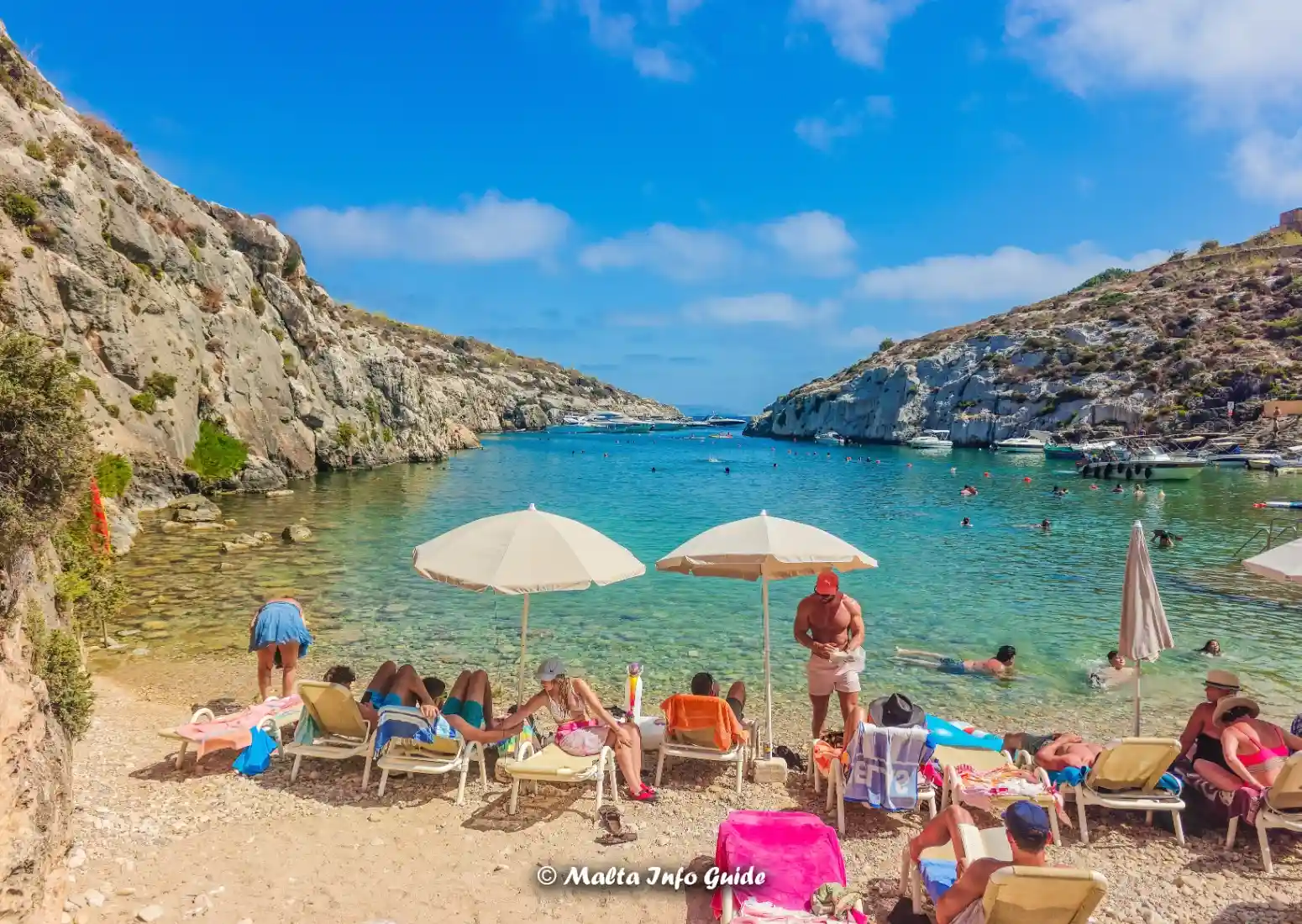 Sunbeds beside Mġarr ix-Xini bay
Wied il-Għasri
Wied il-Għasri is one of Gozo’s most dramatic places for a swim, with a narrow inlet cutting between high limestone cliffs and a small pebbly beach at the bottom. When the sea is calm, the sheltered water is excellent for swimming and snorkelling, while the scenery is one of the main reasons to visit.
The main drawback is the access. You need to descend a substantial flight of steps to reach the inlet and climb them again afterwards, so it is less suitable for older visitors, anyone with mobility difficulties, or those looking for an effortless beach day.
Best for: Dramatic scenery, swimming and snorkelling
Keep in mind: Many steps and a very small shoreline
Xatt l-Aħmar
Xatt l-Aħmar is one of Gozo’s quieter rocky swimming spots, with clear water, a natural coastal setting and plenty of appeal for swimmers, snorkellers and divers. It feels more secluded than Gozo’s main resort bays and is a good choice if you prefer somewhere less developed.
Sea entry varies depending on where you swim, so watch your step on the rocks and consider water shoes if you are not used to rocky shorelines. It is especially appealing to confident swimmers and visitors who value peace, clear water and a more local Gozo atmosphere.
Best for: Clear water, snorkelling, diving and a quieter setting
Keep in mind: Rocky sea entry and fewer facilities than resort beaches
Special Mention: Blue Hole at Dwejra
The Blue Hole at Dwejra is one of Gozo’s most distinctive natural swimming and diving locations, but we would treat it differently from the seven rocky swimming spots above. It is especially well known for diving and snorkelling, with deep water, underwater rock formations and the dramatic Dwejra coastline around it.
Reaching the water involves crossing uneven limestone, which suits confident swimmers more than those looking for an easy beach day. Conditions around Dwejra can also become rough, so avoid the exposed shoreline when the sea is unsettled.
Best for: Confident swimmers, snorkelling and diving
Keep in mind: Uneven access, deep water and changing sea conditions
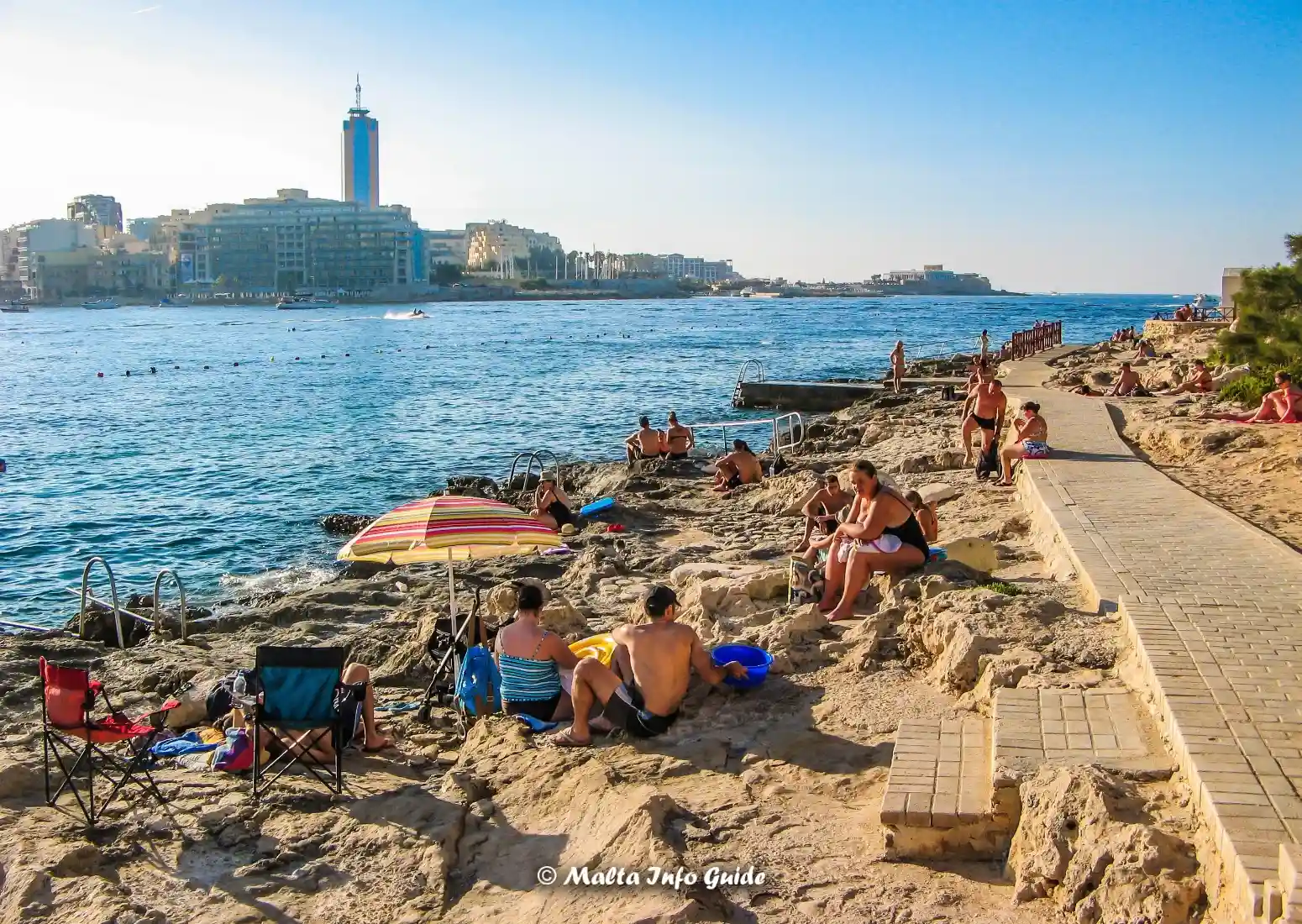 Swimmers along Exiles rocky shoreline
Rocky Beaches vs Sandy Beaches in Malta
Neither beach type is automatically better. Rocky swimming spots usually appeal most to people who enjoy clear water, snorkelling and getting into deeper water more quickly, while flat limestone areas can also be convenient for sitting or sunbathing without getting covered in sand.
The trade-off is comfort and access. Rocky shorelines can be uneven, and sea entry varies considerably: some places have steps or ladders, while elsewhere swimmers enter directly from the rocks. Before getting into the water, always check how you will get back out, especially if there are waves or no obvious ladder. It can help to watch where experienced locals enter and exit, but do not assume a spot is safe just because other people are swimming there. Water shoes can also help if you are not accustomed to walking over limestone, stones or underwater rocks.
If you prefer soft sand, shallower entry and an easier beach day with younger children, see our guide to sandy beaches in Malta and Gozo. If swimming, snorkelling and Malta's typical rocky coastline appeal more, the locations above are the better fit.
More Rocky Beaches & Swimming Spots Worth Knowing
Beyond our main seven, many other stretches of Malta and Gozo’s coastline are used for rocky swimming, particularly by locals. These are worth knowing about if you are staying nearby or want an alternative to the better-known locations above.
More Rocky Swimming Spots in Malta
- Qawra Point (Ta’ Fra Ben): One of the better local rocky-swimming choices around St Paul’s Bay, with flat limestone areas, established sea access, nearby food and facilities, and sunbeds and umbrellas available for hire. It is especially convenient if you are staying in Qawra or Buġibba.
- Anchor Bay, Mellieħa: Best known for Popeye Village, but the bay also has clear water and rocky swimming areas. We would mainly combine a swim here with the unusual setting rather than travel specifically for the beach.
- Baħar iċ-Ċagħaq coast: A long stretch of rocky coastline locals use for swimming, especially if you prefer somewhere less beach-like and more open.
- Marsaskala and Żonqor coastline: Several rocky swimming areas are found around this part of Malta’s south-east coast, making them useful choices if you are staying locally.
- Wied iż-Żurrieq: Better known as the departure point for Blue Grotto boat trips, but rocky swimming is also possible around parts of the inlet when conditions are suitable.
- Fomm ir-Riħ: One of Malta’s most dramatic coastal settings, with a small pebbly and rocky shoreline below steep cliffs. Parking is well above the beach, and access involves a steep, rough descent, so it is best suited to fit visitors. Check current access and rockfall restrictions before going.
More Rocky Swimming Spots in Gozo
- Daħlet Qorrot: A small traditional fishing bay below Nadur where swimmers use the tiny pebbly shore, rocks and paved waterfront beside clear water.
- Hondoq ir-Rummien: A mixed sandy, pebbly and rocky bay near Qala, popular with locals and particularly good for clear-water swimming and snorkelling.
- Marsalforn Bay: Better known as a seaside resort than a beach destination, but locals also swim from the rocky shoreline and ladders around the bay, alongside its small sandy section.
For more ideas, compare our beaches in Malta and Gozo, browse our Gozo beaches guide, or see our Gozo beach photos before deciding where to swim.
Looking for a completely different swimming experience? The Blue Lagoon in Comino is one of Malta’s best-known sea attractions, but we treat it separately rather than as a typical rocky beach.
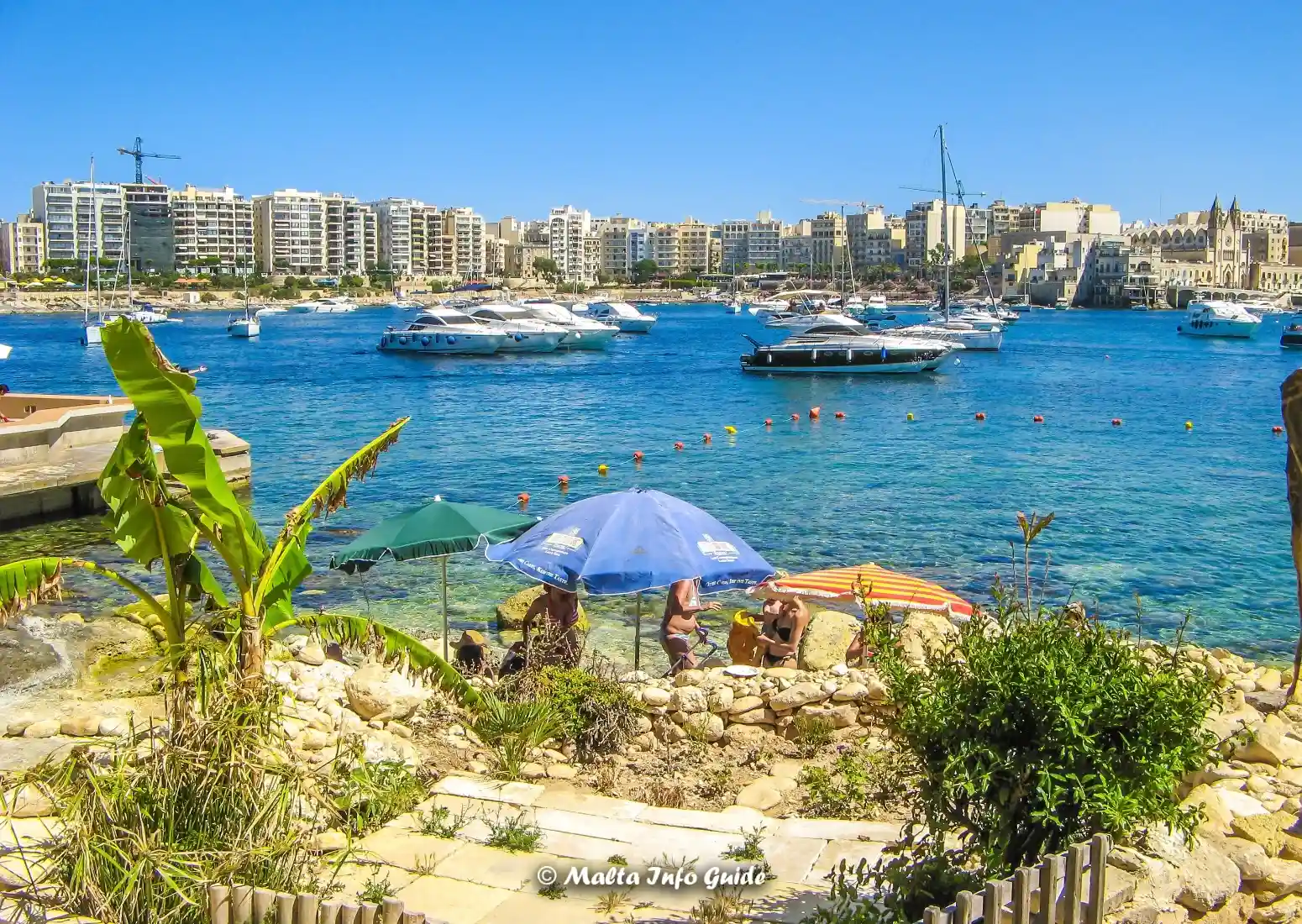 Rocky swimming cove beside Sliema
What to Know Before Visiting a Rocky Beach
Water shoes can be useful, especially if you are not used to walking on limestone, pebbles, or underwater rocks. Many locals swim without them, but they can make entry and walking around more comfortable.
Families should choose carefully. Rocky swimming is not automatically unsuitable for children, but sandy beaches such as Mellieħa Bay are generally easier for very young children. Places with flatter rocks and established access, such as parts of Sliema, are usually more practical.
Access varies considerably. Some locations have ladders, steps or relatively flat platforms, while others involve uneven rock, long stairways or more difficult approaches. This is especially important for older visitors or anyone with mobility difficulties.
Facilities also vary from place to place. Sliema has cafés, restaurants and shops close to the coast, while more natural locations may have very little nearby. Don't assume a rocky beach will be quiet either: popular places such as St Peter’s Pool can get very busy.
Rocky coastlines are also excellent for snorkelling and diving. If diving is one of your main reasons for visiting, see our scuba diving in Malta guide.
Rocky Swimming Safety
Take rough sea conditions seriously at rocky swimming spots. Waves can make it much harder to get back onto the rocks or reach a ladder, and being pushed against a rocky shoreline can be dangerous. If waves are washing over your entry or exit point, choose somewhere else to swim.
Do not assume conditions are safe just because other people are in the water. Check the sea and weather before entering, follow lifeguard instructions and warning signs where present, and weaker swimmers should be particularly cautious around deep or exposed rocky coastlines.
Also respect any closed or restricted coastal areas. Falling rocks are a recognised hazard around parts of Malta's cliffed coastline, and Transport Malta can restrict specific sections to swimmers. Keep away from marked restricted areas and cliff faces, even if the surrounding bay remains open for swimming.
Our list above highlights some of the best rocky beaches and swimming spots, while the map below shows many more rocky coastal locations around Malta and Gozo that you may also want to explore.
Want To Share This Page On Pinterest? Pin It Here!

Disclaimer — We may earn a commission if you book via certain links on the website. No extra cost to you.
🎉 What’s On In Malta?
Updated for October • Local picks
Discover events, village feasts, fireworks, festivals and seasonal things to do this October.
📅 See What’s Happening This October ⛪ Malta Village Feasts 🌞 Things To Do In Malta 🗓️ Events By Month🍺 Enjoying Malta Info Guide?
If our local guides helped you plan your Malta trip, you can say thanks by buying us a Cisk.
Made by two Malta locals. Always free.

✈️ Planning your Malta trip?
✈️ Flights to Malta
Compare airlines and find the best prices today.
Check today’s cheapest flights →🏨 Hotels in Malta
Find available rooms, trusted stays and good locations for your Malta trip.
See available hotels this week →🚗 Car Rental in Malta
Compare prices, pick-up points and car options before you book.
Compare car rental prices →Planning London too?
Discover where to stay, what to do, and when to visit London.
Explore London Guide →Recent Articles


-
Weather in Malta in December 2026 | Temperatures & Tips
Oct 03, 26 05:55 AM
Planning Malta in December? See average temperatures, rainfall, sea temperature, what to wear, swimming conditions, Christmas weather and practical local tips. -
Malta Weather in November: Temperatures, Rain & What to Wear
Oct 03, 26 05:00 AM
Planning a trip to Malta in November? See temperatures, rainfall, early and late November weather, what to wear, whether you can swim and what to expect. -
Malta Weather in October: Temperature, Rain & What to Wear
Oct 02, 26 03:15 PM
Planning a trip to Malta in October? See temperatures, rainfall, sea temperature, early and late October weather, what to wear and whether you can still swim.