- Home
- Weather in Malta
What Is the Weather In Malta Like?
Malta Weather Throughout the Year
Malta has a Mediterranean climate, with hot, dry summers and generally mild winters. The weather varies throughout the year, from long, sunny beach days to cooler, windier and sometimes rainy winter days.
Living in Malta, we know temperature does not tell the whole story. In this guide, we cover Malta's weather year-round, including monthly temperatures, rainfall, sea conditions, and practical local advice to help you plan your visit.
✍️ Written by Albert and Benjamin Magro, Malta locals sharing practical advice from living in and exploring the Maltese Islands.
What You Need to Know About Malta's Weather
- Malta Weather Forecast
- Quick Weather Facts
- Malta Weather by Month
- Malta's Four Seasons
- Winter Weather in Malta
- Spring Weather in Malta
- Summer Weather in Malta
- Autumn Weather in Malta
- Rainfall, Humidity and Wind
- Best Time to Visit Malta
Malta Weather Forecast – Next 7 Days
Check the latest weather forecast for Malta before heading out, particularly if you are planning outdoor activities or boat trips.
MALTA WEATHER
MALTA WEATHERQuick Facts About Weather in Malta
- Annual sunshine: Around 3,000 hours
- Average annual rainfall: Approximately 543 mm
- Average annual temperature: Around 19.5°C (67°F)
- Sea temperature: Around 15°C in February to 26°C in August
- Hottest month: August
- Coldest month: January and February
Malta Weather by Month: Average Temperatures and Rainfall
The table below shows Malta's average daytime highs, night-time lows and rainfall throughout the year. These are historical averages, so actual weather can vary.
| Month | Daytime High | Night-time Low | Rainfall |
|---|---|---|---|
| January | 15.7°C | 10.0°C | 79.4 mm |
| February | 15.7°C | 9.6°C | 68.9 mm |
| March | 17.4°C | 10.9°C | 39.7 mm |
| April | 20.1°C | 12.7°C | 18.7 mm |
| May | 24.3°C | 15.8°C | 11.0 mm |
| June | 28.8°C | 19.6°C | 7.3 mm |
| July | 31.7°C | 22.1°C | 0.2 mm |
| August | 32.0°C | 23.0°C | 11.2 mm |
| September | 28.6°C | 21.2°C | 59.2 mm |
| October | 25.0°C | 18.4°C | 77.6 mm |
| November | 20.8°C | 15.0°C | 89.1 mm |
| December | 17.1°C | 11.8°C | 84.8 mm |
Source: National Statistics Office, Malta — 1991–2020 climate normals, using Malta International Airport Meteorological Office observations.
The Weather in Malta – Seasons in Malta
Each season in Malta offers different weather conditions. Summer is hot and mostly dry, while winter brings cooler temperatures, stronger winds and more frequent rain. Spring and autumn are generally more comfortable for exploring, though the weather can still change.
Below, we explain what to expect during each season, including clothing, swimming conditions and practical advice for planning your visit.
Malta Weather in December, January and February
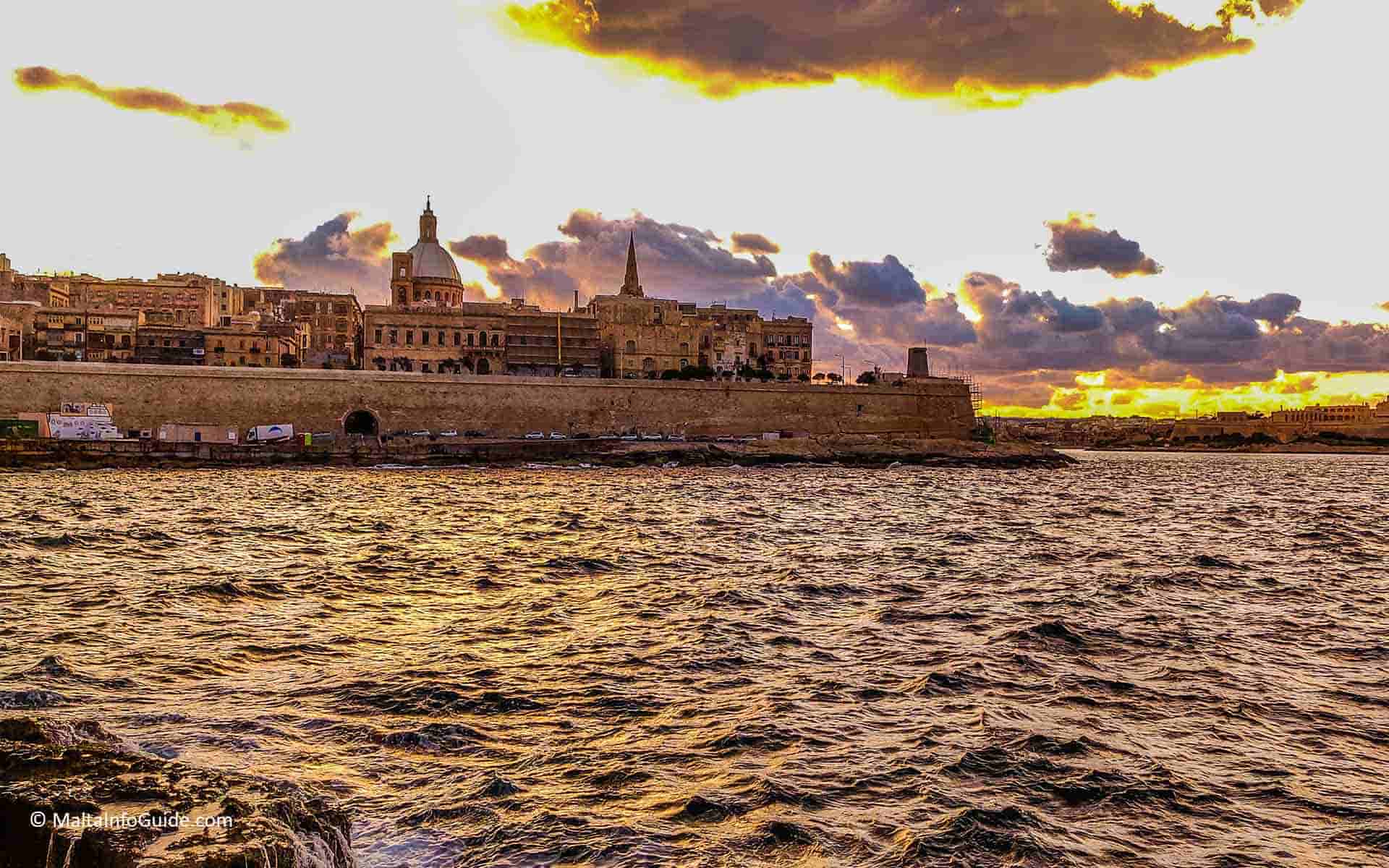
Winter is Malta's coolest and generally wettest season, with a mix of sunny days, cloudy skies, rain, and sometimes strong winds. January and February are usually the coldest months, although pleasant sunny weather is still possible.
From our experience living in Malta, wind makes a big difference to how cold it feels. A sheltered spot in the sunshine can be lovely, while walking along an exposed seafront can feel quite chilly, especially after sunset.
What to Wear in Malta During Winter
We normally wear long trousers, a jumper or fleece, and a jacket during winter. On colder or windier days, an extra layer makes a difference, especially when you are outdoors after sunset.
What we recommend packing:
- Jumper or fleece and a windproof jacket.
- Long trousers and comfortable closed shoes or trainers.
- A waterproof jacket for rainy days.
- An extra warm layer for colder evenings or exposed coastal areas.
An umbrella can help in light rain, but a waterproof jacket is often more practical in strong winds.
Malta Weather in December
December brings cooler weather, shorter days, and a higher chance of rain. You can still have pleasant, sunny afternoons, but evenings and windy days feel noticeably cooler.
Malta Weather in January
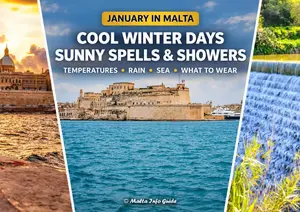
January is one of Malta's coldest months, with a mixture of sunshine, rain and strong winds. Sheltered places can feel pleasant in the sun, but warmer clothing is useful outdoors.
Malta Weather in February
February is one of Malta's coldest months, along with January. The weather can be changeable, with sunny spells, wind and occasional rain. Sheltered areas can feel pleasantly mild in the sunshine, while exposed coastal areas can feel much colder.
Weather in Malta in March, April and May
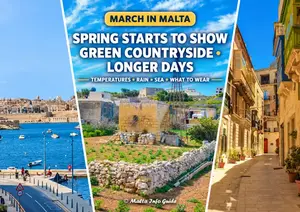
Spring is one of the most pleasant times of year in Malta, with gradually rising temperatures, longer days and plenty of sunshine. The countryside is often green after the winter rains, making it a lovely season to explore the islands.
However, spring weather can be changeable, particularly in March and April. Warm, sunny afternoons can still turn noticeably cooler in the evening, so be prepared for changing conditions throughout the day.
Spring is also a lovely time to explore Malta's towns and countryside and enjoy events in Malta.
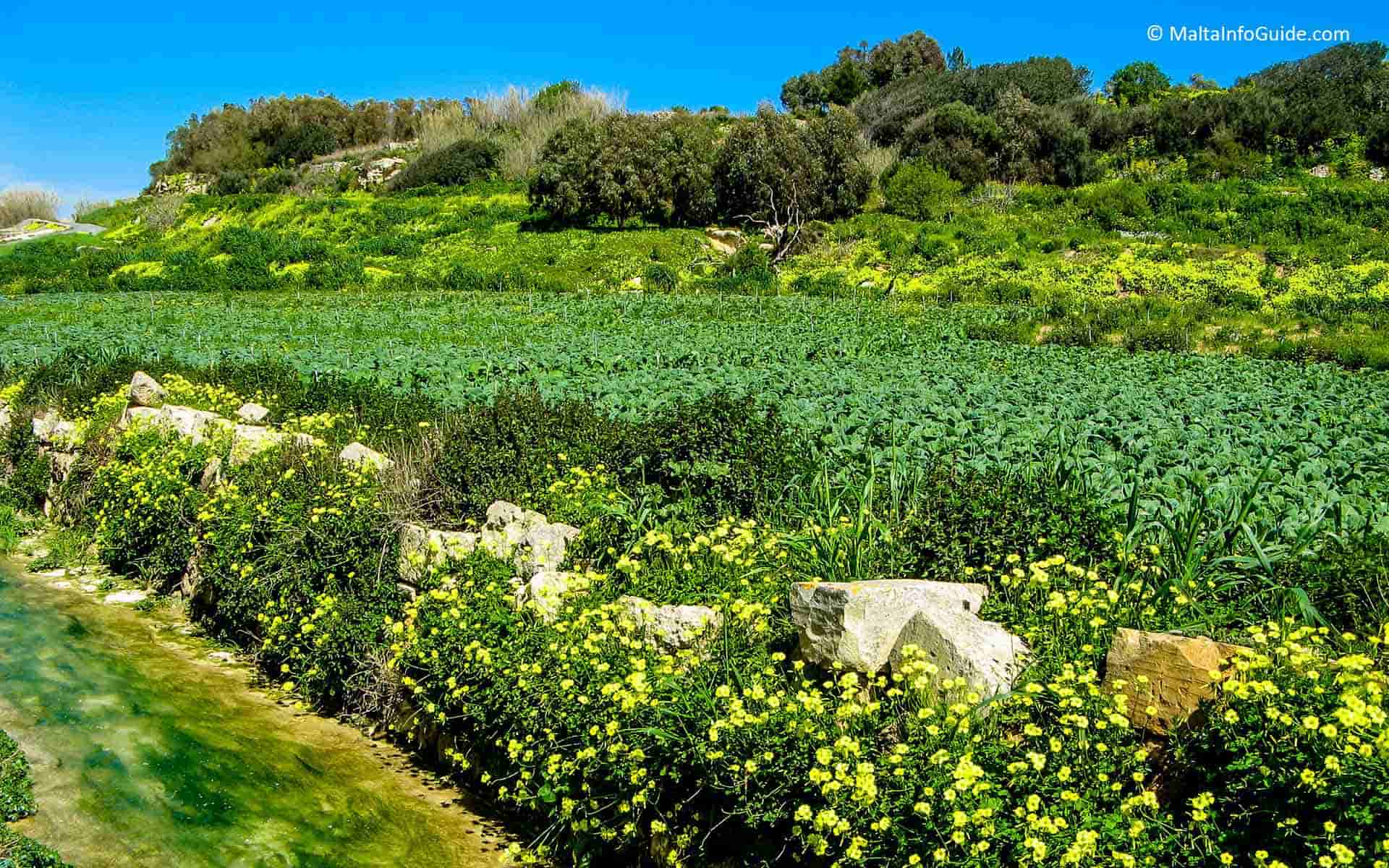
What to Wear in Malta During Spring
Light clothing is usually comfortable on warmer spring days, but layers matter, especially in March and April.
Pack T-shirts, comfortable trousers or shorts, trainers and a light jacket or jumper for cooler evenings. Sunglasses and sunscreen are also useful on sunny days.
Malta Weather in March
March marks the transition to warmer spring weather, though windy, cooler days are still common. The countryside is often green, making it a lovely month for walking.
Malta Weather in April
April brings pleasantly warm afternoons, longer days and good opportunities for sightseeing. Evenings can still feel cool, so bring a light jacket.
Malta Weather in May
May feels increasingly summery, with warmer days and plenty of sunshine. Swimming becomes tempting, although the sea can still feel cool, especially early in the month.
Malta Weather in June, July and August *******
this is not showing correctly when selected from toc ?
Summer in Malta is hot, sunny and mostly dry, with July and August bringing the highest temperatures. These months are especially popular for swimming, boat trips, and beach time.
From our experience, sightseeing is more comfortable early in the morning or later in the day. Avoid long walks in direct sunshine around midday and early afternoon, and remember to carry water, wear sunscreen and take breaks in the shade.
Summer is also the main season for Malta's village feasts, when towns and villages come alive with celebrations, music and fireworks.

What to Wear in Malta During Summer
Choose light, breathable clothing such as T-shirts, shorts and summer dresses. Comfortable footwear is important for sightseeing, especially when walking through Malta's towns and villages.
Bring swimwear, sunglasses, a hat and sunscreen. An extra light layer can also be useful in air-conditioned restaurants or indoor attractions.
Planning to spend time by the sea? Explore our guide to the best beaches in Malta and Gozo to help you choose where to swim and relax.
Malta Weather in June
June brings hot, sunny days and increasingly comfortable sea temperatures. It is an excellent month for a beach holiday, with long daylight hours and generally dry weather.
Malta Weather in July
July is one of Malta's hottest and driest months, with strong sunshine and very warm sea temperatures. It is ideal for visitors who enjoy summer heat, though it is best to plan sightseeing outside the hottest hours.
Visiting during July? Explore our Things to Do in Malta in July guide for events, festivals and activities across the islands.
Malta Weather in August
August is generally Malta's hottest month, with hot days, warm nights and excellent swimming conditions. The heat and humidity can be tiring, especially when walking or sightseeing during the afternoon.
Weather in Malta in September, October and November
Autumn in Malta begins with warm, summer-like weather in September, while October often still offers pleasant sunshine and swimming opportunities. By November, temperatures cool, with a higher chance of rain and wind.
From our experience, autumn weather can be changeable, especially after the first proper storms. Warm, sunny days can return, but checking the forecast and sea conditions becomes increasingly important when planning outdoor activities.

What to Wear in Malta During Autumn
September often calls for summer clothing, while October and November require more flexibility as temperatures become cooler and rain becomes more likely.
Pack light clothing, comfortable closed shoes and a jumper or light jacket for cooler evenings. A waterproof jacket is also useful, particularly later in autumn.
Malta Weather in September
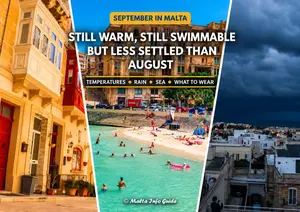
September still feels like summer, with warm days and excellent swimming conditions. Rain and thunderstorms become more likely as the month progresses, although plenty of sunshine is still possible.
Malta Weather in October
October can bring lovely warm days and comfortable sea temperatures, but conditions become more changeable. Swimming is still possible, depending on the wind, sea conditions and weather.
Malta Weather in November
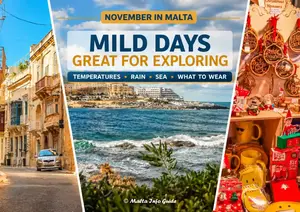
November brings cooler temperatures, shorter days and a greater chance of rain. Sunny afternoons can still be pleasant for exploring, but a jacket and rain protection are useful.
Malta Weather During the Year
Weather in Malta – Rainfall
Most of Malta's rainfall occurs between October and March, while summer is generally very dry.
Rainfall varies from year to year, and occasional heavy showers or thunderstorms can occur, especially during autumn and winter. However, rainy weather does not necessarily last all day, and sunny spells are common between unsettled periods.
Weather in Malta – Relative Humidity
Humidity is a noticeable part of Malta's climate and can make hot summer days and nights feel uncomfortable, particularly during July, August and September.
Air conditioning is useful during summer, especially for sleeping comfortably. In winter, damp conditions combined with wind can make the weather feel colder than the temperature suggests.
Weather in Malta – Wind
Wind can noticeably affect Malta's weather, particularly along exposed coastlines. The main winds visitors may hear mentioned are:
- Majjistral (north-westerly): Malta's most common wind, often bringing cooler, breezy conditions.
- Grigal (north-easterly): Can bring strong winds, unsettled weather and rough seas.
- Xlokk (south-easterly or sirocco): Can bring warm, humid conditions, sometimes with Saharan dust.
In our experience, a sheltered square can feel pleasant, while an exposed promenade can be very windy. *Always check wind and sea conditions before swimming or booking a boat trip.
Best Time to Visit Malta for the Weather
The best time to visit Malta depends on what you want to do. From our experience living here, we recommend:
- Sightseeing: April, May, October and early November, when temperatures are generally more comfortable for exploring.
- Beaches and swimming: June and September, with warm weather and pleasant swimming conditions. July and August suit those who enjoy intense summer heat.
- Countryside walking: January to April, when the landscape is often green, and temperatures are cooler.
You can enjoy Malta year-round, but weather varies, so check the forecast before planning outdoor activities.
For more local advice, activities and travel information, explore our Malta Info Guide homepage.


Other Related Pages That Might Interest You
Malta Weather in February: Temperature, Rain & What to Wear
Planning Malta in February? See temperatures, rainfall, sea temperature, early and late February weather, what to wear and whether you can swim.
Malta Weather in October: Temperature, Rain & What to Wear
Planning a trip to Malta in October? See temperatures, rainfall, sea temperature, early and late October weather, what to wear and whether you can still swim.
Weather in Malta in August: Hot Weather, Warm Sea & Summer Tips
Planning Malta in August? Discover hot weather, warm sea temperatures, swimming conditions, what to wear and practical summer tips from Malta locals.







Disclaimer — We may earn a commission if you book via certain links on the website. No extra cost to you.
🎉 What’s On In Malta?
Updated for October • Local picks
Discover events, village feasts, fireworks, festivals and seasonal things to do this October.
📅 See What’s Happening This October ⛪ Malta Village Feasts 🌞 Things To Do In Malta 🗓️ Events By Month🍺 Enjoying Malta Info Guide?
If our local guides helped you plan your Malta trip, you can say thanks by buying us a Cisk.
Made by two Malta locals. Always free.


Recent Articles


-
Blue Lagoon Malta: Comino Access, Ferries & Swimming
Nov 01, 26 05:10 AM
The Blue Lagoon in Malta is famous for its clear blue water. Plan your Comino visit with tips on access passes, ferries, swimming and boat trips. -
Kalendarju Festi Malta 2026 | Ċelebrazzjoni Unika Maltija
Oct 24, 26 03:34 PM
Festi Malta hija l-gwida tiegħek għall-aħjar għażla għad-dati tal-kalendarju għal festi Maltin u Għawdxin. -
Where to Stay in Malta: Best Areas for Your Holiday
Oct 23, 26 01:47 PM
Compare the best areas to stay in Malta, from Valletta and Sliema to Mellieħa and Gozo, with local advice on beaches, nightlife, transport and more.