- Home
- Getting Around Malta
- Driving in Malta
driving in malta For Tourists
What to Expect Before You Get Behind the Wheel
If you are visiting Malta and planning to rent a car, the first thing to know is that we drive on the left-hand side of the road, as in the UK. Driving here is generally manageable once you get used to it, although narrow streets, roundabouts, busy roads and finding parking can take some adjustment if it is your first time driving on the islands.
Malta is small and driving distances are generally short, so having a car can be very convenient if you want to explore several places, travel at your own pace or reach locations that are less convenient by public transport. However, traffic and parking can be challenging in busy areas, so whether renting a car is right for you will depend on where you are staying and what you plan to see.
Last updated: August 2026
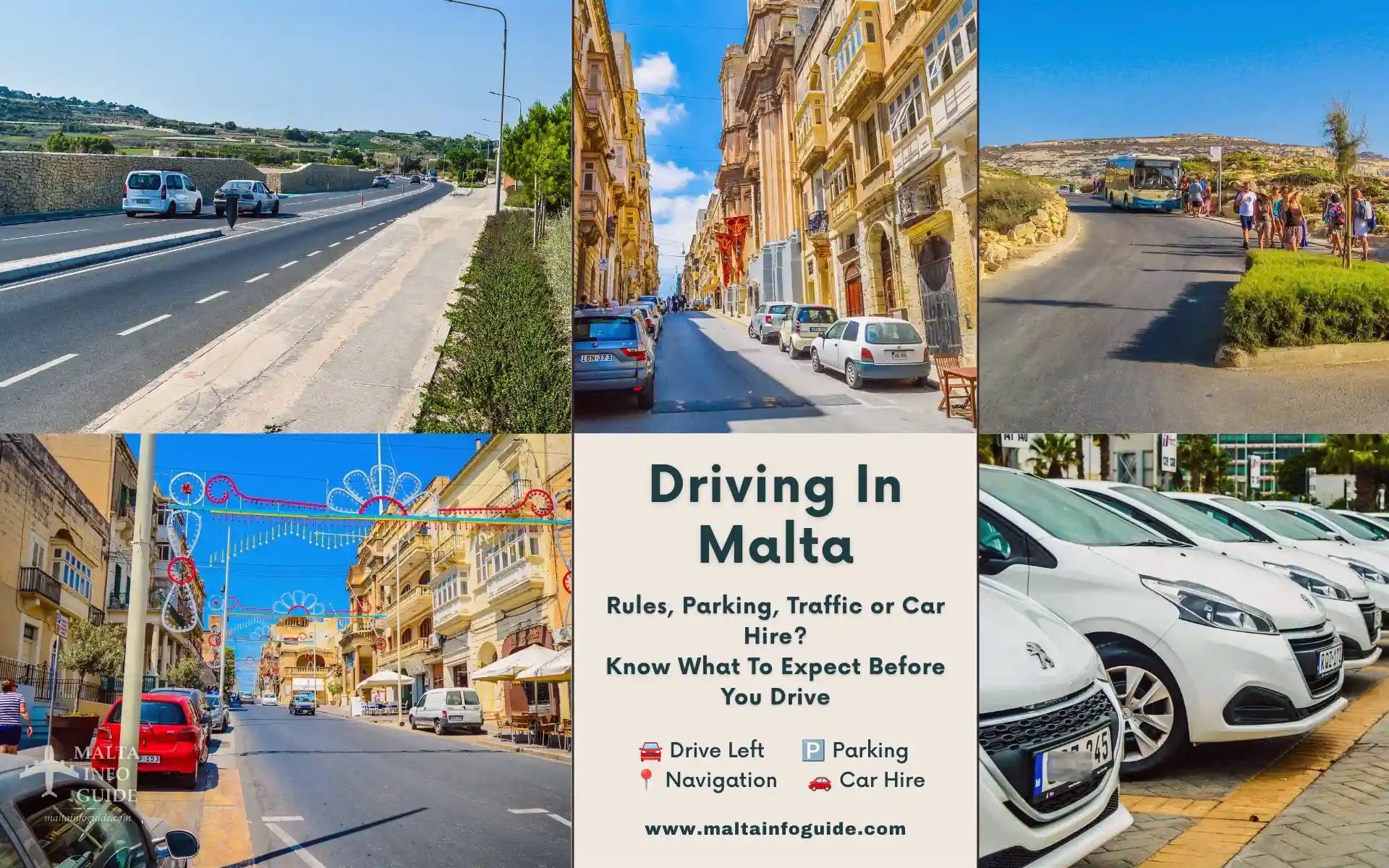 Driving in Malta Guide
Driving in Malta at a glance
- Drive on the left-hand side of the road.
- Malta is small, but traffic and parking can add considerably to journey times.
- A car is useful if you want flexibility or plan to visit places that are less convenient by public transport.
- Narrow streets and busy roundabouts can take some getting used to, especially on your first day.
- Before driving, check that your licence is valid for use in Malta and understand what insurance your rental car includes.
✍️ Written by Albert and Benjamin Magro, Malta locals sharing practical advice based on living on and exploring the islands.
Malta’s main arterial roads have undergone substantial upgrades over the years, including major EU-funded projects. However, road conditions and layouts can vary considerably: some main routes are wide and busy, while roads through villages and historic areas can be much narrower. If you are driving in Malta for the first time, expect the type of road to change quite quickly as you travel around the islands.
On This Page
- What You Need Before Driving in Malta
- Malta Driving Rules
- Parking in Malta
- Should You Rent a Car in Malta?
- What to Expect on Malta’s Roads
- Tips for Driving Safely in Malta
- Alternatives to Driving in Malta
- Driving in Malta FAQs
What You Need Before Driving in Malta
Before collecting a rental car or driving in Malta, check that your driving licence is valid for use here and understand the documents and insurance that apply to your vehicle. Requirements can differ depending on where your licence was issued, so check these details before you travel rather than when you arrive at the rental desk.
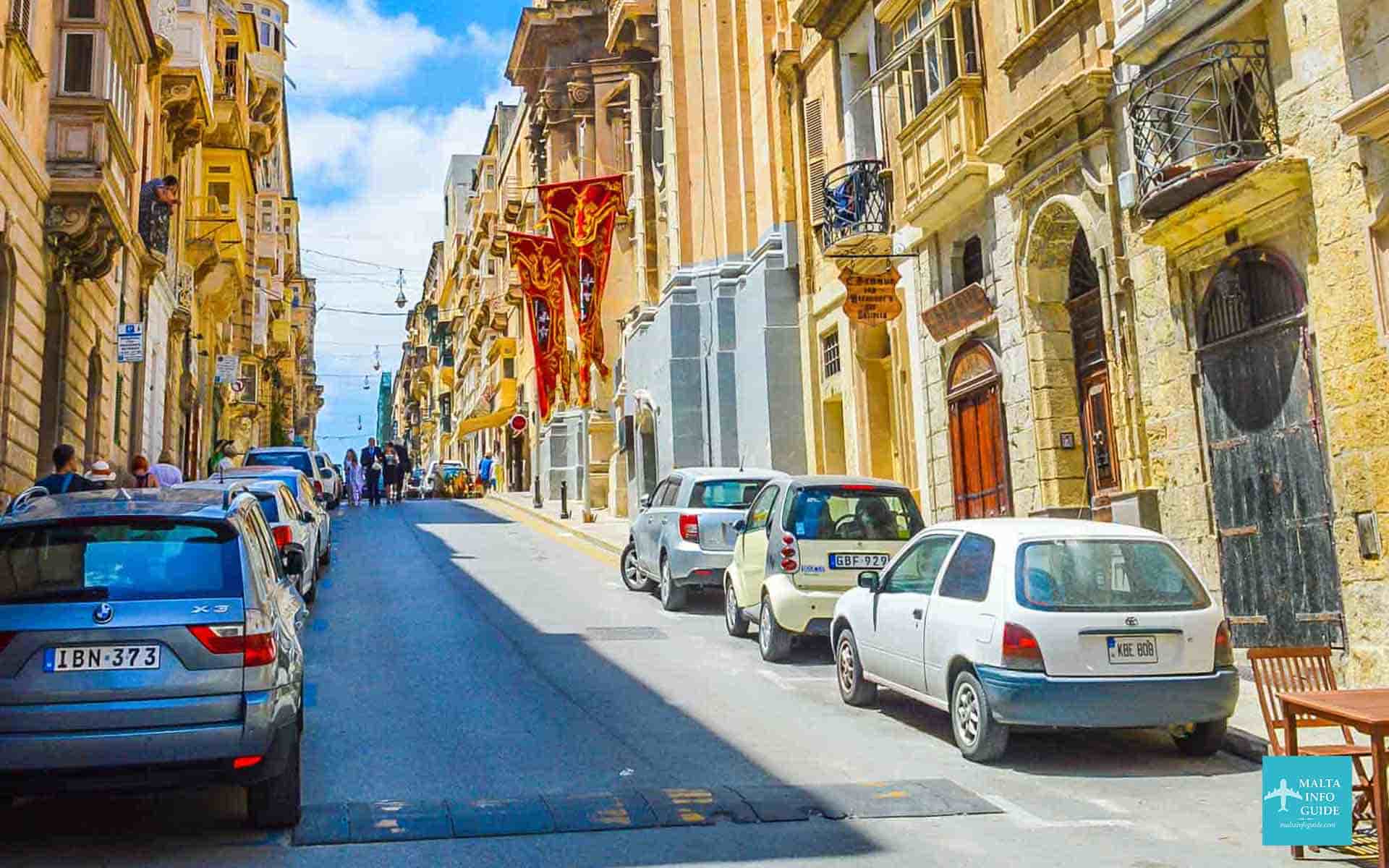 Driving through narrow Valletta
Driving Licence Requirements for Visitors
You must have a valid driving licence to drive in Malta. If your licence was issued by an EU Member State, you can use it in Malta without obtaining an additional Maltese driving permit, provided that the licence is still valid.
Visitors with a driving licence issued outside Malta and the EU can generally drive in Malta for up to 12 months from the date of their last entry into the country. This also applies to visitors using a valid UK driving licence.
An International Driving Permit (IDP) does not replace your normal driving licence. Requirements can depend on the country that issued your licence and your individual circumstances, so if you hold a non-EU licence, check the latest guidance from Transport Malta before travelling. It is also sensible to check any documentation requirements your car rental company imposes before collecting the vehicle.
Rental Car Insurance and Documents
If you are hiring a car in Malta, third-party liability insurance should already be included in the rental price. This covers liability to other people, but it does not necessarily mean that all types of damage to the rental car are fully covered.
Before driving away, check your rental agreement so you understand:
- what insurance is included;
- whether there is an excess if the car is damaged;
- whether optional additional cover has been added or offered;
- what you need to do if the car is damaged or you are involved in an accident;
- who to contact for roadside assistance or an emergency;
- whether there are any restrictions if you intend to take the rental car outside Malta.
Rental companies may also have their own requirements regarding identification, payment methods, driver age, and additional drivers, so check the conditions attached to your booking before you travel.
If you are still comparing companies or preparing to book, see our guide to renting a car in Malta for more practical advice.
Malta Driving Rules
If you are driving in Malta for the first time, there are a few important rules and road habits to understand before setting off. Always follow the road signs and instructions you see while driving, as signed restrictions and speed limits can vary from one road or area to another.
- Drive on the left-hand side of the road. Keep left in normal driving and use the right-hand lane to overtake where appropriate.
- The general minimum legal driving age in Malta is 18, although car rental companies may apply a higher minimum age or additional conditions for younger drivers.
- Follow all road signs, traffic signals and lane markings, including temporary restrictions and signs around roadworks.
- At roundabouts, give way to traffic approaching from your right. Use your indicators clearly when preparing to leave the roundabout.
- In a genuine emergency, call 112 for assistance
- Do not drink and drive. Malta’s general legal blood-alcohol limit is 50mg of alcohol per 100ml of blood, and lower limits can apply to certain categories of drivers.
- Do not use a mobile phone while driving. If you need to make a call, send a message or change your navigation, stop somewhere safe first.
- Wear your seatbelt whenever you are travelling in the car, and make sure your passengers are properly restrained before setting off.
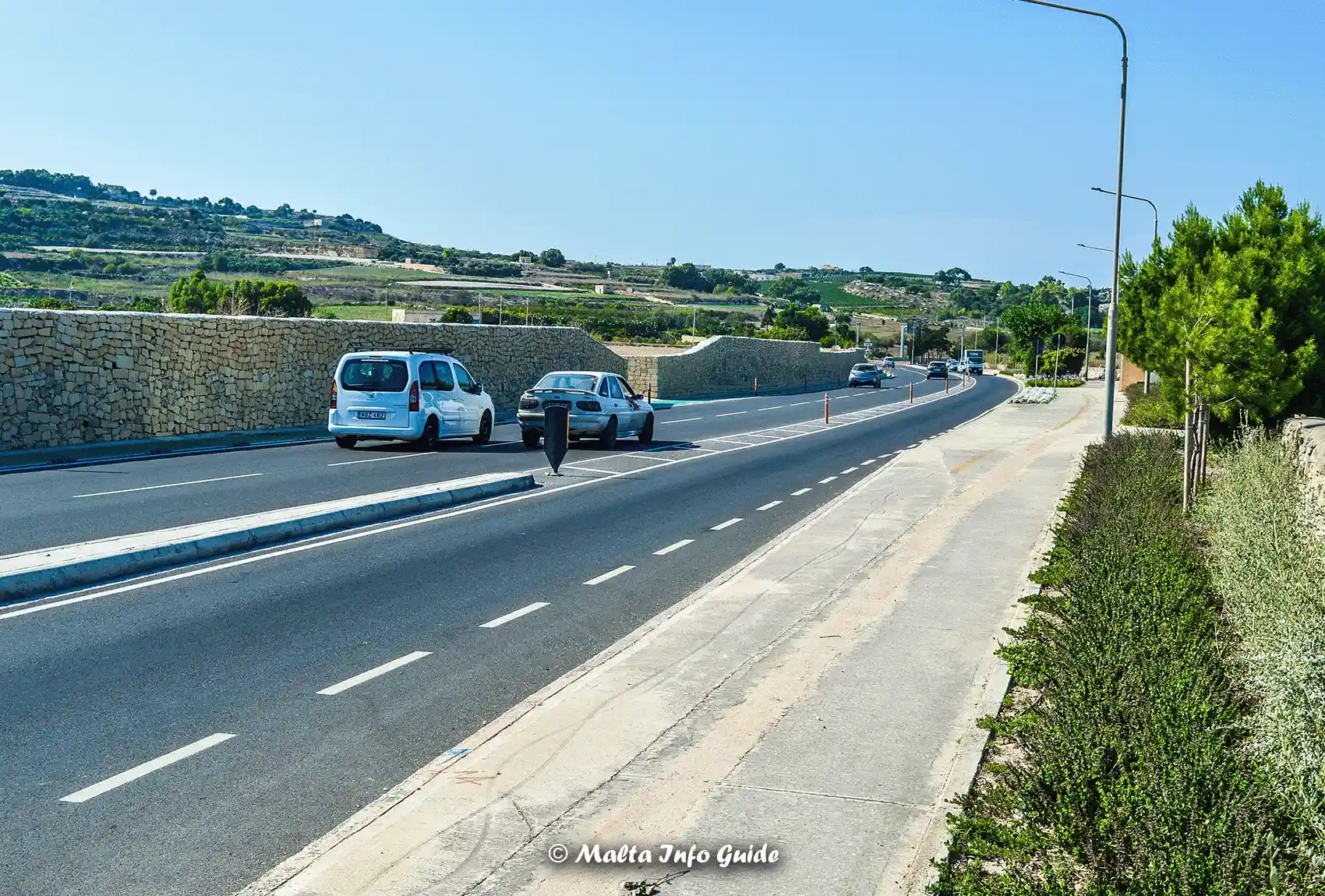 Driving Malta’s main roads
Malta Speed Limits
- In built-up areas, the general speed limit for cars is 50 km/h (31 mph), unless road signs indicate otherwise.
- On faster roads and bypasses, speed limits can be higher, with 80 km/h (50 mph) as the national maximum on bypasses.
- You will also find lower signed limits, particularly in residential areas, village centres and traffic-calmed zones.
Always follow the speed-limit signs on the road you are using, rather than assuming the limit from the type of road.
Parking in Malta
Parking is one of the main things to understand when driving around Malta. Street parking is common, but the colour of the bay or road markings matters, and restrictions can vary by location. Always check nearby signs before leaving your car, even if other vehicles are parked nearby.
- White parking bays: These are generally used for normal on-street parking. Always check nearby signs, as a bay may still have specific restrictions or conditions.
- Double yellow lines: Do not park on them. You will commonly see these markings near places where vehicles must be kept clear, including garages, corners and other restricted areas.
- Reserved or dedicated bays: Some parking spaces are reserved for a particular use, such as disabled parking, loading or other authorised vehicles. Check the road markings and accompanying signs before parking, rather than relying on the bay colour alone.
Parking in Valletta
Parking in Valletta needs a little more attention because some spaces are reserved for residents or have restrictions that apply only at certain times. You will see different coloured bays, including green and blue spaces, but visitors should not rely on colour alone. Always read the sign beside the parking space before leaving your car, as the restriction that applies to that bay matters.
Valletta also operates a Controlled Vehicular Access (CVA) system. Cameras record vehicles entering and leaving the CVA boundary and calculate how long they remain within the controlled area. The CVA charge is separate from whether you are legally allowed to park in a particular space.
Current CVA tariffs give you the first 30 minutes free. Stays of more than 30 minutes and up to one hour cost €0.82, while longer stays are charged at €0.82 per hour or part thereof, up to a maximum of €6.52. Entry after 14:00 from Monday to Friday is free, and there are no CVA charges on Saturdays, Sundays or public holidays.
If you are using a rental car, check your rental agreement to understand how the rental company handles any CVA charges or related administration.
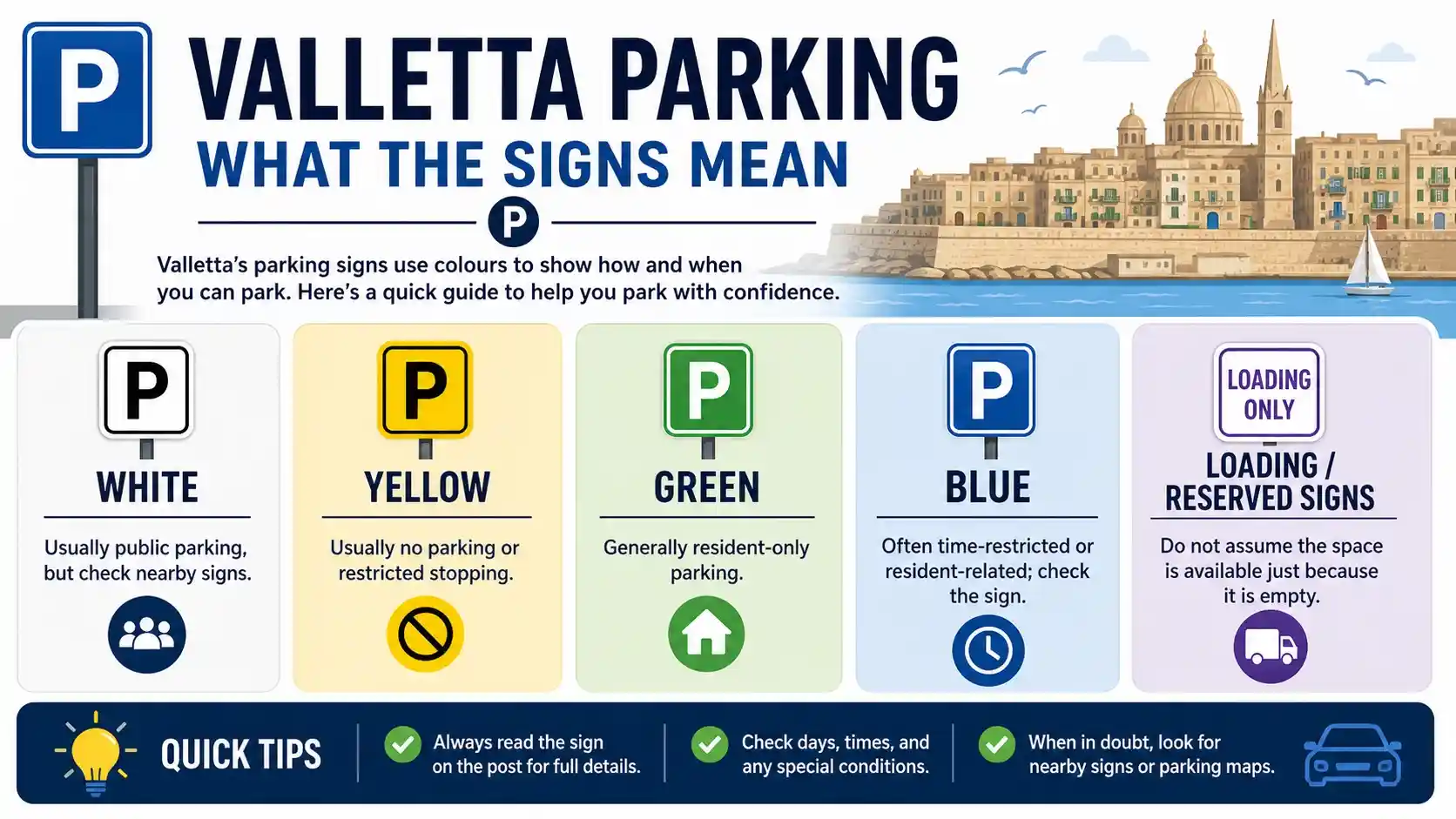 Understanding Valletta parking signs
Should You Rent a Car in Malta?
Renting a car in Malta can be very useful, but not every visitor needs one. Malta is small and distances between places are relatively short, so having your own car gives you the freedom to travel when you want and can make it easier to visit several places in the same day.
We would particularly consider renting a car if you plan to explore widely, want to reach places that are less convenient by public transport, or simply prefer having more flexibility during your holiday.
On the other hand, traffic and finding parking can be frustrating, particularly in busy areas. If most of the places you want to visit are already easy to reach without a car, renting one for your entire holiday may not be necessary.
For us locals in Malta, driving is part of everyday life, but for visitors, the best choice depends on where you are staying, what you want to see, and how comfortable you feel driving on unfamiliar roads.
Why We Use Discover Cars
When we need to rent a car, we use Discover Cars to compare vehicles and rental companies. It lets you compare prices and key booking conditions before choosing a car, including details such as the deposit, excess, and included cover.
Discover Cars also offers optional Full Coverage on eligible bookings, but prices and conditions can vary, and purchasing it does not necessarily waive the security deposit required by the rental company. Always read the conditions for the specific car you are considering before booking.
Compare car rental prices with Discover Cars
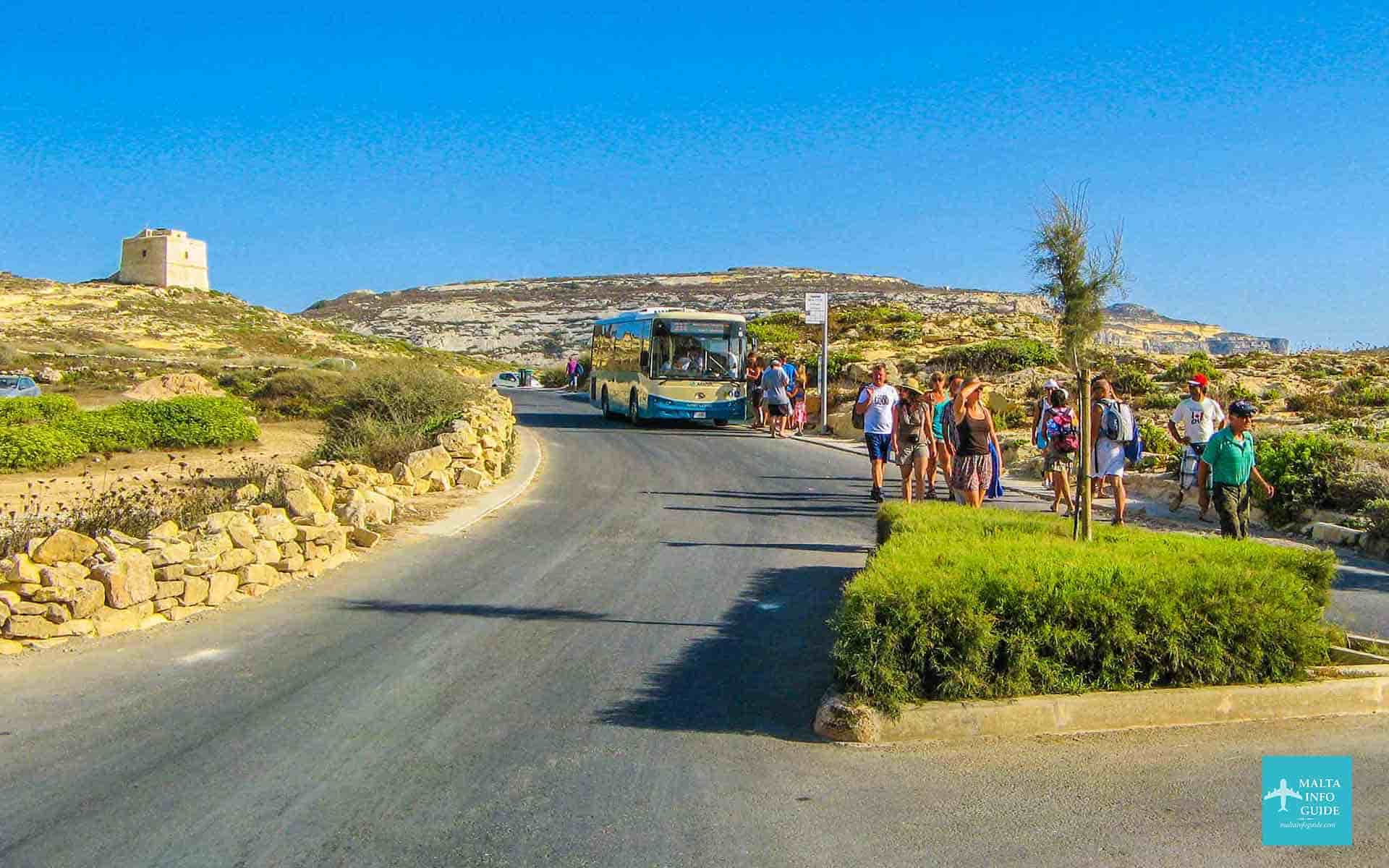 Driving near Dwejra Gozo
What to Expect on Malta’s Roads
Driving conditions can change quite quickly as you travel around Malta. Main routes include larger arterial roads and bypasses, but once you enter towns, villages, or older areas, you can find much narrower streets, tighter turns, and more confined junctions.
- Malta does not have conventional toll roads, so you will not normally pay a road toll as you travel around the islands. Valletta’s CVA charge is a separate access charge, which we explained in the parking section above.
- Some main roads are multi-lane dual carriageways, while others can narrow considerably as they approach residential or historic areas.
- Do not assume that the fastest-looking road is necessarily the quickest route. Traffic, roadworks and local congestion can affect journey times, even when the distance on the map looks short.
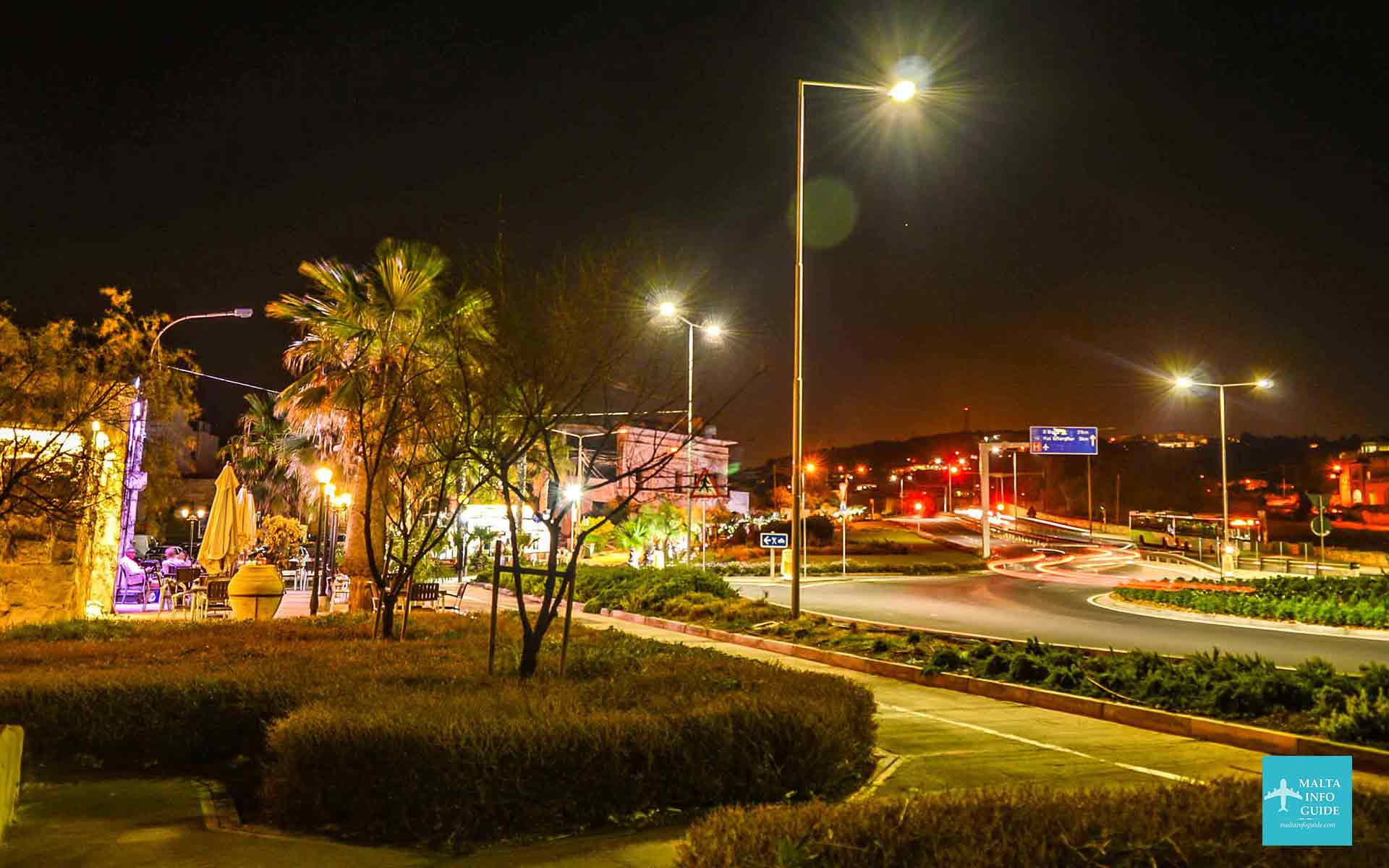 Night driving around Malta
Penalty Points in Malta
Malta operates a penalty-point system for driving offences. For a full Maltese driving licence, accumulating 12 or more penalty points within 12 months can result in licence revocation. Probationary Maltese driving licences are also subject to a 12-point limit during the three-year probationary period.
For visitors, the advice is simple: follow Malta’s road rules even when driving a rental car, as traffic offences can still lead to fines and other consequences.
Tips for Driving Safely in Malta
Once you know the main road rules, the next challenge is getting comfortable with Malta’s traffic, narrower streets, roundabouts and unfamiliar routes. Give yourself time to adjust, especially on your first drive, and avoid rushing just because distances on the map look short.
Navigation Apps and Getting Lost
Using a navigation app makes driving around Malta much easier, especially if you are unfamiliar with the villages, junctions, and smaller roads. Set your destination before you start driving so you don't have to use your phone while on the move.
- Google Maps is useful for general navigation, and you can download the Malta map area for offline use before your trip.
- Waze can be useful when you have a mobile data connection because it provides navigation along with traffic and road alerts.
- Whichever app you use, always follow road signs and access restrictions on the road itself rather than relying entirely on the app's suggested route.
If you miss a turn or take the wrong road, do not stop suddenly or block the road while checking your route. Continue until you can pull over somewhere safe, let the navigation app recalculate the journey and then continue when it is safe to do so.
Driving with Local Traffic
Driving styles vary from one person to another, so drive defensively and give yourself enough space to react, particularly while you are still getting used to Malta’s roads and junctions.
- Use your indicators clearly and in good time so other road users know what you intend to do.
- At roundabouts and busy junctions, do not assume that another vehicle will move exactly as you expect. Check its position and speed before proceeding.
- Keep a safe distance from the vehicle ahead and avoid feeling pressured to drive faster than you are comfortable with.
- If another driver is impatient, stay calm, follow the road rules and concentrate on your own driving rather than copying their behaviour.
Petrol Stations in Malta
You will find fuel stations across Malta and Gozo, so refuelling during your holiday is generally straightforward. However, do not assume every station has the same opening hours or services, especially if you need to refuel early in the morning or late at night.
Before a long journey or when returning a rental car with a full tank, it is sensible to check where the nearest station is. See our guide to petrol stations in Malta for more information and locations.
Traffic in Malta
Traffic can be one of the more frustrating parts of driving in Malta, particularly during busy commuting periods, school times, and in heavily travelled urban areas. Because the islands are small, a journey may look very short on the map but still take considerably longer when roads are congested.
Rather than relying on fixed “rush-hour” times, allow some extra time for important journeys and check current traffic conditions before setting off. This is particularly useful if you are driving to the airport, catching a ferry, or travelling somewhere with a timed booking.
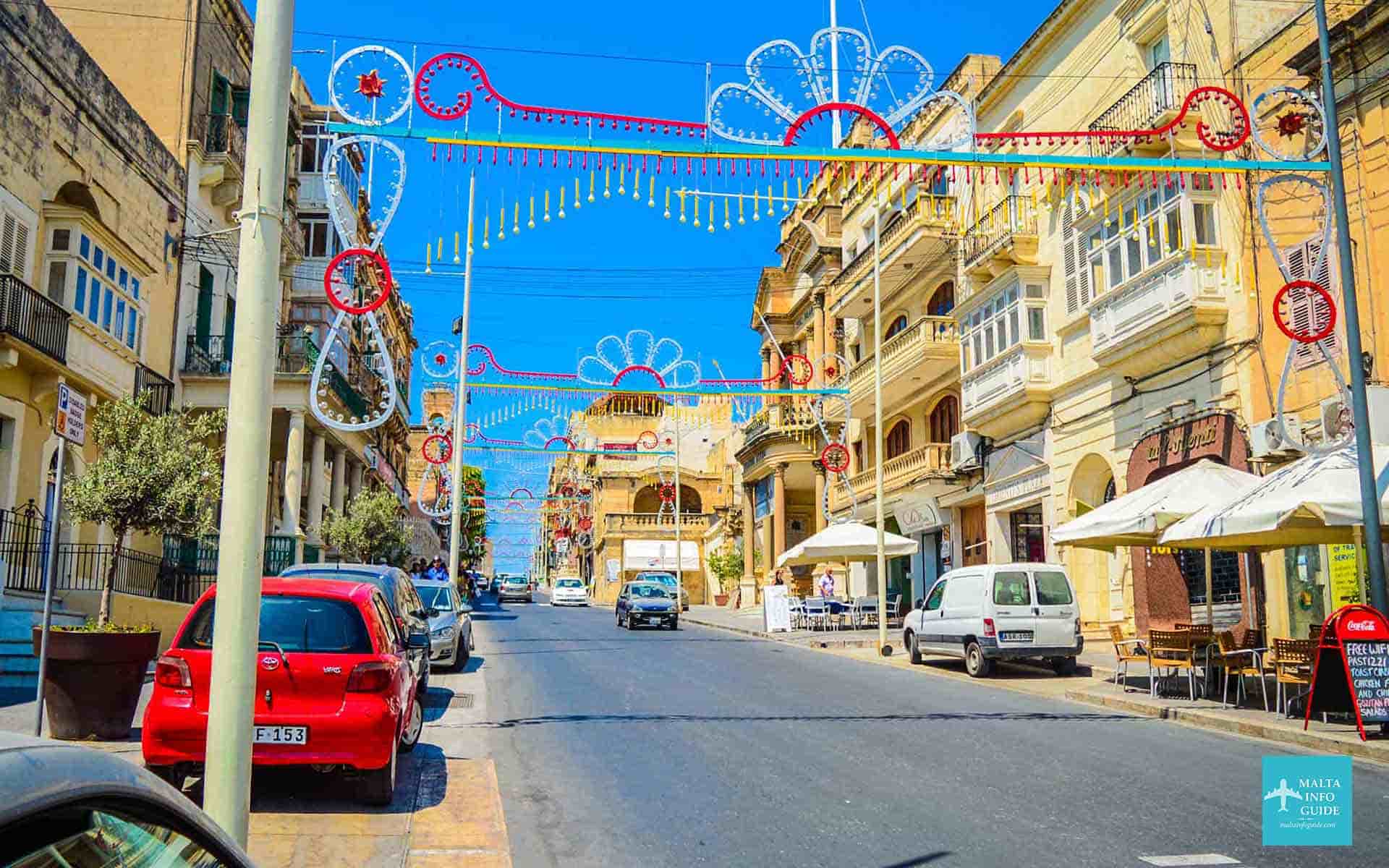 Driving through Victoria Gozo
Speed Cameras in Malta
Speed cameras are used on many roads in Malta, and you should always follow the posted speed limit, whether you can see a camera or not. Speed limits can change along the same route, so keep an eye on the road signs as you drive.
Signs warn drivers about speed-camera locations. To check where fixed cameras are located before your trip, see our guide to speed cameras in Malta.
Compare Car Rental Prices in Malta
Planning to rent a car in Malta? We use Discover Cars to compare rental companies, vehicle options and booking conditions in one place. Check the deposit, excess and insurance details carefully before booking, as these can vary between cars and suppliers.
What Driving in Malta Looks Like
If you would like to see what driving on Malta’s roads is actually like before you arrive, the video below follows a journey from Valletta towards Gozo. It gives you a useful visual impression of the roads, junctions, traffic and general driving environment you may encounter during your holiday.
The video is by Marko Ignjatovic
Alternatives to Driving in Malta
You can still explore Malta without renting a car. If you decide that driving is not right for your holiday, there are several other ways to travel around the islands.
- Buses: Malta has an extensive public bus network that serves towns, villages, beaches, and many popular attractions. See our guide to Malta public transport, check bus routes by locality, or see the available night buses if you plan to travel later in the evening.
- Passenger ferries: Ferries can be a convenient alternative for certain journeys, including services connecting Valletta with Sliema and the Three Cities, as well as services to Gozo. Routes and schedules can change, so check the current service before travelling.
- Hop-on-hop-off sightseeing: If your main aim is visiting popular attractions without driving yourself, Malta hop-on-hop-off tours and the Gozo sightseeing tour can be another option.
- Taxis and ride services: These can be useful when you want door-to-door transport without dealing with parking or collecting a rental car.
For a complete comparison of your options, see our guide to getting around Malta. If you are still planning the journey itself, our guide on how to get to Malta covers the main ways of reaching the islands.
Driving in Malta FAQs
What side of the road do you drive on in Malta?
What side of the road do you drive on in Malta?
Malta drives on the left-hand side of the road, as in the UK. Rental cars are normally right-hand drive, so visitors from countries that drive on the right should allow some time to adjust.
Is it easy to drive in Malta?
Is it easy to drive in Malta?
Driving in Malta is manageable for most confident drivers, but your first journey may take some adjustment. Narrow streets, roundabouts, traffic and finding parking are usually the main challenges rather than long driving distances.
Is it safe to drive in Malta?
Is it safe to drive in Malta?
You should approach driving in Malta as you would in any unfamiliar place: follow the road rules, keep within the posted speed limits, and drive defensively. Give yourself extra space and time while you get used to driving on the left and navigating unfamiliar roads.
Do you need a car in Malta?
Do you need a car in Malta?
Not necessarily. A rental car is useful if you want more flexibility, plan to explore widely, or want to reach places that are less convenient to reach by public transport. If most of your itinerary is already well served by buses, ferries or taxis, you may not need a car for your entire holiday.
How long does it take to drive around Malta?
How long does it take to drive around Malta?
There is no single reliable driving time for “going around Malta”. Distances are short, but traffic, roadworks, parking and the route you choose can make journey times vary considerably. For an important journey, check the current travel time on your navigation app shortly before leaving, rather than planning based on distance alone.
Can tourists drive into Valletta?
Can tourists drive into Valletta?
You can drive into parts of Valletta, but the Controlled Vehicular Access (CVA) system may apply, and some parking spaces are restricted. CVA charges and parking permission are separate matters, so always check road signs and the restrictions for the bay where you intend to park.
Can I use my foreign driving licence in Malta?
Can I use my foreign driving licence in Malta?
A valid licence issued by an EU Member State can be used in Malta. Visitors with licences issued outside Malta and the EU can generally drive for up to 12 months from their last entry into Malta, although individual circumstances may vary. An International Driving Permit does not replace your normal driving licence, so check the current requirements before travelling if you are unsure.
Disclaimer — We may earn a commission if you book via certain links on the website. No extra cost to you.
🎉 What’s On In Malta?
Updated for September • Local picks
Discover events, village feasts, fireworks, festivals and seasonal things to do this September.
📅 See What’s Happening This September ⛪ Malta Village Feasts 🌞 Things To Do In Malta 🗓️ Events By Month❤️ Enjoying Malta Info Guide?
If our free local guides made planning your Malta trip easier, you can say thanks with a small beer.
Written by two locals. Always free.

✈️ Planning your Malta trip?
✈️ Flights to Malta
Compare airlines and find the best prices today.
Check today’s cheapest flights →🏨 Hotels in Malta
Find available rooms, trusted stays and good locations for your Malta trip.
See available hotels this week →🚗 Car Rental in Malta
Compare prices, pick-up points and car options before you book.
Compare car rental prices →Planning London too?
Discover where to stay, what to do, and when to visit London.
Explore London Guide →Recent Articles


-
Malta Weather in October: Temperature, Rain & What to Wear
Oct 02, 26 03:15 PM
Planning a trip to Malta in October? See temperatures, rainfall, sea temperature, early and late October weather, what to wear and whether you can still swim. -
Malta Beach Facilities & Swimming Zones: What to Expect
Sep 27, 26 01:06 PM
Compare toilets, showers, sunbeds, lifeguards, accessibility, parking and swimming zones at popular beaches across Malta, Gozo and Comino. -
Best Rocky Beaches in Malta & Gozo: 7 Swimming Spots
Sep 27, 26 07:43 AM
Discover 7 of the best rocky beaches and swimming spots in Malta and Gozo, with local tips on access, swimming, safety, crowds and facilities.