- Home
- Getting Around Malta
- Malta Routes By Locality
Malta Bus Routes By Locality
Malta Bus Numbers for Localities and Key Destinations
Date Last Updated: 30th August 2026
Use this guide to find Malta bus numbers by locality and key destination. It covers towns and villages across Malta, along with key places such as Malta International Airport, Mater Dei Hospital, the University of Malta, Ċirkewwa Ferry Terminal, and other destinations.
For each locality, you can check useful buses to Valletta and Malta Airport, together with other routes that serve or pass nearby. Locality names are shown in English and Maltese where relevant.
🚌 Before you travel: This guide helps you find the right bus routes for each locality, but times, stops and routes can occasionally change because of diversions or service updates. For live bus arrivals, check Malta Public Transport's real-time information. To plan a complete journey with stops, connections and a map, use the Malta Public Transport Journey Planner.
Quick Navigation
Looking for a particular place? Use the A–Z links below to jump directly to the locality you need.
✍️ Written by Albert and Benjamin Magro, Malta locals sharing practical advice based on living on and exploring the islands.
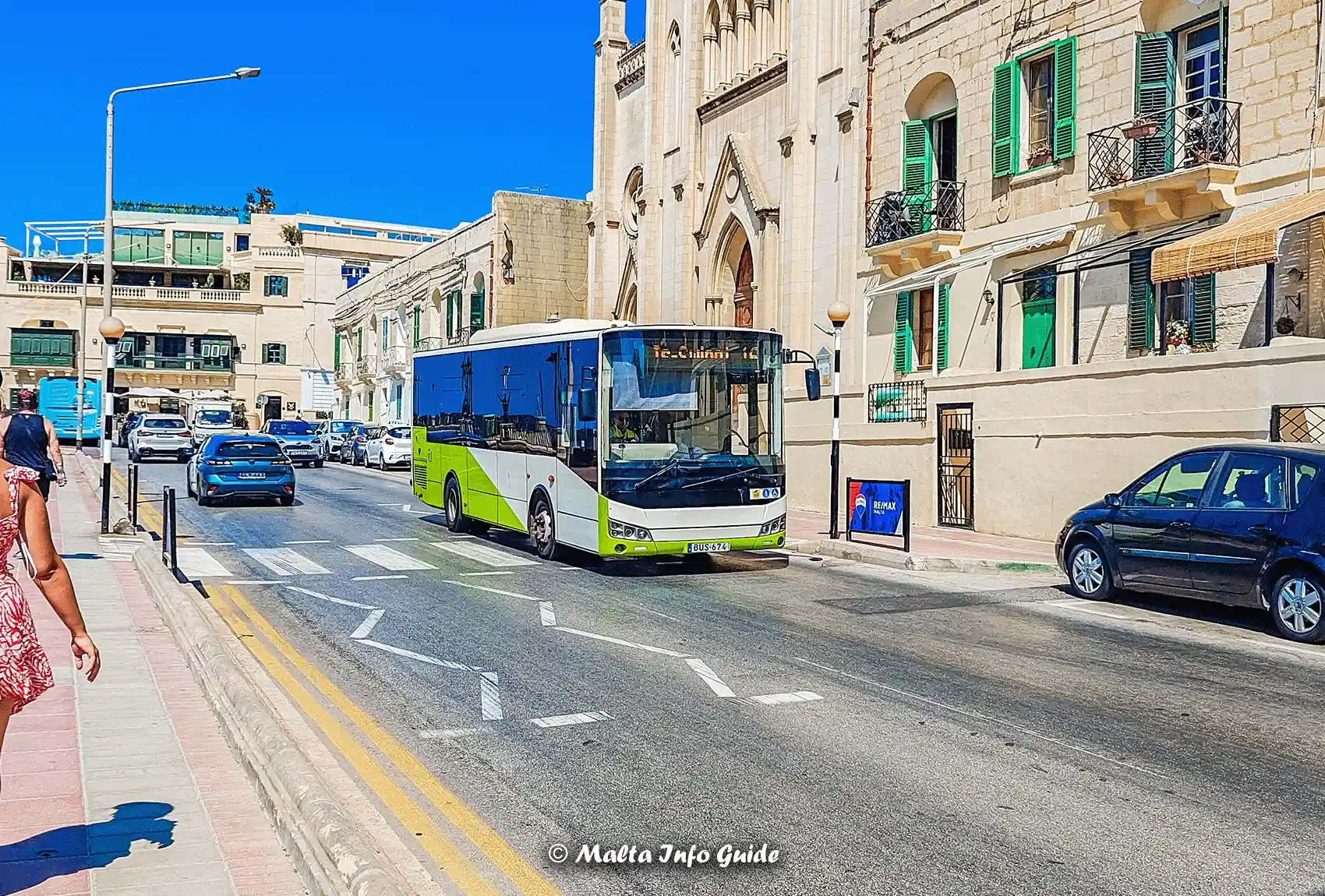 Malta Bus Through Balluta
Malta Bus Route Numbers
Already know your bus number? Use this quick guide to check the main places connected by some of Malta's most commonly searched bus routes. You can then use the locality sections further down this page to see which buses serve individual towns and villages.
| Bus Route | Main Connection |
|---|---|
| 31 | Valletta ↔ Buġibba |
| 42 | Valletta ↔ Ċirkewwa |
| 48 | Valletta ↔ Buġibba |
| 54 | Valletta ↔ Attard |
| 74 | Valletta ↔ Żurrieq |
| 92 | Valletta ↔ Marsaskala (Żonqor) |
| 135 | Marsaskala ↔ Mater Dei Hospital |
| 203 | Sliema ↔ Buġibba |
| 204 | Mater Dei Hospital ↔ Marsaskala |
| 250 | Valletta ↔ Għadira |
Looking for another bus number? Continue to the locality guide below, or check Malta Public Transport for the latest route, stops and timetable before travelling.
Popular Malta Bus Destinations
If you are travelling to one of Malta's main transport hubs or visitor destinations, use the sections below to quickly find the most useful bus connections. These include Malta International Airport, Valletta, Mater Dei Hospital, the University of Malta, Ċirkewwa Ferry Terminal and the Blue Grotto area.
Ċirkewwa Ferry Terminal – Gozo Channel
Visitor note: Ċirkewwa is the Malta-side ferry terminal for travelling to Gozo, so it is an important transport point for visitors continuing to Mġarr in Gozo.
- To Valletta: 41, 42, X300
- To Malta Airport: TD1
- To Buġibba: 221
- To Sliema: 222
- To Mater Dei Hospital: X299
- Other useful routes: 101 and N11
Mater Dei Hospital – L-Isptar Mater Dei
Visitor note: Mater Dei is Malta's main state-run acute general hospital and also one of the island's busiest bus connection points.
- To Valletta: 22, 25, 31, 32, 35, 122, 238, 250, 260, X300
- To Malta Airport: 208
- To Ċirkewwa: X299
- Other routes serving Mater Dei: 106, 110, 117, 120, 135, 181, 182, 204, 206, 209, 210, 211, 213, 218, 226, 233, 280, 300, 402, 403 and N120
Malta International Airport – Ajruport Internazzjonali ta' Malta
Visitor note: Malta International Airport is in Luqa and is the main arrival point for visitors flying to Malta. Several direct bus services connect the terminal with Malta's main visitor areas.
- To Valletta: TD4 or 88
- To St Julian's: TD2 or TD3
- To Sliema, Gżira and Msida: TD3
- To Ċirkewwa, Mellieħa, Buġibba and Rabat: TD1
- To Buġibba and Rabat: TD5
- To Mater Dei Hospital: 208
- To Buġibba: 214
- To Marsaskala: 119
- To Rabat: 201
The TD1–TD5 Airport Direct routes are particularly useful for visitors carrying luggage, while other regular services also connect the airport with different parts of Malta.
Planning the journey to Malta itself? See our guide to how to get to Malta.
Valletta – Il-Belt Valletta
Visitor note: Valletta is Malta's main bus hub, with the terminus just outside the City Gate. It is one of the easiest places to change buses for journeys across the island.
- To Malta Airport: TD4 or 88
- Valletta circular route: 133
- To Valletta Waterfront: 130
Valletta Bus Terminal: Zones and Bays
Valletta Bus Terminal is divided into three main zones, with individual numbered bays within each area:
- Zone A: mainly buses towards southern Malta, together with some services towards Pembroke and Buġibba
- Zone B: mainly buses towards northern Malta
- Zone C: mainly buses towards central Malta
Check the information screens when you arrive at the terminal for your current departure bay. The real-time panels show upcoming buses, departure times and bay numbers, which is more reliable than relying on a fixed bay list.
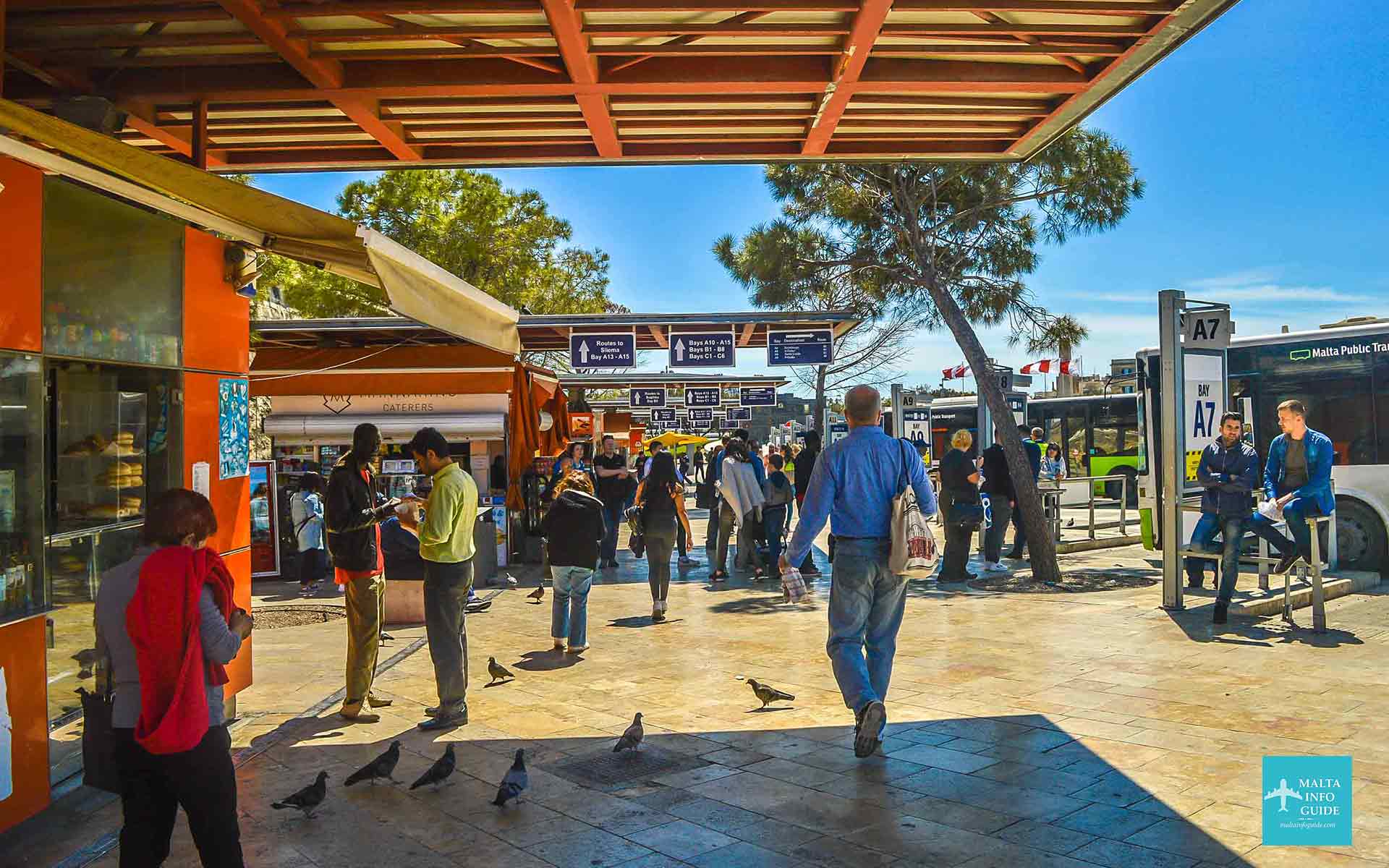 Valletta Main Bus Terminus
University Of Malta - Università Ta' Malta
Visitor note: The University of Malta's main campus is in Msida, next to Mater Dei Hospital. Look for the Università and Qroqq bus stops when planning your journey.
- To Valletta: 25, 31, 32, 35, 122, 238, 250, 260 and X300
- To Malta Airport: 208
- Towards Ċirkewwa: X300
- Other routes serving the University area: 106, 117, 120, 121, 135, 181, 182, 204, 206, 209, 210, 211, 213, 218, 226, 233, 280, 300, 402, 403 and N120
Wied iż-Żurrieq (Blue Grotto)
Visitor note: Wied iż-Żurrieq is the coastal area used to access the Blue Grotto and its boat trips, making it one of the most popular sightseeing stops in southern Malta.
- To Valletta: 74
- To Malta Airport: 201
- Towards Rabat: 201
- Bus routes serving the Grotto stop: 74, 201
Malta Bus Routes by Town and Village
The sections below list bus routes for towns and villages across Malta, including useful connections to Valletta and Malta Airport and the other buses serving each locality. Each section also includes a short Visitor note to help first-time visitors understand the area.
Attard - Ħ'Attard
Visitor note: Attard is a mainly residential central locality, best known to visitors for San Anton Gardens and its position between Valletta and the Rabat–Mdina area.
- To Valletta: 50, 51, 52, 53, 54 or 56
- To Malta Airport: 214 from selected Attard stops
- To Mater Dei Hospital: 106, 181 or 182, depending on your stop
- Other useful routes: 109, 109A, 186 and 202 from selected stops
Check your nearest stop before travelling, as Attard is served by several bus corridors and not every route listed above stops in every part of the locality.
Baħrija – Il-Baħrija
Visitor note: Baħrija is a small rural locality west of Rabat, better suited to countryside walks and a quieter side of Malta than to typical resort sightseeing.
- Towards Rabat: 109 or 109A
- To Valletta: Take 109 or 109A towards Rabat, then change to 50, 51, 52, 53 or 56
- To Malta Airport: Take 109 or 109A towards Rabat, then change to 201
- Bus routes serving Baħrija: 109 and 109A
Baħar iċ-Ċagħaq
Visitor note: Baħar iċ-Ċagħaq is a small coastal locality between Pembroke and Qawra, useful for Coast Road connections rather than as a major bus hub.
- To Valletta: 13, X300 or TD13
- To Malta Airport: Take 13, X300 or TD13 to Valletta, then change to TD4 or 88
- To Sliema: 212, 222 or 225
- Towards Ċirkewwa: 222 or X300
- Other routes serving Baħar iċ-Ċagħaq: 103, X1A, N11 and N212
Balzan – Ħal Balzan
Visitor note: Balzan forms part of Malta's Three Villages with Attard and Lija and is known for traditional houses, gardens and citrus trees.
- To Valletta: 50, 54 or 56
- To Malta Airport: 214
- To Mater Dei Hospital: 106, 181 or 182, depending on your stop
- Bus routes serving Balzan: 50, 54, 56, 106, 181, 182 and 214
Check your nearest bus stop before travelling, as not every route listed above serves every part of Balzan.
Birgu – Il-Birgu (Vittoriosa)
Visitor note: Birgu is one of Malta's historic Three Cities, with a waterfront, narrow historic streets and Fort St Angelo overlooking the Grand Harbour.
- To Valletta: 2
- To Malta Airport: Take 2 to Valletta, then change to 88 or TD4
- Towards Mater Dei Hospital: 213 from selected Birgu stops
- Other routes serving parts of Birgu: 3, 4, 124 and N3
Birkirkara
Visitor note: Birkirkara is a large central locality, known for St Helen's Basilica, its old railway station and traditional town centre.
- To Valletta: 22, 58 or 58A, with several additional Valletta routes available from other parts of Birkirkara
- To Malta Airport: 214 from selected Birkirkara stops
- To Mater Dei Hospital: 106, 181 or 182 from selected stops
- Other useful routes serving different parts of Birkirkara: 41, 42, 43, 44, 45, 46, 47, 48, 49, 50, 54, 56 and 280
Check the nearest stop before travelling, because Birkirkara covers a large area and not every route above serves every part of the locality.
Birżebbuġa
Visitor note: Birżebbuġa is a seaside town in southern Malta, best known to visitors for Pretty Bay, its waterfront and its proximity to the Freeport.
- To Valletta: 80, 82, 82A or 82B
- To Malta Airport: 119 from selected Birżebbuġa stops
- To Mater Dei Hospital: 210
- To Marsa Park & Ride: 205
- Night service to Valletta: N82
Check your nearest stop before travelling, as the 80 and 82-series routes do not all follow exactly the same route through Birżebbuġa.
Bormla (Cospicua)
Visitor note: Bormla is one of Malta's historic Three Cities, centred around Dockyard Creek and within easy reach of neighbouring Birgu and Senglea.
- To Valletta: 4
- To Malta Airport: Take 4 to Valletta, then change to 88 or TD4
- To Mater Dei Hospital: 213 from selected Bormla stops
- Towards Marsaskala and Senglea: 124
- Other routes serving parts of Bormla: 1, 2, 3 and N3
Check your nearest stop, because Routes 1, 2 and 3 serve different parts of the Three Cities rather than following the same route through Bormla.
Buġibba & Qawra
Visitor note: Buġibba and Qawra form one of Malta's main visitor areas, with a major bus terminal and useful connections across the island.
- To Valletta: 31, 45, 48 or TD13
- To Malta Airport: 214, TD1 or TD5
- To Sliema and St Julian's: 212
- To Rabat and Mdina: 186
- To Ċirkewwa: 221 or TD1
- Towards Golden Bay and Għajn Tuffieħa: 223
- To Mater Dei Hospital: 280
- Other useful services around Buġibba and Qawra: 203, N11, N48 and N212
Check whether your nearest stop is in Buġibba or Qawra, as some services use the terminal while others serve stops around the wider resort area.
Bulebel Industrial Estate
Visitor note: Bulebel is primarily an industrial estate, so it is more relevant for people travelling there for work or business than for sightseeing.
- To Valletta: 81 or 84
- To Mater Dei Hospital: 206
- To Malta Airport: Travel to Valletta on 81 or 84, then change to 88 or TD4
- Bus routes serving Bulebel: 81, 84 and 206
Burmarrad
Visitor note: Burmarrad is a small locality between Mosta and the St Paul's Bay area, with several useful north–south bus routes passing through it.
- To Valletta: 31, 41, 42, 45, 48 or 250
- To Malta Airport: 214 from selected Burmarrad stops
- To Sliema: 203
- To Rabat and Mdina: 186
- To Mater Dei Hospital: 280
- Night service towards Valletta/Buġibba: N48
Check your nearest stop before travelling, because the exact combination of services differs between Burmarrad stops.
Dingli – Ħad-Dingli
Visitor note: Dingli is a quiet village on Malta's western side, best known to visitors for the Dingli Cliffs, countryside and coastal views.
- To Valletta: 52 or 56
- To Malta Airport: 201 from selected Dingli stops
- To Mater Dei Hospital: 181
- Night service to Valletta: N52
- Bus routes serving Dingli: 52, 56, 181 and 201
Check your nearest stop before travelling, particularly for Route 201, as not every Dingli service follows exactly the same route through the locality.
Fgura – Il-Fgura
Visitor note: Fgura is a mainly residential locality in south-eastern Malta, with frequent bus connections towards Valletta, Paola and surrounding towns.
- To Valletta: 1, 90, 91, 92, 93, 94 or 95, depending on your stop
- To Malta Airport: Travel to Paola/Lourdes, then change to 88 or 214
- To Mater Dei Hospital: 204 from selected Fgura stops
- Towards Pembroke: 120 or 121
- Night services: N91 and N120 from selected stops
Check the exact stop nearest to you, as Fgura has several bus corridors and not every route listed serves every part of the locality.
Floriana – Il-Furjana
Visitor note: Floriana lies immediately outside Valletta, so many buses leaving or approaching the capital also stop in Floriana or at the nearby Bombi interchange.
- To Malta Airport: 88 from Floriana A, or TD4 from Bombi 3
- To Valletta: Many services continue directly into Valletta; if you are near City Gate, the main bus terminus is also within walking distance
- Towards Sliema, St Julian's and northern or central Malta: useful services from Floriana include 13, 13A, 14, 15, 16, 21, 31, 41, 42, 43, 44, 45, 46, 48, 49, 50, 54, 56, 238, 250 and 260, depending on the stop
- Towards southern Malta: useful services include 1, 2, 3, 4, 71, 72, 73, 74, 80, 81, 82, 82A, 82B, 83, 84, 85, 88, 90, 91, 92, 93, 94 and 95, depending on the stop
- Night services: several night routes also pass through Floriana, including N3, N13, N48, N52, N62, N71, N82 and N91
Check the exact Floriana or Bombi stop before travelling, because the routes serving Floriana A, B, C and the Bombi stops are not identical.
Fleur-de-Lys – Birkirkara
Visitor note: Fleur-de-Lys is a mainly residential area on the Birkirkara–Santa Venera side of central Malta and sits on several busy bus corridors.
- To Valletta: 42, 51, 52, 53 or 58, depending on your stop
- To Malta Airport: Take a Valletta-bound service and change in Valletta to 88 or TD4
- To Mater Dei Hospital: 182 from selected stops
- Other useful route: 110
- Night service towards Valletta and Dingli: N52
Check your nearest stop before travelling, because Fleur-de-Lys has several stops and the exact route combination differs between them.
Għaxaq – Ħal Għaxaq
Visitor note: Għaxaq is a mainly residential village in southern Malta, surrounded by agricultural land and centred around a traditional village core.
- To Valletta: 88
- To Malta Airport: 88
- To Mater Dei Hospital: 135 or 226, depending on your stop
- Bus routes serving Għaxaq: 88, 135 and 226
Check the direction shown on the bus, as Route 88 operates between Valletta and the airport through the Gudja/Għaxaq area.
Għargħur – Ħal Għargħur
Visitor note: Għargħur is one of Malta's smaller rural villages, known for its quiet setting and countryside character between Naxxar and Madliena.
- To Valletta: 46 or 260
- To Malta Airport: Take 46 or 260 to Valletta, then change to 88 or TD4
- Bus routes serving central Għargħur: 46 and 260
Gudja – Il-Gudja
Visitor note: Gudja is a traditional village immediately beside Malta International Airport, with narrow village streets and a historic centre overlooking the airport area.
- To Valletta: 88
- To Malta Airport: 88
- To Mater Dei Hospital: 226
- Other route serving parts of Gudja: 135
Route 88 is particularly useful in Gudja because it directly links the village with both Valletta and Malta Airport.
Gżira – Il-Gżira
Visitor note: Gżira is a busy waterfront locality between Msida and Sliema, with very frequent buses towards Valletta, Sliema and St Julian's.
- To Valletta: 13, 13A, 14, 15, 16, 21, 22, 24, 25 or 35, depending on your stop
- To Malta Airport: TD3 from selected Gżira stops
- To Buġibba: 203
- To Mater Dei Hospital: 233 from selected stops
- Other useful route through Gżira: 211
- Night service towards Valletta and St Julian's: N13
Check your nearest Gżira stop before travelling, as routes along the waterfront and those further inland do not all use the same stops.
Ħal Far
Visitor note: Ħal Far is primarily an industrial area in southern Malta, so its bus services are particularly useful for people travelling there for work.
- To Valletta: 82B from selected Ħal Far stops
- To Malta Airport: 119
- To Marsa Park & Ride: 205
- Bus routes serving Ħal Far: 82B, 119 and 205
Check your exact stop before travelling, as Ħal Far covers a sizeable industrial area and the three routes do not serve every stop identically.
Ħal Farruġ
Visitor note: Ħal Farruġ is a small settlement forming part of Luqa, close to Malta International Airport and several important southern bus corridors.
- To Valletta: 73 or 74
- To Malta Airport: TD1 or TD5 from selected stops
- To Mater Dei Hospital: 117 or 135, depending on your stop
- To Marsa Park & Ride: 205
- Bus routes serving Ħal Farruġ: 73, 74, 117, 135, 205, TD1 and TD5
Check your exact stop before travelling, as the routes use different parts of the Ħal Farruġ area.
Ħamrun – Il-Ħamrun
Visitor note: Ħamrun is a busy residential and commercial locality just outside Valletta, with very frequent bus services towards the capital.
- To Valletta: 42, 47, 51, 52, 53, 58, 58A, 61, 62, 63 or 64, depending on your stop
- To Malta Airport: Travel to Valletta, then change to 88 or TD4
- To Mater Dei Hospital: 122, 182, 209 or 213 from selected stops
- Night services: N52 and N62 serve parts of Ħamrun and Blata l-Bajda
Check your nearest stop before travelling, particularly around Blata l-Bajda, as different bus stops serve different route groups.
Iklin – L-Iklin
Visitor note: Iklin is a small, mainly residential central locality between Birkirkara, Lija, Naxxar and San Ġwann.
- To Valletta: 31 or 43
- To Malta Airport: Take 31 or 43 to Valletta, then change to 88 or TD4
- Bus routes serving central Iklin: 31 and 43
Isla – L-Isla (Senglea)
Visitor note: Senglea, officially L-Isla, is one of Malta's historic Three Cities, occupying a peninsula overlooking the Grand Harbour.
- To Valletta: 1
- To Malta Airport: Take 1 to Valletta, then change to 88 or TD4
- To Marsaskala: 124
- To Mater Dei Hospital: 213
- Bus routes serving central Senglea: 1, 124 and 213
Kalkara – Il-Kalkara
Visitor note: Kalkara is a Grand Harbour locality beside the Three Cities and is useful for visitors heading to Esplora and the Rinella area.
- To Valletta: 3
- To Malta Airport: Take 3 to Valletta, then change to 88 or TD4
- To Mater Dei Hospital: 213
- Night service to Valletta: N3
- Bus routes serving Kalkara: 3, 213 and N3
Kirkop – Ħal Kirkop
Visitor note: Kirkop is a small traditional village in southern Malta, conveniently located close to Malta International Airport.
- To Valletta: 71, 72 or 73
- To Malta Airport: 117, with 201 also available from selected Kirkop stops
- To Mater Dei Hospital: 117 or 218
- Night service towards Valletta and Żurrieq: N71
- Bus routes serving Kirkop: 71, 72, 73, 117, 201, 218 and N71
Check your nearest stop before travelling, as the exact combination of routes differs between stops in Kirkop.
Lija – Ħal Lija
Visitor note: Lija is one of Malta's Three Villages, with a traditional village centre, gardens and a long association with citrus trees.
- To Valletta: 41, 42, 44, 45, 46, 47, 48, 49, 54, 250 or 260, depending on your stop
- To Malta Airport: Take a Valletta-bound service, then change to 88 or TD4
- To Mater Dei Hospital: 106 or 280 from selected Lija stops
- Night service: N48 from selected stops
Check your nearest stop before travelling, because Wiji, Lija, Portelli and Cimiterju have different route combinations.
Luqa – Ħal Luqa
Visitor note: Luqa is a mainly residential southern locality immediately beside Malta International Airport, with several important bus routes passing through it.
- To Valletta: 71, 72 or 73
- To Malta Airport: TD3 from Ewropa; 214 also serves the airport corridor from selected Luqa stops
- Towards St Julian's: 211 from the Avjazzjoni area
- To Mater Dei Hospital: 117 or 218 from selected Luqa stops
- Night service towards Valletta and Żurrieq: N71
Check your nearest stop before travelling, because central Luqa and the stops beside the airport have quite different route combinations.
Madliena
Visitor note: Madliena is a quiet, mainly residential hillside area forming part of Swieqi, with valleys and elevated surroundings north of St Julian's.
- To Valletta: 16
- To Malta Airport: Take 16 towards St Julian's, then change to TD3
- Bus route serving Madliena: 16
Check your nearest Madliena stop before travelling, as Route 16 follows a local loop through the residential area.
Manikata – Il-Manikata
Visitor note: Manikata is a small rural village within the Mellieħa locality, close to Għajn Tuffieħa, Golden Bay and Malta's north-western countryside.
- To Valletta: 44
- To Malta Airport: Take 44 to Valletta, then change to 88 or TD4
- Towards Għajn Tuffieħa and Ġnejna: 44 or 101, depending on your destination
- Towards Ċirkewwa: 101
-
Bus routes serving Manikata: 44 and 101
Marsa – Il-Marsa
Visitor note: Marsa is a mainly urban and industrial locality near the inner Grand Harbour and an important bus interchange between central and southern Malta.
- To Valletta: 1, 2, 3, 4, 71, 72, 73, 80, 81, 82, 82A, 82B, 83, 84, 85, 88, 90, 91, 92, 93, 94 or 95, depending on your stop
- To Malta Airport: 208 from Marsa Park & Ride, or 88 from selected Marsa stops
- To Mater Dei Hospital: 117, 135, 204, 206, 209, 210, 218 or 226 from the Marsa Park & Ride area, depending on the stop
- Other useful connections: 110, 120 and 121 serve the Marsa Park & Ride area
Check the exact Marsa stop before travelling, as the routes at Marsa Park & Ride are very different from those serving other parts of the locality.
Marsaskala – Wied il-Għajn
Visitor note: Marsaskala is a coastal town in south-eastern Malta, popular for its bay, waterfront promenade and nearby St Thomas Bay.
- To Valletta: 91, 92 or 93
- To Malta Airport: 119
- To Mater Dei Hospital: 135 or 204
- To Senglea: 124
- Local circular service: 191
- Night service to Valletta: N91
Check your nearest stop before travelling, as Routes 91, 92 and 93 serve different parts of Marsaskala, including the centre, Żonqor and Jerma areas.
Marsaxlokk
Visitor note: Marsaxlokk is Malta's best-known traditional fishing village, famous for its colourful boats, waterfront restaurants and Sunday market.
- To Valletta: 81 or 85
- To Valletta on Sundays: TD10 is another useful direct option
- To Malta Airport: 119
- To Mater Dei Hospital: 210 from selected Marsaxlokk stops
- Bus routes serving central Marsaxlokk: 81, 85, 119, 210 and TD10
On Sundays, allow for possible route changes around Marsaxlokk because of the market and check the latest service information before travelling.
Mellieħa – Il-Mellieħa
Visitor note: Mellieħa is a large northern locality covering the hilltop village and Għadira Bay, with excellent bus connections towards Ċirkewwa.
- To Valletta: 41, 42, 49, 250 or X300, depending on your stop
- To Malta Airport: TD1 from selected Mellieħa stops
- To Ċirkewwa: 41, 42, 101, 221, 222, TD1 or X300, depending on your stop
- To Sliema: 222
- To Buġibba: 221
- To Mater Dei Hospital: X299 from selected stops
- Towards Ġnejna: 101
- Night service towards St Julian's and Ċirkewwa: N11
Check whether your stop is in Mellieħa village, Għadira or further north, as the locality covers a large area and the exact route combination differs considerably.
Mdina – L-Imdina
Visitor note: Mdina is Malta's historic fortified former capital, known as the Silent City, and is one of the island's most important sightseeing destinations.
- To Valletta: 50, 51, 52, 53 or 56, depending on the service
- To Malta Airport: 201
- To Sliema: 202
- To Buġibba: 186
- To Mater Dei Hospital: 181 or 182
- Night service towards Valletta: N52
Most buses use the Mdina or nearby Saqqajja stops outside the city walls, so check your exact stop before travelling.
Mġarr – L-Imġarr
Visitor note: Mġarr is a rural north-western village, useful for reaching Ġnejna, Għajn Tuffieħa and the surrounding countryside.
- To Valletta: 44 or selected 238 services
- To Mater Dei Hospital: 238
- To Malta Airport: Take 238 to Mater Dei, then change to 208
- Towards Ġnejna and Ċirkewwa: 101
- Bus routes serving Mġarr: 44, 101 and 238
Check the timetable for Route 238, as different 238 journeys operate between Mġarr, Mater Dei and Valletta.
Mosta – Il-Mosta
Visitor note: Mosta is a large central town, best known for the Mosta Rotunda, and sits on several important north–south bus routes.
- To Valletta: 31, 41, 42, 44, 45, 47, 48, 238, 250 or 260, depending on your stop
- To Malta Airport: 214 from selected Mosta stops
- To Mater Dei Hospital: 238 or 280 from selected stops
- To Sliema: 202 or 203
- Towards Rabat: 186
- Night service towards Valletta and Buġibba: N48
Check your nearest Mosta stop before travelling, as the Rotunda, Żokrija and other parts of Mosta are served by different combinations of routes.
Mqabba – L-Imqabba
Visitor note: Mqabba is a small southern village with a traditional centre and a long association with Malta's limestone quarrying industry.
- To Valletta: 72 or 74, depending on your stop
- To Mater Dei Hospital: 117 or 218
- To Malta Airport: 117
- Bus routes serving Mqabba: 72, 74, 117 and 218
Msida – L-Imsida
Visitor note: Msida is a busy central locality and university area, with frequent buses towards Valletta, Sliema, Mater Dei and northern Malta.
- To Valletta: 13, 13A, 14, 15, 16, 21, 22, 24, 25, 31, 35, 41, 43, 44, 45, 46, 48, 49, 50, 54, 56, 238, 250, 260, 300, X300 or TD13, depending on your stop
- To Malta Airport: TD3 from Kullegg
- Towards Sliema and St Julian's: several services are available from Msida, including 13, 13A, 14, 15, 16, 21 and TD3, depending on the stop and direction
- Night services: N13 and N48 from selected Msida stops
Check your exact stop before travelling, because the Msida waterfront, Kullegg and Qroqq areas have different route combinations.
Mtarfa – L-Imtarfa
Visitor note: Mtarfa is a small hilltop locality beside Rabat, known for its British-era military heritage and prominent clock tower.
- To Valletta: 51
- To Mater Dei Hospital: 182
- To Malta Airport: Take 51 towards Rabat, then change to 201
- Bus routes serving Mtarfa: 51 and 182
Naxxar – In-Naxxar
Visitor note: Naxxar is a large central locality with a traditional town centre and attractions such as Palazzo Parisio.
- To Valletta: 43, with 31, 46, 49 and 238 also available from selected Naxxar stops
- To Malta Airport: Take a Valletta-bound service, then change to 88 or TD4
- To Mater Dei Hospital: 238 or 280 from selected stops
- Towards Sliema: 202 or 203 from selected stops
- Towards Bidnija and Pembroke: 103
Check your nearest stop before travelling, as central Naxxar and the surrounding areas are served by different combinations of routes.
Paola – Raħal Ġdid
Visitor note: Paola is a busy southern town and transport interchange, best known to visitors as the location of the Ħal Saflieni Hypogeum.
- To Valletta: 1, 2, 3, 4, 81, 82, 82A, 82B, 83, 84, 88, 90, 91, 92, 93, 94 or 95, depending on your stop
- To Malta Airport: 88 or 214 from the Lourdes area
- To Mater Dei Hospital: 204, 206, 213 or 402 from selected Paola stops
- Towards St Julian's: 211
- Local Paola circular service: 401
- Other useful cross-island routes: 120 and 121
Lourdes is one of Paola's main bus interchange points, so check whether your route departs from Lourdes or another nearby Paola stop.
Pembroke
Visitor note: Pembroke is a mainly residential coastal locality beside St Julian's and Paceville, with a useful Park & Ride serving several cross-island routes.
- To Valletta: 14
- To Malta Airport: TD2 from Pembroke Park & Ride
- To Mater Dei Hospital: 233 from selected Pembroke stops
- Towards Rabat and Sliema: 202
- To Marsa Park & Ride: 110
- Towards Xgħajra: 120 or 121
- Towards Bidnija: 103
Check which Pembroke Park & Ride bay or local stop your service uses, as different routes serve different parts of the area.
Pietà – Tal-Pietà / Gwardamanġa
Visitor note: Pietà and Gwardamanġa form a central residential district between Valletta and Msida, with excellent bus connections along the main Valletta corridor.
- To Valletta: 13, 13A, 14, 15, 16, 21, 22, 24, 25, 31, 32, 35, 41, 43, 44, 45, 46, 47, 48, 49, 50, 54, 56, 238, 250, 260 or 300, depending on your stop
- To Malta Airport: Take a Valletta-bound service, then change to 88 or TD4
- To Mater Dei Hospital: 122 or 300 from selected Pietà and Gwardamanġa stops
- Night services: N13 and N48 from selected stops
Check your exact stop before travelling, as the waterfront Pietà stops and the higher Gwardamanġa stops have different route combinations.
Qormi – Ħal Qormi
Visitor note: Qormi is one of Malta's largest traditional towns, historically known as Città Pinto and particularly associated with traditional Maltese bread.
- To Valletta: 61, 62, 63 or 64, depending on your stop
- To Malta Airport: Travel towards Marsa Park & Ride, then change to 208
- To Mater Dei Hospital: 209 from selected Qormi stops
- Other routes serving the Qaddisin area: 110, 117, 120, 121, 135, 204, 206, 210, 218 and 226
- Night services: N62 and N120 from selected stops
Check your nearest stop before travelling, because central Qormi, Ħarifa and the Qaddisin/Marsa Park & Ride side have very different route combinations.
Qrendi – Il-Qrendi
Visitor note: Qrendi is a traditional southern village, while the wider locality also includes the Ħaġar Qim and Mnajdra archaeological sites.
- To Valletta: 72 or 74, depending on your stop
- To Malta Airport: 201 from the Hagar/Hassajtek area
- To Mater Dei Hospital: 117 or 218
- Towards Rabat and the Blue Grotto area: 201 from selected stops
Check your exact stop before travelling, as central Qrendi and the Hagar/Hassajtek side of the locality are served by different routes.
Qroqq Skate Park – Msida
Visitor note: Qroqq Skate Park is beside the University of Malta and Mater Dei area, making it a useful interchange for several cross-island routes.
- To Valletta: 24, 25, 31, 32, 35, 238, 250, 260, 300 or X300, depending on the Qroqq stop and direction
- To Malta Airport: 208 from nearby Università 2
- To Mater Dei Hospital: several routes serve the Qroqq–Mater Dei corridor, including 233, 280 and 300 from selected stops
- Towards Ċirkewwa: X300 from selected Qroqq stops
- Other useful services: 211, TD13 and X299 from selected Qroqq stops
Check the Qroqq stop number as well as the bus number, because Qroqq 1–5 serve different routes and directions.
Rabat – Ir-Rabat
Visitor note: Rabat lies immediately beside Mdina and is a major sightseeing area in its own right, with attractions including St Paul's Catacombs and the Domus Romana.
- To Valletta: 50, 51, 52, 53 or 56, depending on your stop
- To Malta Airport: 201
- To Sliema: 202
- To Buġibba: 186
- To Mater Dei Hospital: 181 or 182
- Towards Baħrija: 109 or 109A
- To Ta' Qali Park & Ride: 404
- Night service towards Valletta: N52
Check whether you are using Rabat, Mdina or Saqqajja stops, as several routes serve the wider Rabat–Mdina area but do not use exactly the same stops.
San Ġwann
Visitor note: San Ġwann is a mainly modern residential and commercial locality between central Malta and the Sliema–St Julian's area.
- To Valletta: 24, 25 or 35, with 22 and 238 also available from selected stops
- To Malta Airport: TD2 or TD3 from selected San Ġwann stops
- To Mater Dei Hospital: 25 or 35 from selected stops
- Towards Rabat and Sliema: 202
- Towards Buġibba and Sliema: 203
- Other useful routes: 110, 120 and 121 from selected stops
Check your nearest stop before travelling, as different parts of San Ġwann have quite different route combinations.
St Vincent de Paul Long-Term Care Facility
Visitor note: St Vincent de Paul is a long-term care facility in Luqa, rather than a separate town or village.
- To Valletta: 73 or 74
- To Malta Airport: 208; Route 117 also serves the airport from selected stops
- To Mater Dei Hospital: 117 or 135
- Towards Marsa Park & Ride and Birżebbuġa: 205
- Bus routes serving the Vincenz stops: 73, 74, 117, 135, 205 and 208
Check whether you need Vincenz 1 or Vincenz 2, as the route combinations differ between the stops.
Santa Luċija
Visitor note: Santa Luċija is a mainly residential southern locality, best known to visitors for the Chinese Garden of Serenity.
- To Valletta: 80 or 83
- To Malta Airport: 214 from the Pepprin/Inez area
- To Mater Dei Hospital: 226
- Towards Birżebbuġa: 80
Check your nearest stop before travelling, as Route 214 does not serve every Santa Luċija stop.
Santa Venera
Visitor note: Santa Venera is a central residential locality between Ħamrun and Birkirkara, with several useful bus corridors passing through it.
- To Valletta: 64, with 42, 47, 51, 52, 53, 58 and 58A also available from selected stops
- To Malta Airport: 214 from selected Santa Venera stops
- To Mater Dei Hospital: 181 or 182, depending on your stop
- Other useful route: 110 from the Ahmar area
Check your nearest stop before travelling, particularly around Fleur-de-Lys and Ferrovija, because the route combinations differ considerably.
St Julian's – San Ġiljan
Visitor note: St Julian's is one of Malta's main visitor areas, covering the Spinola Bay, Balluta and Paceville districts and offering frequent bus connections.
- To Valletta: 13A, with 13, 14 and 16 also available from selected stops
- To Malta Airport: TD2 or TD3
- Towards Rabat: 202
- Towards Buġibba: 212
- Towards Ċirkewwa: 222
- Towards Għajn Tuffieħa: 225
- To Mater Dei Hospital: 233 from selected stops
- Night services: N13 towards Valletta, N11 towards Ċirkewwa and N212 towards Buġibba from selected stops
Check whether your nearest stop is in St Julian's, Paceville, Balluta or the Swieqi side, as different services use different parts of the locality.
St Paul's Bay – San Pawl il-Baħar
Visitor note: St Paul's Bay is a large northern locality. This section is particularly useful for St Paul's Bay village and Xemxija, while Buġibba and Qawra are covered separately above.
- To Valletta: 41, 42, 49, 250 or X300, depending on your stop
- To Malta Airport: TD1 from selected Xemxija-area stops; 214 is available from the Burmarrad side
- To Sliema: 203, 212, 222 or 225 from selected stops
- To Ċirkewwa: 41, 42, 221, 222 or X300
- To Mater Dei Hospital: 280 or X299 from selected stops
- Night services: N11, N48 and N212 serve different parts of the wider locality
Check your exact stop before travelling, because St Paul's Bay, Xemxija, Buġibba and Qawra have different route combinations.
Safi – Ħal Safi
Visitor note: Safi is a small, mainly residential village in southern Malta, close to Żurrieq, Kirkop and Malta International Airport.
- To Valletta: 71 or 73
- To Malta Airport: 117
- To Mater Dei Hospital: 117 or 218
- Night service towards Valletta and Żurrieq: N71
- Bus routes serving Safi: 71, 73, 117, 218 and N71
Check your nearest stop before travelling, as the 117/218 and 71/73 services do not use every Safi stop identically.
Siġġiewi – Is-Siġġiewi
Visitor note: Siġġiewi is a traditional village in western Malta surrounded by extensive rural countryside and agricultural land.
- To Valletta: 62
- To Malta Airport: 201
- To Mater Dei Hospital: 209
- Towards Baħrija and Providenza: 109 or 109A
- Night service to Valletta: N62
Check your nearest stop before travelling, as Route 201 and the 109 services do not serve every Siġġiewi stop.
Sliema – Tas-Sliema
Visitor note: Sliema is one of Malta's main visitor areas, with a long waterfront promenade and excellent bus connections to Valletta, St Julian's and northern Malta.
- To Valletta: 13, 13A, 14, 15, 16 or 21, depending on your stop
- To Malta Airport: TD3 from selected Sliema stops
- To Rabat: 202
- To Buġibba: 203 or 212
- To Ċirkewwa: 222
- Towards Għajn Tuffieħa: 225
- To Mater Dei Hospital: 233 from selected stops
- Night services: N13 and N212 from selected Sliema stops
Check whether your nearest stop is at the Ferries, Chalet, Exiles or further along the waterfront, as different services use different parts of Sliema.
Smart City
Visitor note: Smart City is a modern business and commercial development beside Kalkara and the Xgħajra coastline.
- To Valletta: 3 or 94
- To Malta Airport: Take 3 or 94 to Valletta, then change to 88 or TD4
- Towards Pembroke: 120
- Night services: N3 and N120 from selected Smart City stops
Check whether you need Smart City 1 or Smart City 2, as the available services can differ by stop and direction.
Swatar – Is-Swatar
Visitor note: Swatar is a central residential area close to the University of Malta, Mater Dei Hospital and Birkirkara.
- To Valletta: 32
- To Mater Dei Hospital: 110 from selected Swatar stops
- To Malta Airport: Take 110 to Mater Dei, then change to 208
- Bus routes serving central Swatar: 32 and 110
Check your nearest stop before travelling, as Swatar stretches towards both Birkirkara and the University/Mater Dei area.
Swieqi / Tal-Ibraġ / Victoria Gardens
Visitor note: Swieqi and Tal-Ibraġ are mainly residential areas immediately inland from St Julian's and Pembroke, with several useful cross-island bus connections nearby.
- To Valletta: 16 from central Swieqi and Tal-Ibraġ; 13 or 14 are also available from selected stops closer to St Andrew's and Pembroke
- To Malta Airport: TD2 from Pembroke Park & Ride, or travel towards St Julian's and change to TD2 or TD3
- To Mater Dei Hospital: 233
- Towards Rabat: 202 from selected stops
- Towards Buġibba: 212
- Towards Ċirkewwa: 222
- Towards Għajn Tuffieħa: 225
- Other useful services: 110, 120 and 121 from selected stops
Check your nearest stop carefully, because central Swieqi, Tal-Ibraġ, St Andrew's and the Pembroke side have quite different route combinations.
Tarxien – Ħal Tarxien
Visitor note: Tarxien is a traditional southern locality best known to visitors for the Ħal Tarxien Prehistoric Complex, one of Malta's major prehistoric sites.
- To Valletta: 81, 82, 82A, 82B, 84, 85 or 88, depending on your stop
- To Malta Airport: 88; 214 is also available from selected Tarxien stops
- To Mater Dei Hospital: 206 from selected stops
- Local connection towards Paola: 401 from selected stops
- Night service towards Valletta: N82
Check your nearest Tarxien stop before travelling, as Neolitici, Tarxien, Witja and other stops have different route combinations.
Ta' Xbiex
Visitor note: Ta' Xbiex is a small central waterfront locality between Msida and Gżira, with frequent buses along the Valletta–Sliema corridor.
- To Valletta: 13, 13A, 14, 15, 16, 21, 22 or 35, depending on your stop
- To Malta Airport: Walk to Ponsonby in neighbouring Gżira for TD3, or travel to Valletta and change to 88 or TD4
- Towards Sliema: 15 or 21, depending on your stop and direction
- To Mater Dei Hospital: 233 from selected stops
- Night service towards Valletta and St Julian's: N13
Check your nearest stop before travelling, as Principessa, Rigord, Xatt and the waterfront stops do not all have the same routes.
Xgħajra – Ix-Xgħajra
Visitor note: Xgħajra is a small coastal village east of Żabbar, with a seafront promenade and Delle Grazie Battery among its main landmarks.
- To Valletta: 94
- To Malta Airport: Take 120 towards Mater Dei, then change to 208
- To Mater Dei Hospital: 120
- Towards Pembroke: 120 or 121
- Night service towards Pembroke: N120
- Bus routes serving Xgħajra: 94, 120, 121 and N120
Check your nearest stop before travelling, as some services continue through the Smart City side of Xgħajra while others use different local stops.
Żabbar – Ħaż-Żabbar
Visitor note: Żabbar is a large, mainly residential town in south-eastern Malta, conveniently placed between the Three Cities, Xgħajra and Marsaskala.
- To Valletta: 90, with 91 and 94 also available from selected stops
- To Malta Airport: Take 90 to Valletta, then change to 88 or TD4
- To Mater Dei Hospital: 204 from selected Żabbar stops
- Towards Pembroke: 120 or 121
- Towards Senglea and Marsaskala: 124
- Night services: N91 and N120 from selected stops
Check your nearest stop before travelling, as central Żabbar and the Xgħajra/Marsaskala side have different route combinations.
Żebbuġ – Ħaż-Żebbuġ
Visitor note: Żebbuġ is a large traditional town in central-western Malta, with an old village centre and strong connections towards Valletta and Rabat.
- To Valletta: 61
- To Malta Airport: TD1 or TD5 from Rohan
- To Mater Dei Hospital: 209
- Towards Rabat and Baħrija: 109 or 109A
- Bus routes serving central Żebbuġ: 61, 109, 109A and 209, with TD1 and TD5 serving Rohan
Check whether Rohan is convenient for you if travelling to the airport, as the Airport Direct routes do not pass through every part of Żebbuġ.
Żebbiegħ – Mġarr
Visitor note: Żebbiegħ is a small rural settlement within the Mġarr area, close to the Skorba prehistoric site and Malta's north-western countryside.
- To Valletta: 44 or 238, depending on your stop
- To Malta Airport: Take 44 or 238 towards Valletta, then change to 88 or TD4
- Towards Ċirkewwa: 101
- Towards Mġarr: 44, 101 or 238, depending on your stop
- Bus routes serving Żebbiegħ: 44, 101 and 238
Check your nearest stop, particularly around Mrejnu, Skorba and Temi, as the three routes do not all serve exactly the same stops.
Żejtun – Iż-Żejtun
Visitor note: Żejtun is a historic town in south-eastern Malta, with a traditional centre and a long association with olive cultivation and Maltese heritage.
- To Valletta: 84, with 80, 81 and 85 also available from selected stops
- To Malta Airport: 119 from selected Żejtun stops
- To Mater Dei Hospital: 135 or 206, depending on your stop
- Towards Marsaxlokk: 81 or 85 from selected stops
- Night service towards Valletta: N82 from selected stops
Check your nearest stop before travelling, as central Żejtun, Bir id-Deheb and the surrounding areas have different route combinations.
Żonqor – Marsaskala
Visitor note: Żonqor is the coastal end of Marsaskala, connected to the town's long waterfront promenade and quieter shoreline.
- To Valletta: 92
- To Malta Airport: Take 92 or 124 into central Marsaskala, then change to 119
- Towards Senglea: 124
- Local Marsaskala circular service: 191
- Bus routes serving Żonqor: 92, 124 and 191
Check your connection point in Marsaskala if travelling to the airport or elsewhere, as Routes 119, 135 and 204 serve central Marsaskala rather than the Żonqor terminus itself.
Żurrieq – Iż-Żurrieq
Visitor note: Żurrieq is a historic southern town, with the wider area including Wied iż-Żurrieq, the Blue Grotto viewpoint and traditional landmarks such as Xarolla Windmill.
- To Valletta: 71, 73 or 74, depending on your stop
- To Malta Airport: 117 or 201 from selected Żurrieq-area stops
- To Mater Dei Hospital: 117 or 218 from selected stops
- Towards Wied iż-Żurrieq and the Blue Grotto: 74 or 201
- Night service to Valletta: N71
Check your nearest stop before travelling, as central Żurrieq, Xarolla and the Wied iż-Żurrieq area have different route combinations.
Malta Towns and Villages Map
Use this map to see where Malta's main towns, villages and localities are located across the island. It can help you understand how the places listed in this bus-route guide relate to each other before planning your journey.
Disclaimer — We may earn a commission if you book via certain links on the website. No extra cost to you.
🎉 What’s On In Malta?
Updated for September • Local picks
Discover events, village feasts, fireworks, festivals and seasonal things to do this September.
📅 See What’s Happening This September ⛪ Malta Village Feasts 🌞 Things To Do In Malta 🗓️ Events By Month❤️ Enjoying Malta Info Guide?
If our free local guides made planning your Malta trip easier, you can say thanks with a small beer.
Written by two locals. Always free.

✈️ Planning your Malta trip?
✈️ Flights to Malta
Compare airlines and find the best prices today.
Check today’s cheapest flights →🏨 Hotels in Malta
Find available rooms, trusted stays and good locations for your Malta trip.
See available hotels this week →🚗 Car Rental in Malta
Compare prices, pick-up points and car options before you book.
Compare car rental prices →Planning London too?
Discover where to stay, what to do, and when to visit London.
Explore London Guide →Recent Articles


-
Christmas Pantos in Malta 2026/27 - Dates, Venues & Tickets
Sep 14, 26 12:07 PM
Find Christmas pantos in Malta and Gozo for 2026/27, with confirmed dates, venues, language, age guidance, booking status and official ticket links. -
Dog Friendly Beaches Malta & Gozo: 16 Official Locations
Sep 13, 26 04:09 AM
Find the 16 official dog friendly beaches in Malta and Gozo, plus the rules on where dogs can swim and what owners need to know before visiting. -
Xlendi Bay Gozo: Local Guide to Swimming, Beach & Tips
Sep 11, 26 03:26 PM
Local guide to Xlendi Bay in Gozo, with advice on swimming, the small beach, restaurants, parking, buses, summer crowds and who Xlendi suits best.