- Home
- Weather in Malta
- Weather in Malta in February
Weather in Malta in February
What Is Malta Weather Like in February?
February is still winter in Malta, so expect a mixture of sunny spells, wind, cloud and rain rather than dependable warm weather. On a sunny day, walking or sitting somewhere sheltered can feel lovely, but move into the shade or onto an exposed street or seafront and it can feel noticeably cooler. After sunset, the chill usually becomes more noticeable, especially when it is windy.
February can be a very enjoyable month for sightseeing, exploring Malta's towns, and walking in the countryside, particularly if you prefer to avoid the intense summer heat. It is not a month we would choose for a traditional beach holiday, and the weather can change quickly, so pack layers and keep some flexibility in your plans.
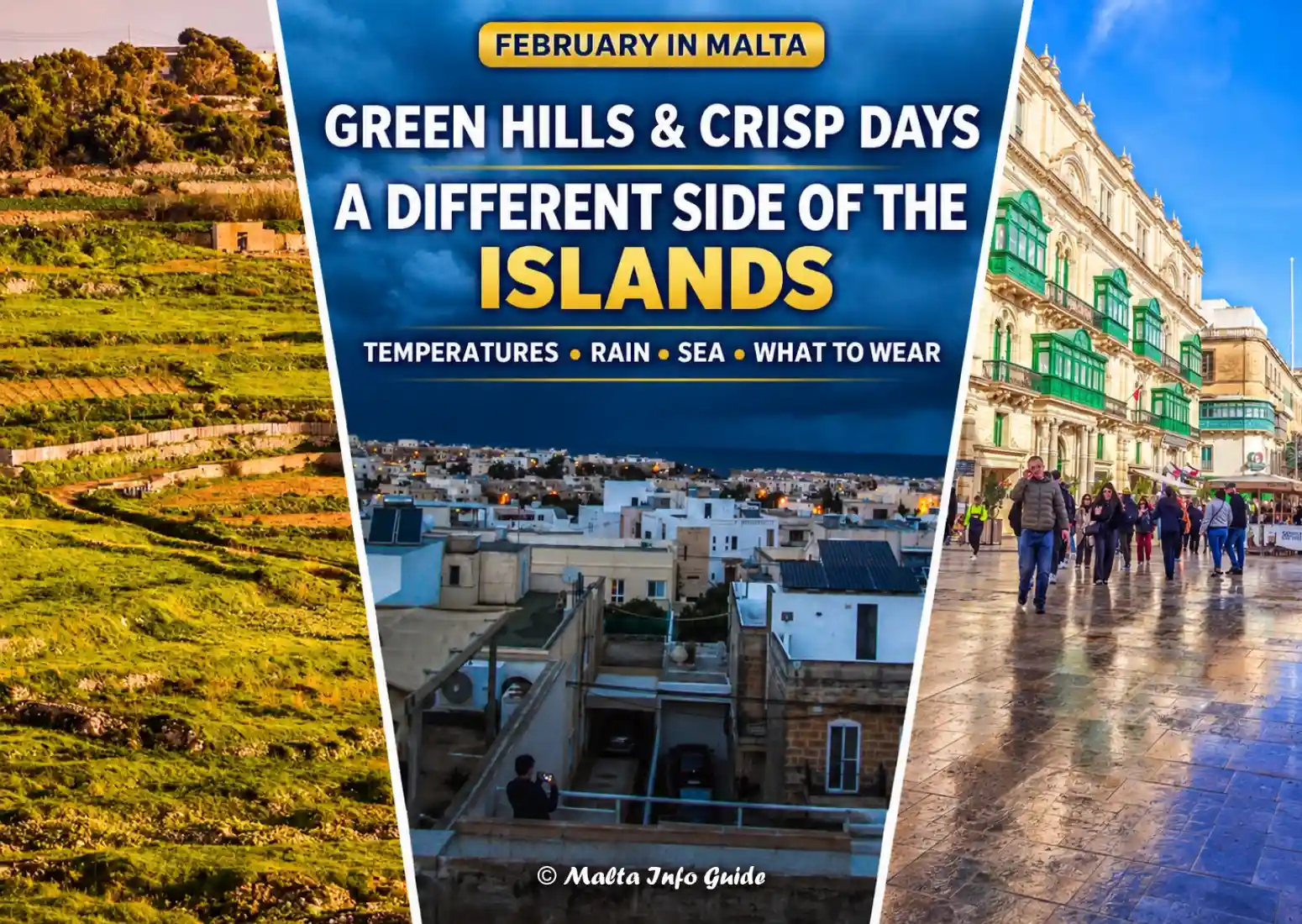 February weather across the Maltese Islands
✍️ Written by Albert and Benjamin Magro, Malta locals sharing practical advice based on living on and exploring the islands.
A Quick Glance Into Malta In February
- Statistics For February
- Early vs Late February Weather
- Is February a Good Time to Visit Malta?
- What Should I Wear & Pack?
- Things To Do During February
- Events in Malta in February
- What Happens When It Rains in Malta in February?
- Top Tours in Malta for February
- Can You Swim and Sunbathe in Malta in February?
- Weather in Malta in February FAQs
Malta Weather in February: Temperatures and Rainfall
- 🌡️ Average Daytime High: 15.7°C (60°F)
- 🌙 Average Nighttime Low: 9.6°C (49°F)
- 🌡️ Average Air Temperature: 12.6°C (55°F)
- 🌊 Average Sea Temperature: 15.1°C (59°F)
- ☀️ Average Maximum UV Index: 4 (Moderate)
- 🌧️ Average Rainfall: 69 mm (2.7 inches)
- 🔥 Highest February Temperature Recorded: 26.7°C (80°F), on 18th February 1960
- ❄️ Lowest February Temperature Recorded: 1.7°C (35°F), night of 7 to 8 February 1956
These are long-term averages, not a forecast for your particular holiday. February rainfall can vary considerably from year to year, so it is better to check the forecast shortly before travelling than to plan around the monthly average alone.
Sunshine and Daylight in February
- ☀️ Average Sunshine: 6 hours of bright sunshine per day
- 🕒 Daylight: 10h 26m early February → 11h 22m late February
- 🌅 Sunrise: 07:03 at the beginning of February | 06:34 by the end
- 🌇 Sunset: 17:29 at the beginning of February | 17:56 by the end
One noticeable change during February is the increase in daylight. By late February, the later sunset gives you more time for sightseeing and can make sunny afternoons feel more spring-like, though this does not mean the weather will necessarily be warmer or drier.
What Does Malta Weather Feel Like in February?
The temperature alone does not always tell you how February will feel in Malta. Sunshine, wind and how sheltered you are can make a big difference. On a sunny day, walking or sitting somewhere protected from the wind can feel very pleasant, while the shade, an exposed street or a seafront can feel noticeably colder.
The weather can also change during the same day. A bright morning may be followed by cloud, wind or a shower, while sunshine can return again later. Once the sun goes down, the temperature usually feels cooler quite quickly, particularly on windy evenings.
- 🌅 Morning: Often cool and fresh, with wind making exposed areas feel colder.
- ☀️ Sunny afternoon: Sheltered places can feel very pleasant and sometimes surprisingly mild in direct sunshine.
- 🌬️ Windy or cloudy conditions: Exposed areas can feel much colder than the temperature suggests.
- 🌙 Evening: The chill becomes more noticeable after sunset, especially when there is wind.
This difference is particularly noticeable along Sliema's promenade, exposed parts of Valletta and open coastal areas in Gozo. It does not mean one location is always colder than another; wind direction and shelter often make the biggest difference.
 Serene countryside views in Mgarr
Early vs Late February Weather
February does not suddenly change from winter to spring as the month progresses. From our experience living in Malta, the most noticeable difference is the increasing daylight, while temperatures and rainfall can still vary considerably throughout the month.
| February Weather | Early February | Late February |
|---|---|---|
| Daytime Feel | Sunny, sheltered places can feel pleasant, while wind and shade still feel distinctly wintry. | Some sunny afternoons can feel more spring-like, but winter weather is still possible. |
| Evenings | Cool after sunset, especially when windy. | Still cool, but the later sunset gives you more usable daylight. |
| Daylight | Shorter days. | Noticeably more daylight. |
| Rain & Wind | Rain and windy weather are both possible. | Still possible and not reliably drier than early February. |
| Swimming | The sea is cold and mainly suits regular winter swimmers. | Still cold; conditions matter more than the date. |
| Sightseeing | Very suitable on good weather days. | Equally suitable, with extra daylight as the main advantage. |
If you are choosing between early and late February, the extra daylight later in the month is the clearest advantage. We would not choose late February expecting guaranteed warmer, sunnier or drier weather.
Is February a Good Time to Visit Malta?
Yes, February can be a good month for sightseeing, history, countryside and a quieter atmosphere, especially if beaches and swimming are not your main priorities.
Reasons to Visit Malta in February
- Comfortable sightseeing: Valletta, Mdina and other historic areas are easier to explore without summer heat.
- Greener countryside: Winter rainfall makes February a good time for walks and rural scenery.
- Quieter tourist areas: Many places feel calmer than during the main summer season.
- Carnival: When Carnival falls in February, Valletta and Nadur become much livelier.
Things to Keep in Mind
- The weather can be changeable, with rain and wind possible.
- It is not a beach holiday month, although some winter swimmers still enter the sea.
- Boat trips depend on sea conditions, so some flexibility helps.
We recommend February for visitors who want to explore Malta rather than spend most of their holiday at the beach. If swimming, warm evenings and dependable sunshine are priorities, choose a warmer month.
What Should I Wear & Pack?
Packing for Malta in February is mainly about layers and protection from wind and rain. A sunny afternoon can feel pleasant, but evenings, shade and exposed coastal areas can feel considerably cooler.
A useful February packing list includes:
- Long trousers or jeans
- T-shirts or light tops for layering
- A jumper, sweatshirt or cardigan
- A jacket that gives some protection from wind and light rain
- Comfortable closed shoes with good grip for wet streets and sightseeing
- A compact umbrella or lightweight waterproof layer
- Sunglasses for bright winter sunshine
- A warmer coat or scarf if you feel the cold easily or expect to spend long evenings outdoors
Gloves and thermals are not normally essential for most visitors, although they may be useful if you are particularly sensitive to cold.
The best approach is to check the forecast shortly before travelling and pack clothes you can add or remove easily during the day.
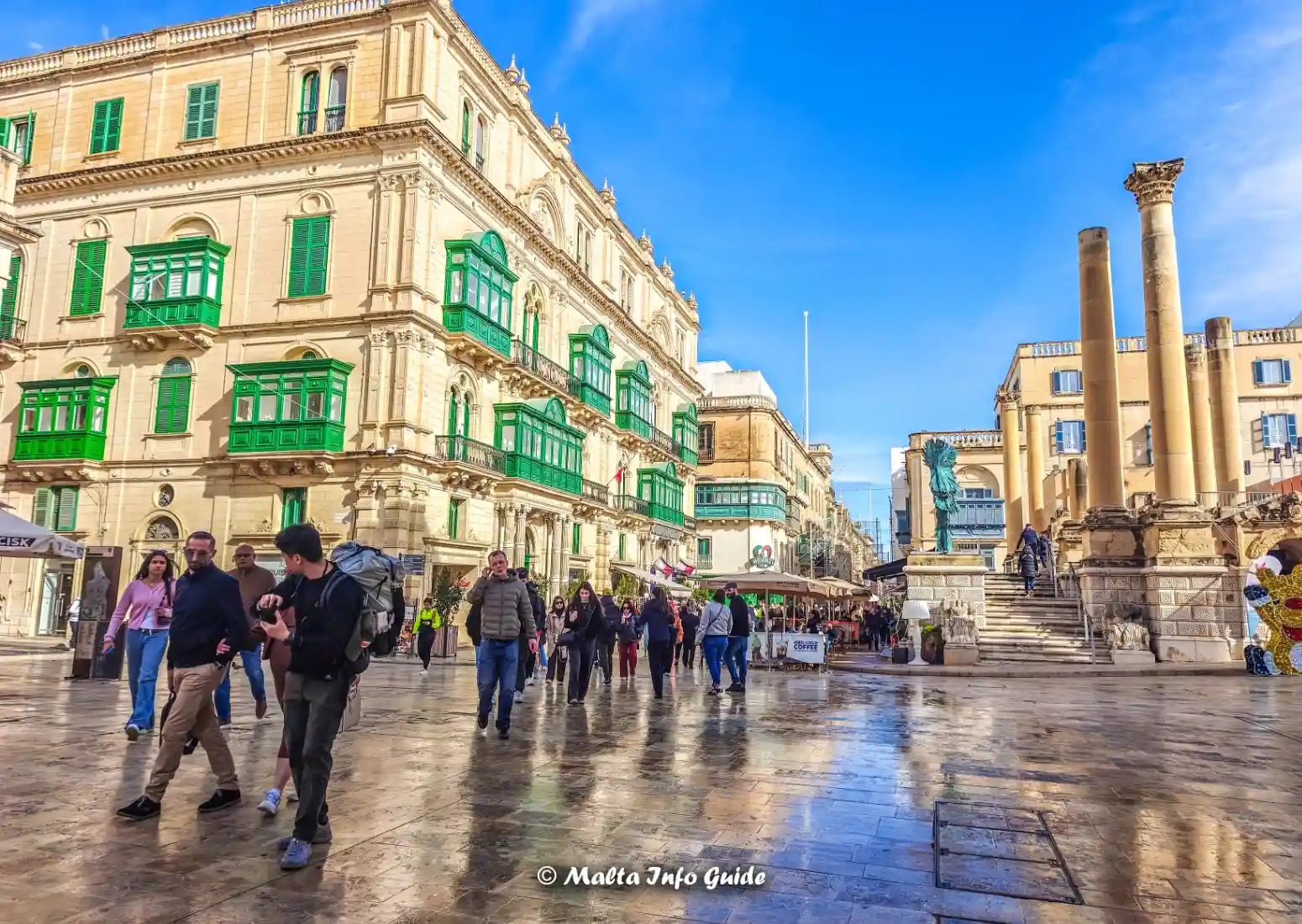 Valletta after a February shower.
Things To Do During February
February is a great month to explore Malta without the summer heat, especially if you plan outdoor activities around the forecast.
- 🥾 Walk in the countryside: Winter rainfall usually leaves the islands greener, making February a good time for a countryside walk. After heavy rain, some paths can be muddy or slippery.
- 🏛️ Explore Malta's historic towns: Spend time in Valletta, Mdina and the Three Cities, when walking temperatures are generally much more comfortable than in summer.
- ⛴️ Visit Gozo: A February day trip can work very well for sightseeing and countryside, but check the forecast and ferry information if strong winds are expected.
- 🚌 See more of Malta by sightseeing bus: The north route and south route are useful if you want to cover several areas without spending the whole day walking.
 People walking in Valletta near Teatru Rjal
Events in Malta in February
February can also bring some of Malta's better-known annual events and traditions.
- 🎭 Malta Carnival: Usually held in February or early March, with the main organised celebrations in Valletta and Floriana. Gozo also has strong Carnival traditions, especially the spontaneous Carnival in Nadur, Gozo.
- ⛪ Feast of St Paul's Shipwreck: Celebrated on 10 February and also a public holiday in Malta, with the main feast centred in Valletta.
- ❤️ Valentine's Day: Celebrated on 14 February, with restaurants, hotels and some attractions offering special events or packages.
- 🏃 Malta Marathon: One of Malta's major annual running events, normally held in February and attracting both local and international participants.
For current dates and more seasonal activities, see our guide to events and things to do in Malta during February.
 Malta’s Carnival magic at night in Floriana
What Happens When It Rains in Malta in February?
Rain in February does not necessarily mean losing an entire day. In our experience, you can get a heavy shower followed by sunshine, though some days have rain for several hours or most of the day and remain cloudy.
Heavy downpours can cause water to collect on some roads, while wet paving and steps can become slippery. If particularly bad weather is forecast, allow extra travel time and avoid planning a long countryside walk or exposed coastal activity.
It helps to keep a few flexible options available:
- Visit a museum, church or other indoor attraction
- Stop for lunch or coffee while a heavy shower passes
- Choose shopping, a cinema or another indoor activity
- Move a countryside walk or boat trip to a better weather day
A rain symbol in the forecast does not automatically mean a complete washout, but February is a month when keeping your itinerary flexible pays off.
 Stormy February skies over Malta.
Top Tours in Malta for February
Can You Swim and Sunbathe in Malta in February?
February is cold for swimming in Malta, with an average sea temperature of around 15.1°C (59°F). You may still see a few regular winter swimmers, but for most visitors and locals, February is not a swimming month. Sunbathing is more realistic on a sunny day, particularly on a sheltered sandy beach, but it depends heavily on the wind, cloud cover, and air temperature.
Can You Swim in February?
You can, but most visitors will find the sea cold. Sunshine, wind, and sea conditions also make a big difference: a calm, sunny day can feel much more inviting than a cloudy or windy one.
If swimming is an important part of your holiday, we would choose a warmer month rather than rely on February conditions.
Can You Sunbathe in February?
On a sunny, sheltered day, it can feel lovely to sit outside in the sun, especially away from the wind. However, we wouldn't plan a February holiday around traditional beach sunbathing, as cloud, wind, and cooler air can quickly change how warm it feels.
What Is the UV Like in February?
The average maximum UV Index is around 4, which is moderate. If you spend a long time outdoors on a clear day, sun protection can still be sensible, even if the air feels cool.
Check the weather in other months in Malta
See our complete Weather in Malta guide to compare conditions year-round.
Weather in Malta in February FAQs
How hot is Malta in February?
How hot is Malta in February?
The average daytime high is around 15.7°C (60°F), with an average nighttime low of about 9.6°C (49°F). Sunny, sheltered places can feel pleasantly mild, while wind and shade can make it feel considerably cooler.
What is the weather like at the end of February?
What is the weather like at the end of February?
There is noticeably more daylight by the end of February, and some sunny afternoons can feel more spring-like. However, late February is not guaranteed to be warmer or drier, and rain, wind and cool evenings are still possible.
Is Malta busy in February?
Is Malta busy in February?
Generally, February is much quieter than the summer months, particularly around beach areas. Valletta and Nadur, Gozo can become much busier during Carnival when it falls in February.
Does it rain all day in Malta in February?
Does it rain all day in Malta in February?
Sometimes, but not necessarily. February rain can range from a heavy shower followed by sunshine to several hours, or occasionally a mostly wet day. It is better to keep plans flexible rather than assume a rain symbol means the whole day will be lost.
Want To Share This Page On Pinterest? Pin It Here!


Disclaimer — We may earn a commission if you book via certain links on the website. No extra cost to you.
🎉 What’s On In Malta?
Updated for October • Local picks
Discover events, village feasts, fireworks, festivals and seasonal things to do this October.
📅 See What’s Happening This October ⛪ Malta Village Feasts 🌞 Things To Do In Malta 🗓️ Events By Month❤️ Enjoying Malta Info Guide?
If our free local guides made planning your Malta trip easier, you can say thanks with a small beer.
Written by two locals. Always free.

✈️ Planning your Malta trip?
✈️ Flights to Malta
Compare airlines and find the best prices today.
Check today’s cheapest flights →🏨 Hotels in Malta
Find available rooms, trusted stays and good locations for your Malta trip.
See available hotels this week →🚗 Car Rental in Malta
Compare prices, pick-up points and car options before you book.
Compare car rental prices →Planning London too?
Discover where to stay, what to do, and when to visit London.
Explore London Guide →Recent Articles


-
Weather in Malta in December 2026 | Temperatures & Tips
Oct 03, 26 05:55 AM
Planning Malta in December? See average temperatures, rainfall, sea temperature, what to wear, swimming conditions, Christmas weather and practical local tips. -
Malta Weather in November: Temperatures, Rain & What to Wear
Oct 03, 26 05:00 AM
Planning a trip to Malta in November? See temperatures, rainfall, early and late November weather, what to wear, whether you can swim and what to expect. -
Malta Weather in October: Temperature, Rain & What to Wear
Oct 02, 26 03:15 PM
Planning a trip to Malta in October? See temperatures, rainfall, sea temperature, early and late October weather, what to wear and whether you can still swim.