- Home
- Weather in Malta
- Weather in Malta in March
Weather in Malta in March
What Is the Weather Like in Malta in March?
March in Malta usually feels mild and increasingly spring-like. On a good day, direct sunshine can feel surprisingly warm, especially around midday, but shade and wind make it feel noticeably cooler. Once the sun goes down, you will normally want a jumper or jacket.
It is a great month for sightseeing, walking, and exploring Malta and Gozo while the countryside is still green. The islands are quieter than during the main summer season but do not feel closed or deserted. You may even find pleasant sunbathing conditions on calm, sunny days, although March is not a guaranteed hot beach holiday and the sea is still cold.
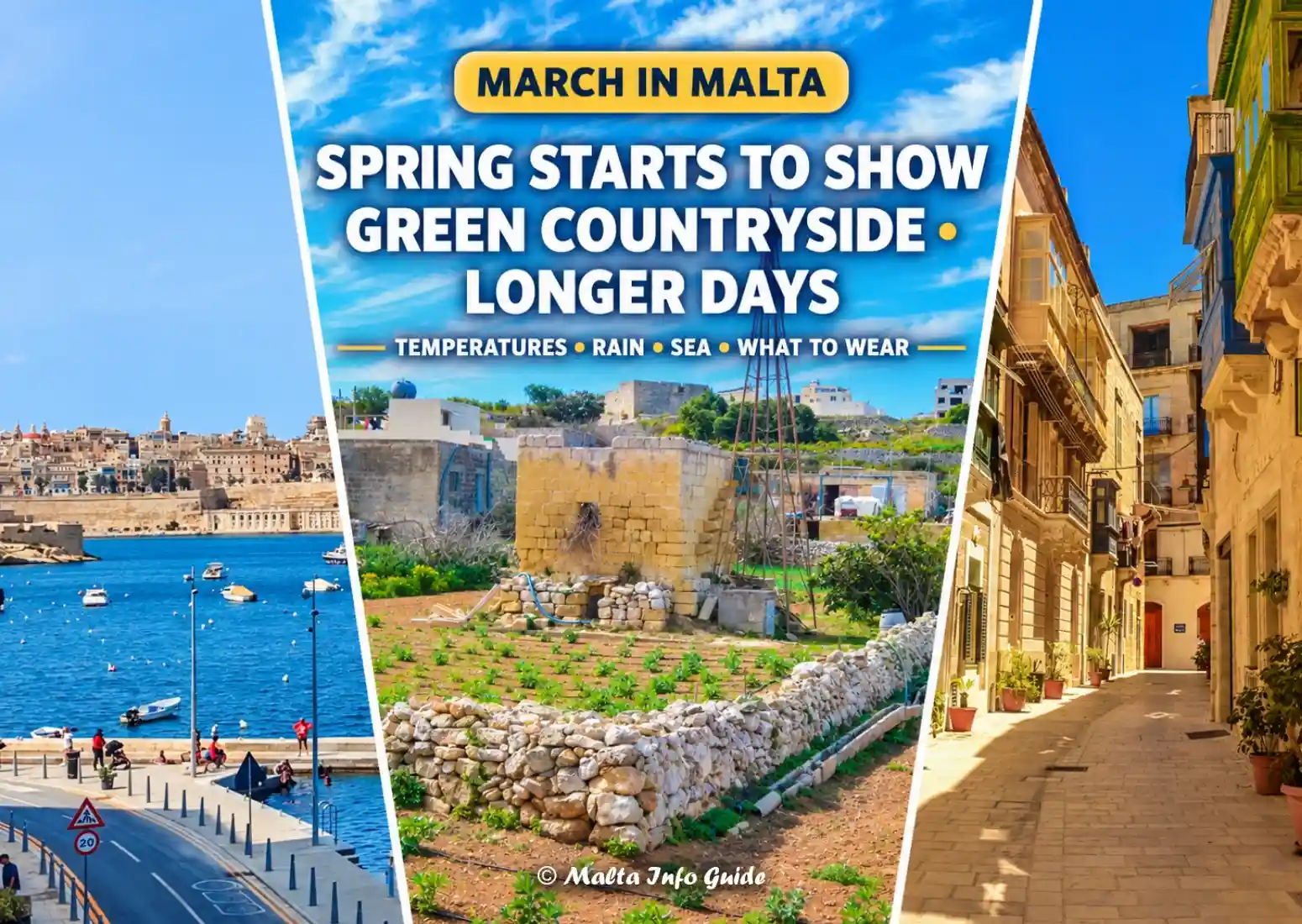 Spring starts to show across Malta in March
✍️ Written by Albert and Benjamin Magro, Malta locals sharing practical advice from living in and exploring the Maltese Islands.
Here Is What You Need To Know
- Statistics For March
- What Does March Weather Actually Feel Like?
- Early vs Late March Weather
- What Happens When It Rains in Malta in March?
- How Much Difference Does Wind Make in March?
- Can You Swim and Sunbathe in Malta in March?
- Is March a Good Time to Visit Malta?
- What Should I Wear & Pack?
- Things To Do During March
- March Highlights & Seasonal Events
- Top Tours In Malta For March
- Quick March In Malta Thoughts
- Malta in March Weather FAQs
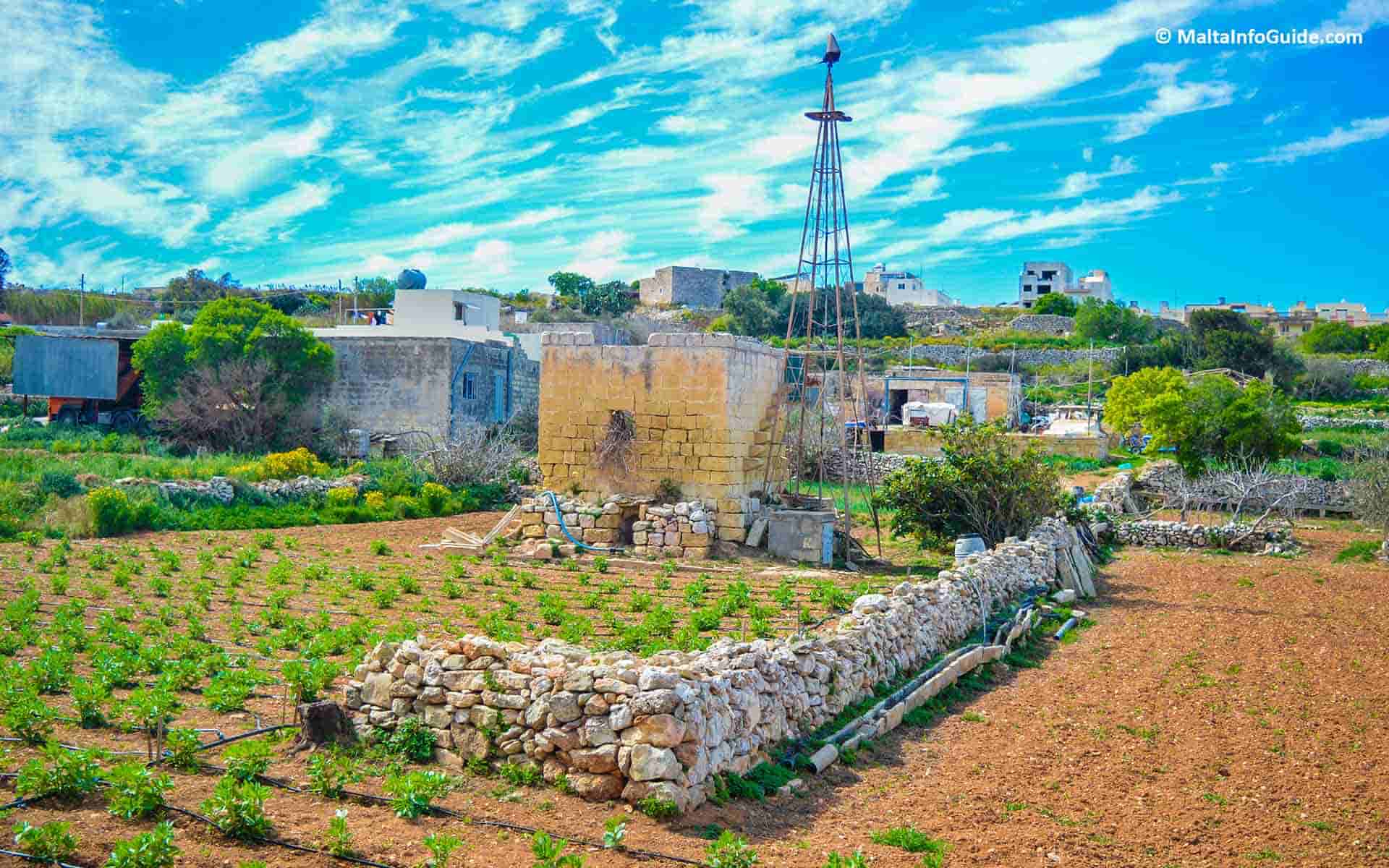 Traditional Maltese Farmhouse with old stone structures and a wind water pump
Statistics For March
- 🌡️ Average Daytime High: 17.4°C (63°F)
- 🌙 Average Nighttime Low: 10.9°C (52°F)
- 🌡️ Average Air Temperature: 14.1°C (57°F)
- 🌊 Average Sea Temperature: Around 15.4°C (60°F)
- ☀️ Average Maximum UV Index: 5 (Moderate)
- 🌧️ Average Rainfall: Around 40mm (1.6 inches)
These averages give a useful guide to typical March conditions, but the weather can feel very different depending on sunshine, wind and cloud.
March Temperature Extremes
Historical Malta Airport MetOffice records from 1947 to 2010 show:
- 🔥 Highest March Temperature Recorded: 33.5°C (92°F) — in March 2001
- ❄️ Lowest March Temperature Recorded: 2.2°C (36°F) — in March 1949
These extremes show what was possible during that historical record period, not what visitors should normally expect. For everyday trip planning, the average daytime high and nighttime low above are much more useful.
Sunshine Hours and Daylight
- ☀️ Average Sunshine: Around 7.2 hours of bright sunshine per day
- 🕖 Daylight: Around 11 hours 20 minutes at the beginning of March, increasing to around 12 hours 30 minutes by the end of the month
- 🌅 Sunrise: 06:35 early March • 06:50 end of March
- 🌇 Sunset: 17:55 early March • 19:20 end of March
Malta's clocks move forward by one hour on the last Sunday of March, which is why the sunrise and sunset times suddenly appear about one hour later towards the end of the month.
The noticeably longer days are one advantage of visiting Malta in March. By late March, you have considerably more daylight for sightseeing, countryside walks and spending time outdoors than during the winter months.
Sunshine hours and daylight are not the same thing. Malta averages around 7.2 hours of actual bright sunshine per day in March, while the total time between sunrise and sunset is considerably longer.
What Does March Weather Actually Feel Like?
The temperature alone does not tell the full story in March. Sunshine, shade and wind can completely change how the same day feels.
On a calm, sunny day, direct sunshine can feel surprisingly warm around midday, and you may be comfortable in a T-shirt or light top for a while. Move into the shade or an exposed area, however, and it can feel noticeably cooler.
Wind makes a particularly big difference. A sunny 17°C or 18°C day with little wind can feel very pleasant, while the same temperature with a strong breeze can feel quite cold. Once the sun goes down, you will normally want a jumper or jacket.
Overall, March feels like spring rather than summer. You can get some beautiful warm-feeling afternoons, but you should still expect cooler mornings, evenings and windy periods.
Early vs Late March Weather
March gradually becomes more spring-like as the month progresses. From our experience, the difference between the beginning and end of March can be quite noticeable, although individual weather days still vary.
| March Weather | Early March | Late March |
|---|---|---|
| Daytime Feel | Mild, but windy or cloudy days can still feel quite cool. | More spring-like, with a better chance of warmer afternoons. |
| Evenings | Usually cool; a jumper or jacket is useful. | Still cool, although generally a little milder. |
| Daylight | Around 11 hours 20 minutes. | Around 12 hours 30 minutes. |
| Time Outdoors | Good for sightseeing and walking when conditions are settled. | Longer days make outdoor sightseeing and cafés more enjoyable. |
| Countryside | Green after the winter rains. | Still green, with more spring colour appearing. |
| Overall Feel | A mix of late winter and early spring. | Noticeably more spring-like, but still changeable. |
Late March usually gives you a better chance of warmer afternoons and longer periods outdoors, but it is still not guaranteed summer weather. Wind, cloud and rain can make individual days feel considerably cooler at any point in the month.
If your main priority is sightseeing, walking and exploring Malta and Gozo, both early and late March can work very well. Late March simply tends to offer longer days and a stronger spring feel.
 A peaceful countryside walk in Malta during March
What Happens When It Rains in Malta in March?
March rain can vary quite a lot. In our experience, you may get a short, heavy shower, a few unsettled hours, or occasionally a much wetter day.
The weather can also change within the same day. You can have rain followed by sunshine, so a rain symbol in the forecast does not automatically mean losing an entire sightseeing day.
If unsettled weather is forecast, keep your plans flexible. You could:
- Visit museums, churches or historic interiors during the wetter part of the day
- Move a countryside or coastal walk to a drier period
- Stop for lunch or coffee while a heavy shower passes
- Check boat trips again before travelling, especially when rain is accompanied by strong wind
- Allow extra travel time if heavy rain affects roads or traffic
March works best when you avoid planning every outdoor activity around a fixed timetable. Use the better weather periods for walking, coastal areas and boat trips, and keep a few indoor options available.
How Much Difference Does Wind Make in March?
Wind can make a big difference to how March weather feels in Malta. A sunny 17°C or 18°C day with little wind can feel very pleasant, while the same temperature in a strong breeze can feel considerably colder.
You will notice this most in exposed coastal and open areas, including:
- Sliema seafront, particularly when the wind is coming directly off the sea
- Dingli Cliffs and exposed countryside
- Mellieħa and northern coastal areas
- Parts of Valletta and the Grand Harbour
- Open countryside and coastal areas in Gozo
Sheltered streets can feel much warmer than an exposed promenade or cliff top on the same day.
If you are planning a coastal walk, Gozo day trip or boat excursion, check the wind forecast as well as the temperature. In March, wind can affect not only how comfortable the day feels but also sea conditions and boat trips.
Can You Swim and Sunbathe in Malta in March?
March is not normally a beach swimming month in Malta. Both the air and sea are still cool, and most people will not be swimming. You may occasionally see regular year-round swimmers in the water, but this is not typical.
Sunbathing is a different story. As March progresses, sunny, sheltered days become more pleasant, and you will increasingly see people sitting or lying in the sun around beaches, rocky coastlines, and promenades.
Is It Warm Enough to Swim in March?
The average sea temperature is only around 15°C to 16°C (59°F to 61°F), so the water will feel cold to most visitors.
Some Maltese people swim year-round, but they're usually regular swimmers already accustomed to colder water. In our experience, March is not a month when most people head to the beach specifically to swim.
Sea temperature is only part of the picture. Sunshine, air temperature, wind and sea conditions all affect how inviting the water feels. Even on a bright day, the sea can still feel very cold.
If swimming is one of the main reasons for your holiday, we would not choose March expecting regular sea swimming.
Can You Sunbathe in Malta in March?
Yes, and this becomes increasingly realistic during March, particularly on sunny days with little wind.
Around midday, direct sunshine can feel surprisingly warm, and on good days you may see people relaxing in the sun on beaches, rocky swimming areas, promenades and outdoor terraces.
Late March generally gives you a better chance of pleasant sunbathing conditions than early March, but it is still weather dependent. Wind, cloud, and cooler spells can quickly make sitting by the sea uncomfortable, so treat sunbathing as a possibility rather than a daily guarantee.
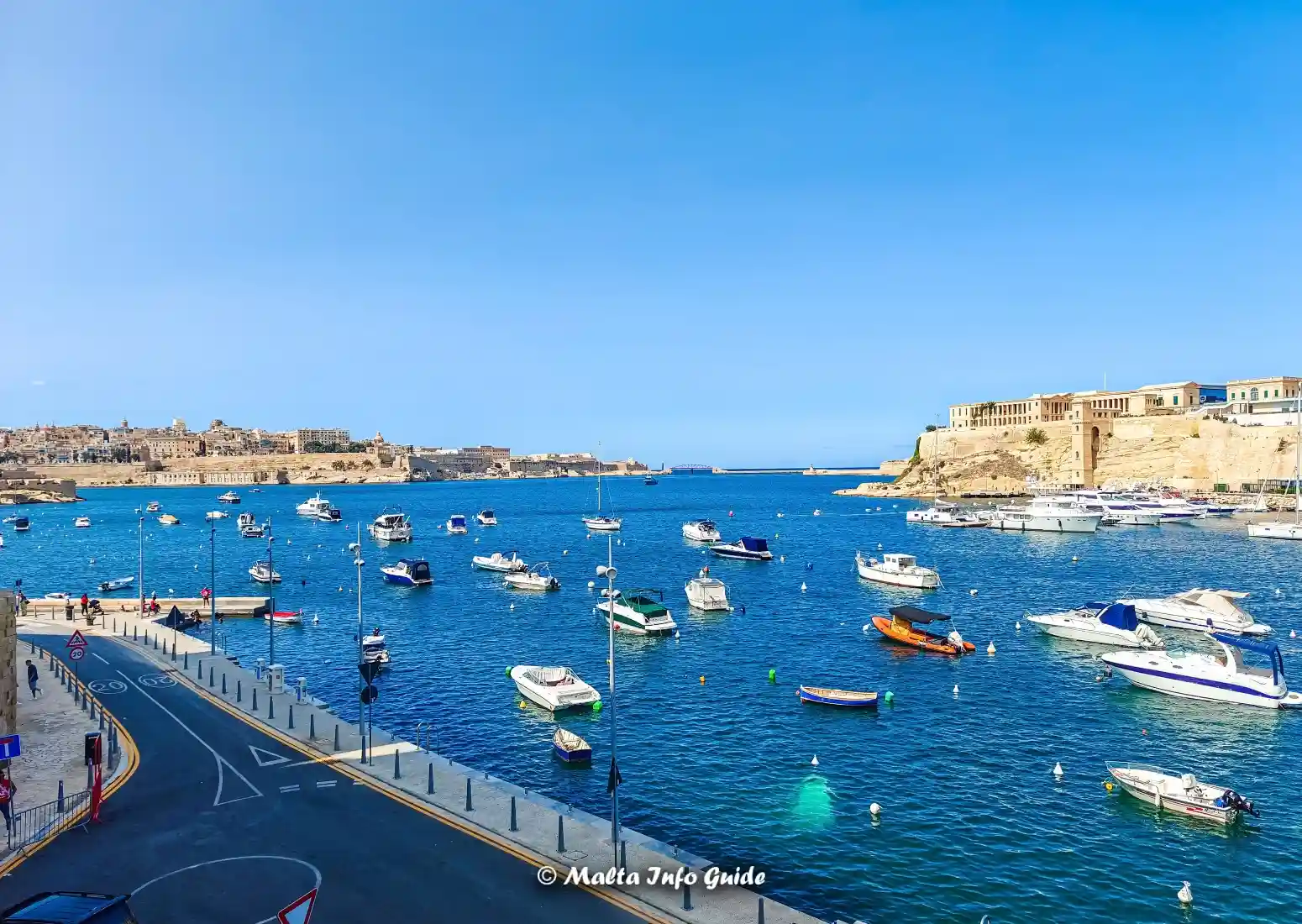 Kalkara Creek in the Grand Harbour on a bright March day
Is March a Good Time to Visit Malta?
Yes, especially if your main interests are sightseeing, walking, history and exploring Malta and Gozo without the intense summer heat.
March is one of the months when the islands still feel very green, and the cooler temperatures make it much easier to spend long periods outdoors.
Reasons to Visit Malta in March
- Comfortable sightseeing: Valletta, Mdina, Rabat and the Three Cities are much easier to explore than during the hottest summer months.
- Excellent for walking: Malta and Gozo are normally green after the winter rains, making countryside and coastal walks particularly enjoyable.
- Good for a Gozo day trip: The island is ideal for sightseeing and exploring on calm, dry days.
- Quieter than summer: Malta is active rather than deserted, but the main attractions generally feel less crowded than during peak season.
- Longer days: Daylight increases noticeably through March, giving you more time for outdoor sightseeing.
- Pleasant outdoor weather on good days: Sunny, sheltered afternoons can feel very comfortable for cafés, promenades and spending time outside.
 Traditional Maltese streets of Birgu, also known as Vittoriosa
Check Hotels In Malta Rates For This Month
- Find good rates for hotels in Malta on Booking.com.
Things to Keep in Mind
- The weather is still changeable: Rain, clouds, and wind can affect some days.
- It is not a guaranteed beach month: You may get excellent sunny weather, but you can't rely on daily sunbathing.
- The sea is still cold: Swimming is possible for some people, but March is not a typical warm-water swimming month.
- Evenings are cool: A jumper or jacket is usually useful after sunset.
- Wind matters: Exposed coastal areas can feel considerably colder than sheltered streets.
We recommend March most for visitors who want a sightseeing and outdoor holiday with comfortable temperatures and spring scenery.
If your main priority is guaranteed hot weather, warm sea and regular beach days, March is not the best month to choose.
What Should I Wear & Pack?
Packing for Malta in March is mainly about layers.
During the day, we usually wear long trousers with a T-shirt, a long-sleeved top, or a light jumper, or even a jacket, depending on the weather. On a sunny, sheltered afternoon, you may end up removing a layer, but wind and cloud can make the same temperature feel much cooler.
For evenings, bring a jumper or light to medium jacket, as temperatures normally feel noticeably cooler after sunset.
A useful March packing list includes:
- T-shirts and light tops
- Long-sleeved tops
- A light jumper or cardigan
- A light to medium jacket
- Long trousers or jeans
- Comfortable walking shoes
- A lightweight waterproof jacket
- A compact umbrella
- Sunglasses
- Swimwear, if your accommodation has a pool or you are accustomed to cold water swimming
You do not normally need heavy winter clothing, but bringing only summer clothes will leave you unprepared for cooler, windy or wet days.
The best approach is to check the forecast shortly before travelling and pack clothes you can layer.
Things To Do During March
March is ideal for sightseeing, walking, and exploring Malta and Gozo, with comfortable temperatures and countryside that is usually still green.
- 🥾 Walk in the countryside: March is one of the nicest months for exploring Malta's best hiking trails.
- 🏛️ Explore historic Malta: Valletta, Mdina, Rabat and the Three Cities are comfortable to discover on foot before the summer heat arrives.
- 🌊 Visit the coast: On a bright, calm day, places such as the Blue Grotto and Dingli Cliffs are excellent choices.
- 🚗 Spend a day in Gozo: Spring scenery and milder temperatures make March particularly suitable for exploring villages, historic sites and countryside.
- 🍽️ Enjoy Maltese food: Cooler days are perfect for slowing down over traditional dishes such as rabbit, fresh fish and pastizzi.
For plenty more ideas, see our complete guide to things to do in Malta.
Hiring A Car? Check The Best Rates
- Looking to hire a car for your holiday? Check Discover Cars for rates.
March Highlights & Seasonal Events
March brings a mix of music, religious traditions and national celebrations across Malta.
- 🎵 Mużika Mużika: Malta's national festival of Maltese music, usually held during March.
- ☘️ St Patrick's Day – 17 March: St Julian's is the main centre of Malta's lively St Patrick's Day celebrations.
- ⛪ Feast of St Joseph – 19 March: A public holiday in Malta, with Rabat particularly associated with traditional celebrations.
- ✝️ Easter: When Easter falls in March, visitors may experience Good Friday processions and Easter Sunday celebrations across Malta and Gozo.
- 📜 Freedom Day – 31 March: A national holiday commemorating the withdrawal of British military forces from Malta in 1979.
For confirmed dates, events and more ideas for your visit, see our complete guide to activities and events in Malta during March.
 Good Friday processions of Zejtun with the statue of Jesus with Pontius Pilate
Top Tours In Malta For March
March is a great month for sightseeing tours because cooler temperatures make spending several hours exploring much more comfortable than in summer.
Land-based tours around Valletta, Mdina, the Three Cities and Gozo are particularly well suited to March. Sightseeing bus tours can also be useful if you want to cover several parts of the islands in a limited amount of time.
Boat trips to Comino and the Blue Lagoon may operate, but they are much more dependent on wind and sea conditions. A sunny day does not always mean the sea will be calm enough for a comfortable boat trip.
If your itinerary is flexible, use the calmest, sunniest day for boat trips or exposed coastal activities, and save city sightseeing and other land-based tours for more changeable days.
Quick March In Malta Thoughts
- 🌤️ Excellent for sightseeing: March is comfortable for exploring Valletta, Mdina, the Three Cities and Malta's historic attractions without the summer heat.
- 🥾 Great for walking: The countryside is normally green, and spring scenery makes March particularly attractive for exploring Malta and Gozo.
- ☀️ Sunny days can feel surprisingly warm: Especially around midday and in sheltered areas, although wind and shade can feel much cooler.
- 🏖️ Sunbathing is possible: Good sunny days become more suitable for spending time by the sea, particularly later in March.
- 🌊 Not a swimming month for most people: The sea is still cold, so do not expect regular swimming.
- 🧥 Keep some layers handy: Evenings and windy days can still feel cool.
Our view: March is a great choice for a sightseeing, walking, and cultural holiday, with the bonus of increasingly spring-like weather as the month progresses.
Check the weather in other months in Malta
See our complete Weather in Malta guide to compare conditions year-round.
Malta in March Weather FAQs
Is Malta Warm in March?
Is Malta Warm in March?
Malta is mild, not hot, in March. Sunny, sheltered conditions can feel surprisingly warm around midday, but shade, wind and evenings feel noticeably cooler.
Does It Rain a Lot in Malta in March?
Does It Rain a Lot in Malta in March?
March can bring rain, but it does not necessarily mean a complete washout. You may get a short, heavy shower, several unsettled hours, or occasionally a wetter day, with sunshine sometimes returning afterwards.
What Should I Wear in Malta in March?
What Should I Wear in Malta in March?
Layers work best. Pack long trousers, T-shirts, long-sleeved tops, a jumper and a light to medium jacket. Comfortable walking shoes, sunglasses and a lightweight waterproof are also useful.
Can You Swim or Sunbathe in Malta in March?
Can You Swim or Sunbathe in Malta in March?
Swimming is uncommon for most people because the sea stays cold, around 15°C to 16°C. Sunbathing is more realistic, particularly on sunny, sheltered days with little wind, and becomes more common as March progresses.
Is Late March Warmer Than Early March?
Is Late March Warmer Than Early March?
Generally, late March feels more spring-like than early March. Days are longer, the sun feels stronger and pleasant outdoor conditions become more common, although cool, windy or rainy days are still possible.
What Is the Weather Like in Gozo in March?
What Is the Weather Like in Gozo in March?
Gozo's March weather is broadly similar to Malta's. It is an excellent time for sightseeing and countryside walks, but open coastal and countryside areas can feel noticeably cooler when it is windy.
Want To Share This Page On Pinterest? Pin It Here!

Other Related Pages That Might Interest You
Malta Weather in February: Temperature, Rain & What to Wear
Planning Malta in February? See temperatures, rainfall, sea temperature, early and late February weather, what to wear and whether you can swim.
Weather in Malta: Temperatures by Month & Seasons
Discover Malta's weather throughout the year, with monthly temperatures, rainfall, sea conditions and practical local advice to help plan your holiday.
Weather in Malta in May: Temperatures, Sea & What to Wear
Planning Malta in May? See typical temperatures, swimming conditions, what to wear, early and late May differences, plus practical advice from Malta locals.










Disclaimer — We may earn a commission if you book via certain links on the website. No extra cost to you.
🎉 What’s On In Malta?
Updated for October • Local picks
Discover events, village feasts, fireworks, festivals and seasonal things to do this October.
📅 See What’s Happening This October ⛪ Malta Village Feasts 🌞 Things To Do In Malta 🗓️ Events By Month🍺 Enjoying Malta Info Guide?
If our local guides helped you plan your Malta trip, you can say thanks by buying us a Cisk.
Made by two Malta locals. Always free.


Recent Articles


-
Comino Ferry from Malta & Gozo | Times & Prices
Nov 02, 26 11:42 AM
Take the Comino ferry from Malta or Gozo. Compare departure points, ferry operators, timetables and ticket prices, with practical tips from Malta locals. -
Blue Lagoon Malta: Comino Access, Ferries & Swimming
Nov 01, 26 05:10 AM
The Blue Lagoon in Malta is famous for its clear blue water. Plan your Comino visit with tips on access passes, ferries, swimming and boat trips. -
Kalendarju Festi Malta 2026 | Ċelebrazzjoni Unika Maltija
Oct 24, 26 03:34 PM
Festi Malta hija l-gwida tiegħek għall-aħjar għażla għad-dati tal-kalendarju għal festi Maltin u Għawdxin.