- Home
- Beaches In Malta & Gozo
- St Peters Pool Malta
St. Peter's Pool in Malta
Swimming, Access & Crowd Tips from Locals
St Peter's Pool is a natural rocky swimming spot on Malta's Delimara coast, close to Marsaxlokk. It is known for its clear blue water, pale limestone ledges and distinctive curved inlet. There is no sandy shoreline, and swimming is from the rocks into deeper water rather than by a gradual beach entry.
We think St Peter's Pool is worth visiting if you enjoy rocky swimming spots, clear water, and natural coastal scenery, but we wouldn't call it an essential stop for every first-time visitor. If you mainly want sand, shade, easy access to the sea and plenty of facilities, one of Malta's more conventional beaches will probably suit you better.
We have visited St Peter's Pool ourselves and find it at its best when the sea is calm and the area isn't overcrowded. In reality, it feels rugged and exposed rather than truly secluded, and summer crowds can make it feel very different from the quiet scenes often shown in photos. This guide explains what to expect, when to go, how to get there and who St Peter's Pool suits best.
Last reviewed: September 2026
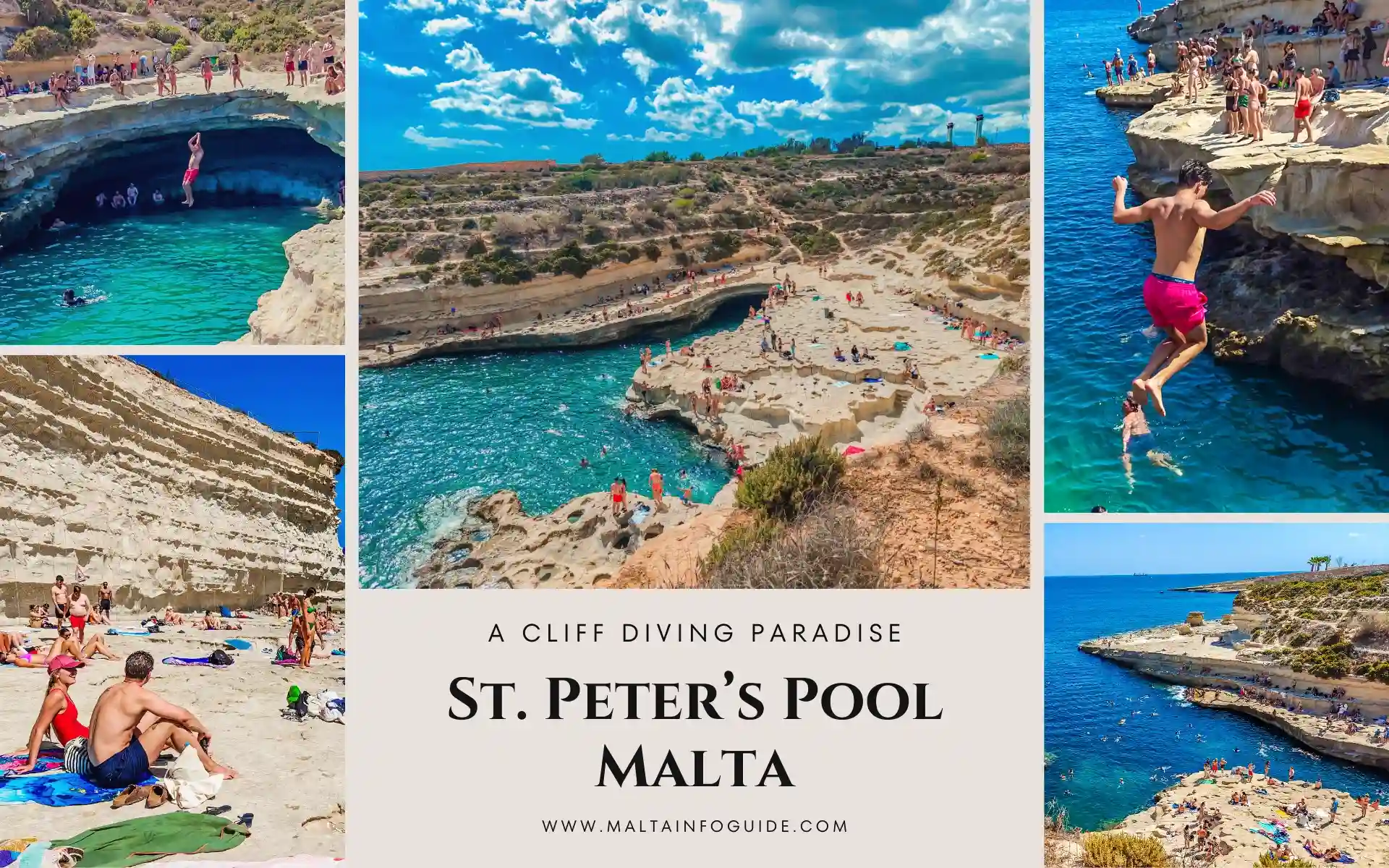 Rocky swimming at St Peter's Pool in Malta
On This Page
- Where Is St Peter's Pool Malta?
- Is St Peter's Pool Worth Visiting?
- How to Get to St Peter's Pool Malta
- Essential Tips for Visiting St Peter's Pool
- Places to Visit Near St Peter's Pool
- Where to Stay Near St Peter's Pool
- The Dog That Made St Peter's Pool Famous
- A Virtual Tour of St Peter's Pool
- FAQs About St Peter's Pool Malta
✍️ Written by Albert and Benjamin Magro, Malta locals sharing practical advice based on living on and exploring the islands.
Where Is St Peter's Pool Malta?
St Peter's Pool is on the Delimara coast in southern Malta, a few kilometres from Marsaxlokk fishing village. St Peter’s Pool is on the Delimara peninsula, away from Malta’s main resort areas and without a bus stop directly beside the swimming area.
If you are planning your route, these are the coordinates for St Peter's Pool:
- Latitude: 35.8331° N
- Longitude: 14.5622° E
Related Guide: Top 7 Rocky Beaches in Malta
Is St Peter's Pool Worth Visiting?
Yes, we think St Peter's Pool is worth visiting, particularly if you enjoy rocky swimming spots, clear water and natural coastal scenery. Its curved inlet and pale limestone surroundings make it very different from Malta's sandy beaches, but it will not suit everyone.
🔵 Clear-Water Swimming: When the sea is calm, the water can be beautifully clear. Swimming is in deeper water rather than from a gradual shoreline, so it suits confident swimmers best.
🔵 Natural Limestone Setting: The curved inlet, pale rock and rugged coastline give St Peter's Pool much more character than an ordinary rocky swimming spot.
🔵 Cliff Jumping: You will often see people jumping from the rocks, but we would not encourage visitors to do so simply because others are. Sea conditions, water depth, rocks and warning signs should always be taken seriously.
🔵 Quieter Outside Peak Hours: Early mornings and periods outside peak summer can feel much calmer. In July and August, especially from late morning onwards, it can become busy and lively.
🔵 Sunbathing on the Rocks: The flatter limestone areas are commonly used for sitting and sunbathing, but there is very little natural shade and the rock can become extremely hot.
St Peter's Pool is best for visitors who want clear-water swimming from rocks and a rugged Mediterranean setting. If you prefer sand, easy water entry, shade and more facilities, compare our guide to the best beaches in Malta and Gozo.
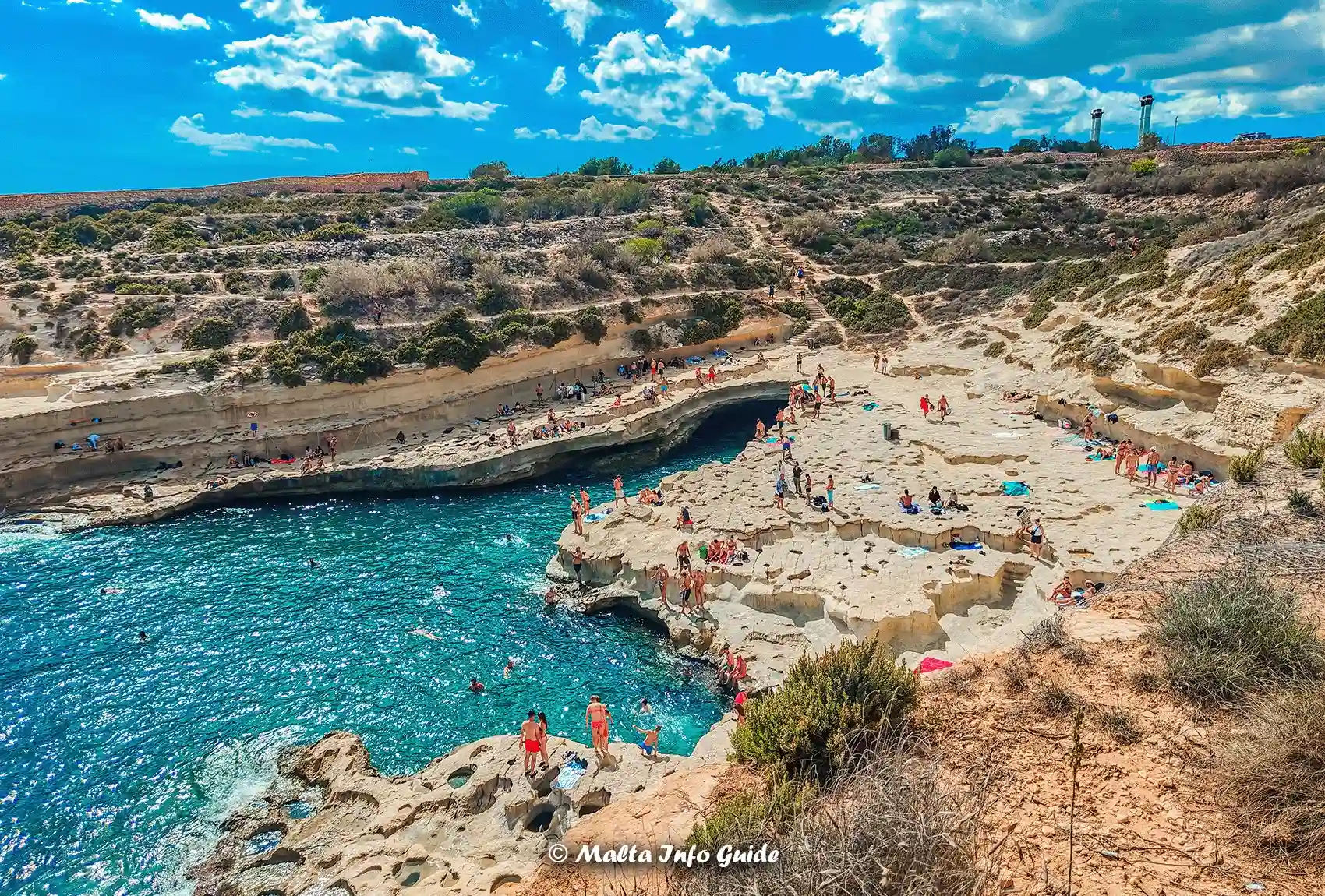 An aerial perspective of the scenic natural pool at St. Peter's Pool, Malta
How to Get to St Peter's Pool Malta
St Peter’s Pool is on the Delimara peninsula, away from Malta’s main resort areas and public transport routes. Driving or taking a taxi is generally the easiest option, while visitors using public transport will need to complete part of the journey on foot.
The final approach is more rural than the main roads around Marsaxlokk, so allow a little extra time and do not expect the same easy access you would find at one of Malta’s larger serviced beaches. The sections below explain the practical differences between arriving by car and by bus.
Getting Here by Car
Driving is one of the easiest ways to reach St Peter's Pool if you already have a car. The main roads towards Marsaxlokk and Delimara are straightforward, but the final approach becomes narrower, rougher and more rural, so drive carefully and watch for pedestrians and vehicles coming in the opposite direction.
Using Google Maps or another navigation app is useful if you are visiting for the first time. These are the main directions:
- Drive south along the main Tal-Barrani road.
- Take Triq Marsaxlokk towards Marsaxlokk fishing village.
- Continue towards Tas-Silġ via Triq Melqart, Triq Bir Rikka and Triq il-Patrijiet Terezjani.
- Turn onto Triq Delimara, passing Tas-Silġ Church, and continue for around 2 km towards St Peter's Pool. The final stretch is narrower and more rural, so take your time and be aware of pedestrians and oncoming traffic.
- Once you reach one of the two parking areas, continue to St Peter's Pool on foot.
Use the map we have integrated on this page for a better understanding!
There are two commonly used parking areas around St Peter's Pool:
- Closer parking area: This is only a short walk from the inlet, followed by the rocky approach down to the swimming area. A parking fee may sometimes be collected here.
- Second parking area: Another parking area is available farther along the Delimara side and normally involves a slightly longer walk over uneven ground. This is generally the free option.
In peak summer, do not assume that a convenient parking space will be available, especially if you arrive from late morning onwards or at the weekend. Going early makes both parking and the visit itself considerably easier.
Getting Here by Bus
There is no bus that goes directly to St Peter's Pool, so public transport always involves some walking. The most useful option is Route 119, which serves the Delimara area.
- Take Route 119 to Delimara or Delimara 2 bus stop, then continue on foot towards St Peter's Pool. Allow roughly 20–30 minutes for the walk.
- From Valletta, take Route 81 or 85 to Marsaxlokk, then change to Route 119 for Delimara.
- If you do not want to walk the final stretch, a taxi or ride-hailing service from Marsaxlokk can take you closer to the St Peter's Pool access area.
- Wear comfortable shoes and bring plenty of water if you are walking.
We would not casually recommend the walk in the middle of a hot July or August day. The route is exposed, there is little shade, and the heat can make the walk much harder than the distance suggests.
Use the map we have integrated on this page for a better understanding!
St. Peter's Pool Map
Boat from Marsaxlokk to St Peter’s Pool
If you are also visiting Marsaxlokk, you can see St Peter’s Pool from a different perspective by taking a traditional Maltese boat from Marsaxlokk Harbour. Some trips cruise along the Delimara coastline, while others allow passengers to stop at St Peter’s Pool for swimming before being collected for the return journey.
Boat trips and swimming stops are subject to suitable weather and sea conditions, so availability can change on the day.
Essential Tips for Visiting St Peter's Pool
St Peter’s Pool is quite different from a serviced beach, so a little planning makes a big difference. Facilities are limited, the area is exposed to the sun and swimming is from rocks into deeper water, so it is worth knowing what to expect before you arrive.
Facilities and Amenities
St Peter's Pool is a natural rocky swimming spot rather than a serviced beach, so facilities are very limited. We recommend arriving with everything you need rather than relying on finding services once you get there.
What you will find:
- Two parking areas serving St Peter's Pool.
- Swimming ladders may be available for getting in and out of the sea during the main swimming season.
What you should not expect:
- No sunbeds or umbrellas for hire.
- No public toilets or changing rooms.
- No lifeguard service.
- No watersports equipment for hire.
- No proper wheelchair-accessible route to the swimming area; access involves uneven rocky ground and steps.
- Very little natural shade.
Do not rely on being able to buy food or drinks at St Peter's Pool. Bring plenty of drinking water and, if you plan to stay for several hours, take your own food with you.
Safety Tips for Your Visit
St Peter's Pool is an undeveloped rocky swimming area, so sea conditions, uneven ground and the exposed coastline all need to be taken seriously. Keep these points in mind when visiting:
- Check the sea before swimming: St Peter's Pool is best enjoyed when the water is calm. If the sea is rough or waves are breaking against the rocks, getting into and out of the water can become much more difficult.
- Respect barriers and warning signs: Parts of the Delimara coastline around St Peter's Pool have been restricted because of unstable rock and falling-rock risk. Do not enter fenced or closed areas, even if other visitors are doing so.
- Be cautious around cliff jumping: You will often see people jumping from the rocks, but do not assume that a jump is safe simply because someone else has done it. Water conditions, depth and submerged rocks can vary.
- Be comfortable in deeper water: There is no gradual sandy entry. Swimming is from the rocks into deeper water, so St Peter's Pool suits confident swimmers better.
- Use the ladders where available: Ladders make getting out of the water considerably easier, although visitors should not assume they will always be installed or accessible.
- Wear suitable footwear: The limestone can be uneven, sharp in places and slippery when wet. Water shoes or secure footwear can make it easier to move around.
- Protect yourself from the sun: There is very little shade and the limestone becomes extremely hot in summer. Bring sunscreen, a hat and plenty of water.
- Take extra care with children: We would not choose St Peter's Pool for very young children. Older children and teenagers who are confident swimmers may enjoy it, but close supervision is still important.
- In an emergency: Call 112 for police, medical or rescue assistance in Malta.
Take any rubbish with you and help keep the surrounding coastline clean.
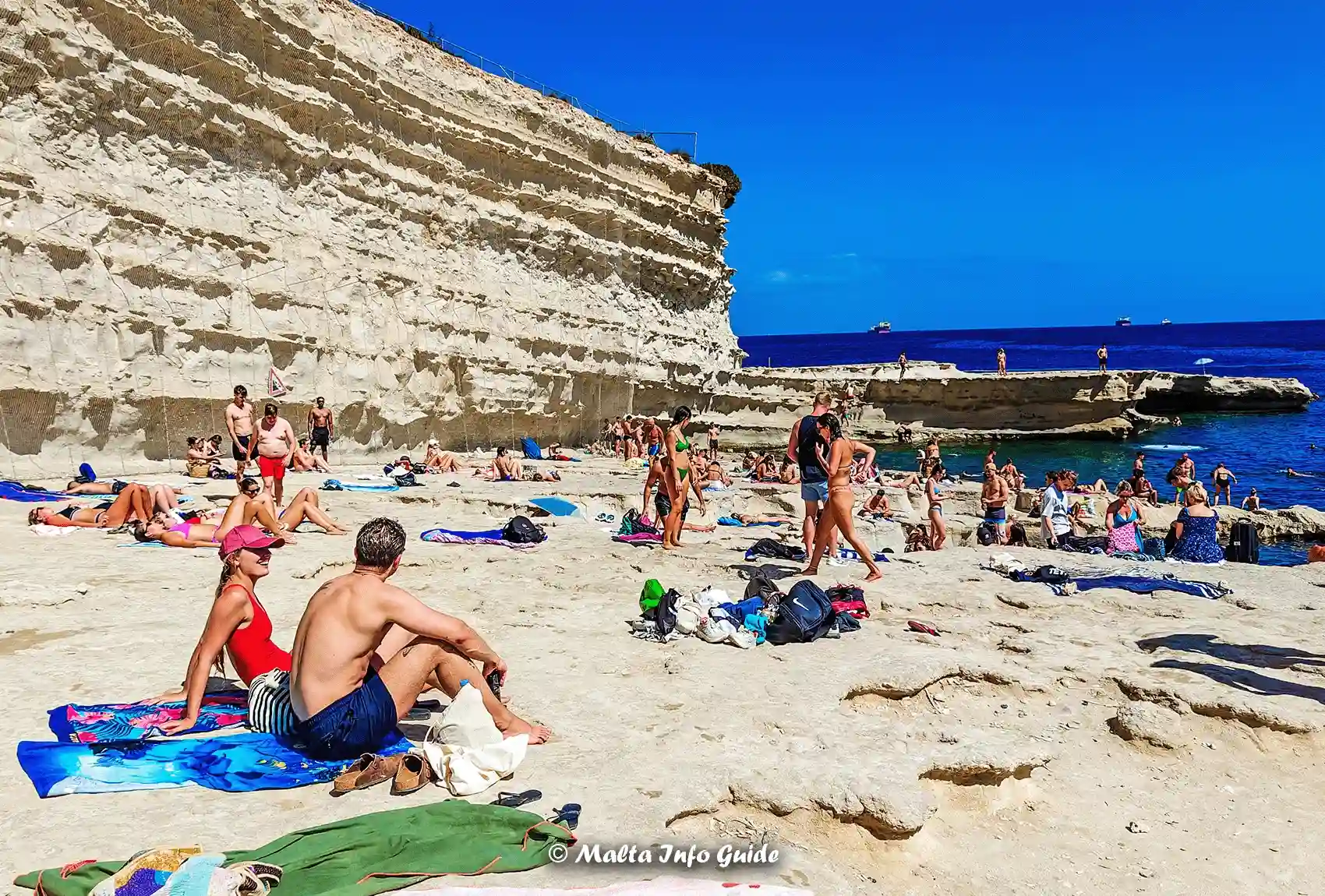 Visitors enjoying the sun on the rocky shores of St. Peter's Pool in Malta.
Best Time to Visit St Peter’s Pool
For the best balance of warm weather and fewer crowds, we prefer May, June, September and early October, depending on the weather and sea conditions. July and August are the busiest months and can also be extremely hot on the exposed limestone.
If you are visiting in peak summer, go early in the morning and, if possible, on a weekday. From late morning through the afternoon, the most convenient areas can fill quickly, especially at weekends and on public holidays.
Late afternoon can also be a good option once some visitors begin leaving, but allow enough daylight for the walk back to your car, taxi pick-up point or bus connection. Whatever the month, check the sea conditions before deciding to swim.
Packing Essentials for Your Day Trip
St Peter’s Pool has limited facilities and very little shade, so bring what you need, especially if you plan to stay for several hours.
- Plenty of water: One of the most important things to bring, particularly during summer or if you are walking part of the way.
- Sunscreen and a hat: There is very little protection from the sun around the inlet.
- Water shoes or secure footwear: Useful for walking over the uneven limestone and moving around wet rock.
- Swimwear: Swimming is one of the main reasons to visit when the sea is calm.
- Towel or mat: The surrounding surface is rock, so something to sit or lie on makes a noticeable difference.
- Food or snacks: Do not rely on being able to buy food when you arrive.
- Snorkelling gear: Optional, but the clear water can make snorkelling enjoyable in suitable sea conditions.
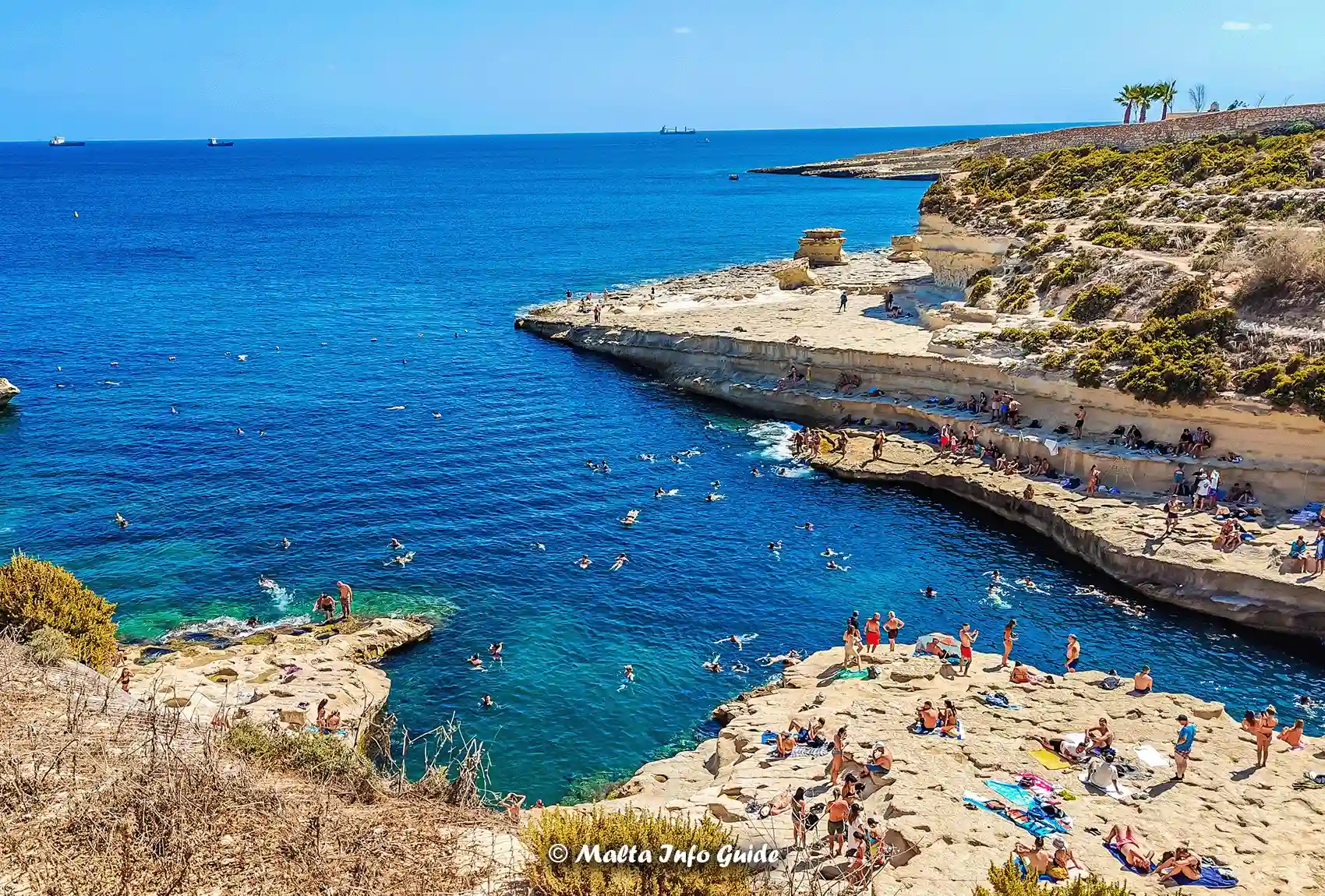 Swimming at St Peter's Pool Malta
Places to Visit Near St Peter's Pool
If you are already travelling to the Delimara area, there are a few nearby places that can be worth combining with your visit. Marsaxlokk is the most practical addition for most visitors, while the Delimara peninsula also has several historic sites, coastal viewpoints and quieter swimming spots if you have more time.
Marsaxlokk Fishing Village
Marsaxlokk is the most practical place to combine with a visit to St Peter’s Pool. The waterfront is known for its colourful traditional fishing boats, including the Maltese luzzu, and it remains closely connected to Malta’s fishing community.
The village has a regular open-air market, while Sunday is the best-known market day, with fish and other stalls along the waterfront. There are also plenty of restaurants around the harbour, making Marsaxlokk a convenient place for lunch before or after St Peter’s Pool. You will also find boat operators offering trips along the Delimara coast, including St Peter’s Pool when sea conditions allow.
Tas-Silġ Archaeological Complex & Church
The Tas-Silġ Archaeological Complex is one of Malta’s most important multi-period archaeological sites, with remains spanning thousands of years. The site was used from prehistoric times and later became an important religious centre during the Phoenician, Punic and Roman periods.
The archaeological complex is open by appointment rather than as a normal walk-in attraction, so check Heritage Malta’s current visiting arrangements if you want to go inside. Nearby, Tas-Silġ Church and the surrounding countryside make this a worthwhile stop if you are already exploring the Delimara area.
Delimara Lighthouse
Delimara Lighthouse is one of the most distinctive landmarks on the peninsula. It was commissioned in the 1850s and was operational by 1855, before being decommissioned around 1989–90. The historic lighthouse has since been restored and is managed by Din l-Art Ħelwa, Malta’s National Trust.
It is not a normal walk-in attraction, although Din l-Art Ħelwa occasionally opens it for events and guided visits. The former lighthouse-keepers’ quarters have also been converted into heritage accommodation, so it is possible to stay at the lighthouse when bookings are available.
🔗 Source: Delimara Lighthouse
Fort Delimara
Fort Delimara was built by the British between 1876 and 1878 to defend the approaches to Marsaxlokk Harbour. This Victorian coastal fortification still contains underground areas, defensive structures and surviving heavy guns, making it an interesting stop for visitors with an interest in Malta’s military history.
The fort is not currently open as a normal walk-in attraction. Heritage Malta lists it as temporarily closed, although access may be possible through pre-booked curator tours or occasional organised openings. Check Heritage Malta’s current arrangements before planning a visit.
Fort San Luċjan
Fort San Luċjan began as a coastal watchtower built between 1610 and 1611 during the rule of Grand Master Alof de Wignacourt. An artillery battery was later added, the complex was strengthened into a fort during the 1790s and it was substantially rebuilt by the British during the 19th century. The original tower remains one of Malta's largest historic coastal watchtowers.
Today, Fort San Luċjan is used by Aquatic Resources Malta for fisheries and aquaculture research. It is not a normal walk-in attraction, but members of the public can apply to visit the facilities through the government's VisitARM service, where visits are guided by agency officials.
🔗 Source: Fort St. Lucian
Il-Ħofra l-Kbira and Il-Ħofra ż-Żgħira
These two natural bays form part of the rugged Delimara coastline near Marsaxlokk. They are more remote and less developed than St Peter’s Pool, so they are better treated as scenic coastal spots for visitors exploring the peninsula rather than essential additions to every beach day.
Il-Kalanka Bay
Il-Kalanka is another rocky inlet on the Delimara peninsula, only a short distance from St Peter’s Pool. It offers the same general style of clear-water swimming from limestone rocks, but it is usually less well known and can feel calmer when St Peter’s Pool is busy. Facilities are very limited, so bring what you need with you.
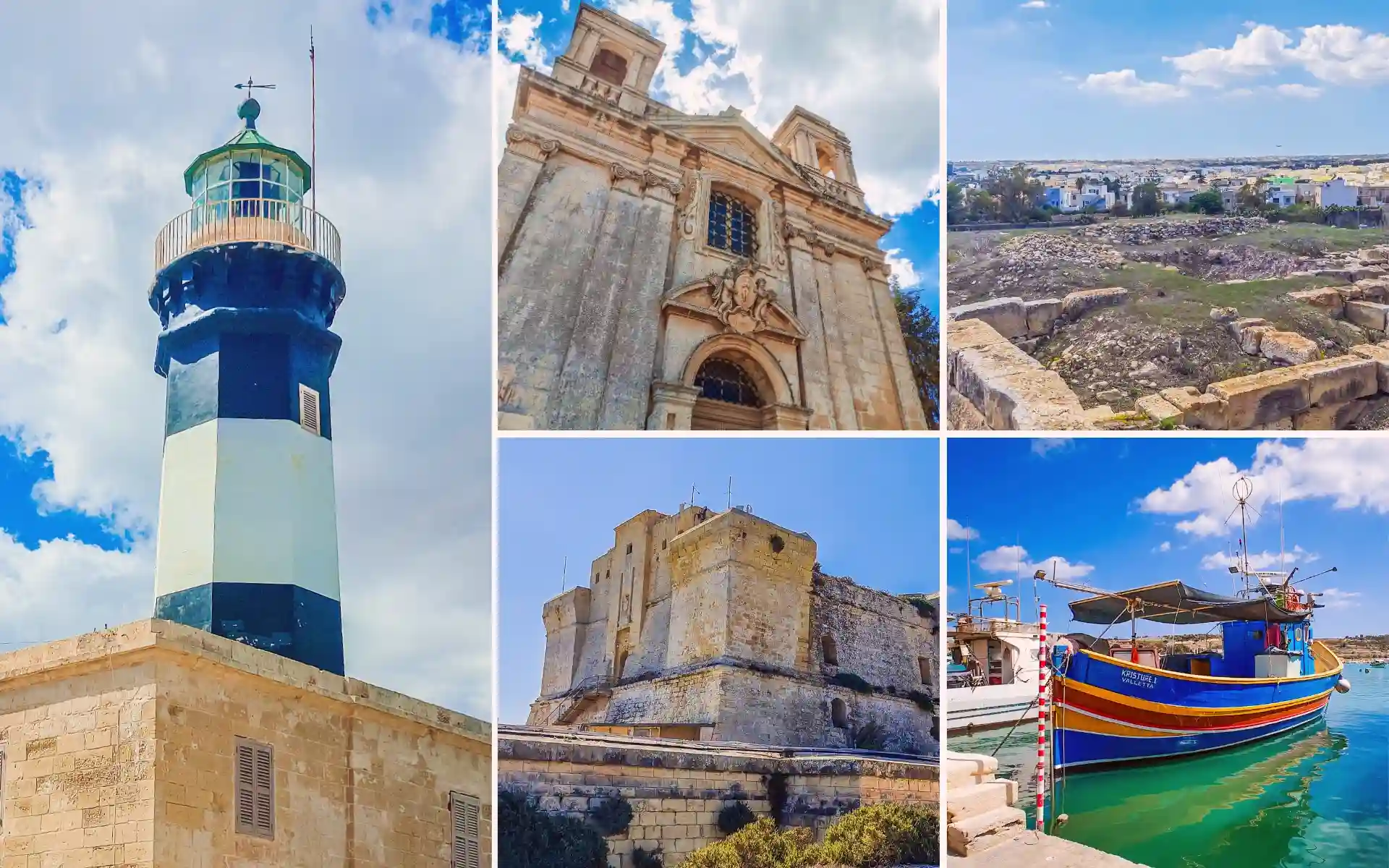 Nearby Attractions: Delimara Lighthouse, Marsaxlokk, and historical fortifications
Other Beaches You May Prefer: Bugibba Perched Beach | Dahlet Qorrot Gozo | Ghajn Tuffieha Bay Malta | Gnejna Bay Beach | Golden Bay Malta | Armier Bay Malta | Marsalforn Bay Gozo Malta | Mellieha Bay | Paradise Bay Beach Malta | Ramla Il Hamra Beach | St Georges Bay | Xlendi Malta
Where to Stay Near St Peter's Pool
There is no conventional resort or hotel area at St Peter’s Pool itself. If you want to stay nearby, Marsaxlokk is the most practical choice, with guesthouses, holiday apartments and other small-scale accommodation around the village and waterfront.
Staying in Marsaxlokk can work well if you want a quieter base in southern Malta and easy access to St Peter’s Pool and the Delimara coast. For most first-time visitors who want to explore the whole island, however, we would treat St Peter’s Pool as a day trip rather than a reason to choose your accommodation around it.
The Dog That Made St Peter's Pool Famous
St Peter’s Pool became even better known internationally thanks to Titti, a Jack Russell who regularly jumped into the sea alongside her owner, Carmelo Abela. Videos and photos of the pair attracted attention well beyond Malta and made Titti closely associated with the swimming spot. She died in 2019, but her story remains part of St Peter’s Pool’s more unusual recent history.
Carmelo later got another dog, Tina, who also became known for jumping into the water with him at St Peter’s Pool. Tina has continued to attract attention online, with videos of the pair still going viral in 2026.
🔗 Source: Malta’s Cliff-Diving Dog Captures Hearts Around the World
🔗 Source: Summer Is Back And So Is Tina The Dog!
A Virtual Tour of St Peter's Pool
Take a virtual look around St Peter’s Pool before you visit. The video shows the rocky shoreline, clear water, natural inlet and swimming area, giving you a better idea of what the place is actually like beyond the photos.

FAQs About St Peter's Pool Malta
Is St. Peter’s Pool Malta safe for children?
Is St. Peter’s Pool Malta safe for children?
We would not choose St Peter’s Pool for very young children. There is no sandy shoreline or gradual water entry, the surrounding ground is rocky and there is very little shade. Families with older children or teenagers who are confident swimmers may enjoy it much more.
Is there a kiosk at St Peter’s Pool?
Is there a kiosk at St Peter’s Pool?
Food and drink availability around St Peter’s Pool has changed over time, so do not rely on finding a kiosk or seller when you arrive. Bring plenty of water and take your own food if you plan to stay for several hours.
Does St Peter’s Pool have opening times?
Does St Peter’s Pool have opening times?
St Peter’s Pool is not a ticketed attraction with normal visitor opening hours. However, parts of the surrounding coastline can be restricted for safety reasons, so always respect barriers, warning signs and any closed areas when you visit. Current restrictions have been issued around parts of the Delimara coastline because of falling-rock risk.
How long does it take to walk from Marsaxlokk to St. Peter’s Pool?
How long does it take to walk from Marsaxlokk to St. Peter’s Pool?
Allow roughly 30–45 minutes on foot, depending on your starting point and pace. The walk is exposed, so bring plenty of water and avoid treating it as a casual midday walk during the hottest summer months.
What should I do if St. Peter’s Pool is crowded?
What should I do if St. Peter’s Pool is crowded?
If the most convenient areas are already busy, arriving at another time is often the better option. Early morning on a weekday is our preference, while late afternoon can also be quieter once daytime visitors begin leaving.
Are there any restroom/changing facilities available?
Are there any restroom/changing facilities available?
No public toilets or changing rooms should be expected at St Peter’s Pool. Treat it as a natural rocky swimming spot with very limited facilities and arrive prepared.
Want To Share This Page On Pinterest? Pin It Here!

Disclaimer — We may earn a commission if you book via certain links on the website. No extra cost to you.
🎉 What’s On In Malta?
Updated for September • Local picks
Discover events, village feasts, fireworks, festivals and seasonal things to do this September.
📅 See What’s Happening This September ⛪ Malta Village Feasts 🌞 Things To Do In Malta 🗓️ Events By Month❤️ Enjoying Malta Info Guide?
If our free local guides made planning your Malta trip easier, you can say thanks with a small beer.
Written by two locals. Always free.

✈️ Planning your Malta trip?
✈️ Flights to Malta
Compare airlines and find the best prices today.
Check today’s cheapest flights →🏨 Hotels in Malta
Find available rooms, trusted stays and good locations for your Malta trip.
See available hotels this week →🚗 Car Rental in Malta
Compare prices, pick-up points and car options before you book.
Compare car rental prices →Planning London too?
Discover where to stay, what to do, and when to visit London.
Explore London Guide →Recent Articles


-
Christmas Pantos in Malta 2026/27 - Dates, Venues & Tickets
Sep 14, 26 12:07 PM
Find Christmas pantos in Malta and Gozo for 2026/27, with confirmed dates, venues, language, age guidance, booking status and official ticket links. -
Dog Friendly Beaches Malta & Gozo: 16 Official Locations
Sep 13, 26 04:09 AM
Find the 16 official dog friendly beaches in Malta and Gozo, plus the rules on where dogs can swim and what owners need to know before visiting. -
Xlendi Bay Gozo: Local Guide to Swimming, Beach & Tips
Sep 11, 26 03:26 PM
Local guide to Xlendi Bay in Gozo, with advice on swimming, the small beach, restaurants, parking, buses, summer crowds and who Xlendi suits best.