- Home
- Getting Around Malta
- Renting a Car in Malta
- Should You Rent a Car in Malta
Should You Rent a Car in Malta?
Car vs Buses, Ferries and Taxis for Your Malta Holiday
Whether you should rent a car in Malta depends much more on where you are staying and what you want to do than on the size of the islands. Some visitors gain a lot of freedom with a car, while others find buses, ferries and taxis easier and less stressful.
If you are staying around Valletta, Sliema or St Julian's and most of your plans are concentrated around the main towns, you may manage very well without a rental car. If you want to explore quieter beaches, rural areas, several sights in one day or more of Gozo independently, having a car can become much more useful.
The key is not simply asking whether driving in Malta is convenient. It is deciding whether a car actually fits your base, itinerary, parking situation and travel style. This guide will help you work that out before you book anything.
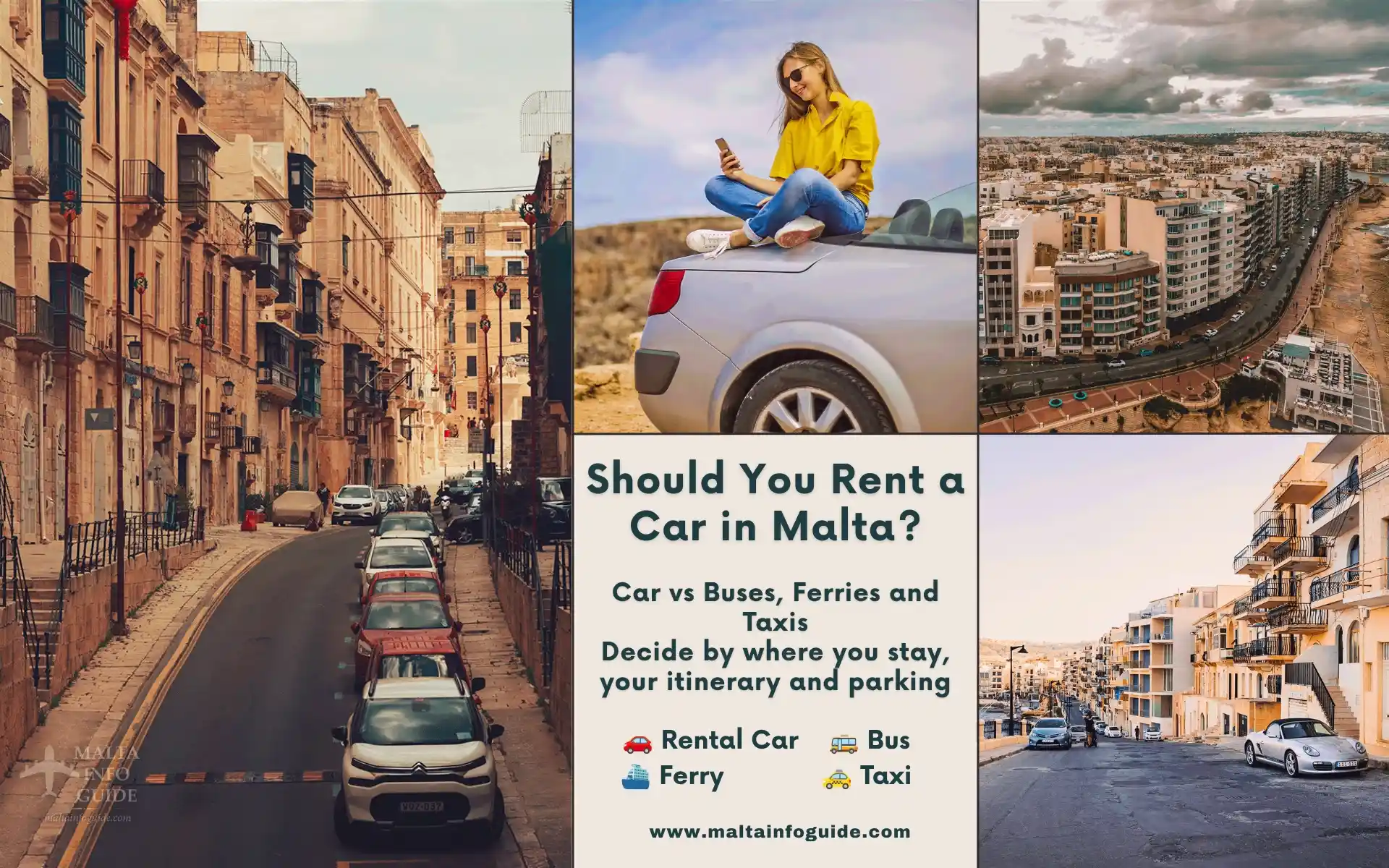 Choosing transport around Malta
✍️ Written by Albert and Benjamin Magro, Malta locals sharing practical advice based on living on and exploring the islands.
What This Guide Covers
- Where You Stay Changes the Answer
- Your Itinerary Changes the Answer
- When Having a Car in Malta Can Make Life Easier
- When Renting a Car Can Add More Stress
- Parking, Traffic and Driving Confidence
- Nightlife Can Change the Decision
- What Can You Use Instead of a Rental Car?
- You May Only Need a Car for Part of Your Trip
- If You Decide to Rent a Car
Quick Malta Car Fit Check
A rental car probably suits your trip if:
- You are staying somewhere less convenient for frequent public transport.
- You want to visit rural areas, quieter beaches or several spread-out places in one day.
- You are travelling with children or carrying a lot of beach or day-trip gear.
- You plan to explore Gozo independently.
- Your accommodation has convenient parking.
- You value flexibility more than avoiding traffic and parking.
You may be better without a car if:
- You are staying in Valletta, Sliema, Gżira or St Julian's and most of your plans are nearby.
- Buses, ferries and occasional taxis cover most of your itinerary.
- You are uncomfortable driving on the left or on unfamiliar roads.
- Searching for parking would add stress to your holiday.
- Nightlife and drinking will form an important part of your trip.
- You only need a car for one or two specific sightseeing days.
This is only a starting point. Where you stay and what you plan to see can completely change the answer, which we explain in the sections below.
Where You Stay Changes the Answer
Your base can make a big difference to whether a rental car is useful. Staying in a well-connected area such as Valletta, Sliema or St Julian's is very different from staying in Mellieħa, a quieter village or somewhere more rural. Before deciding, think about how easily you can reach the places on your itinerary without having to drive and park every day.
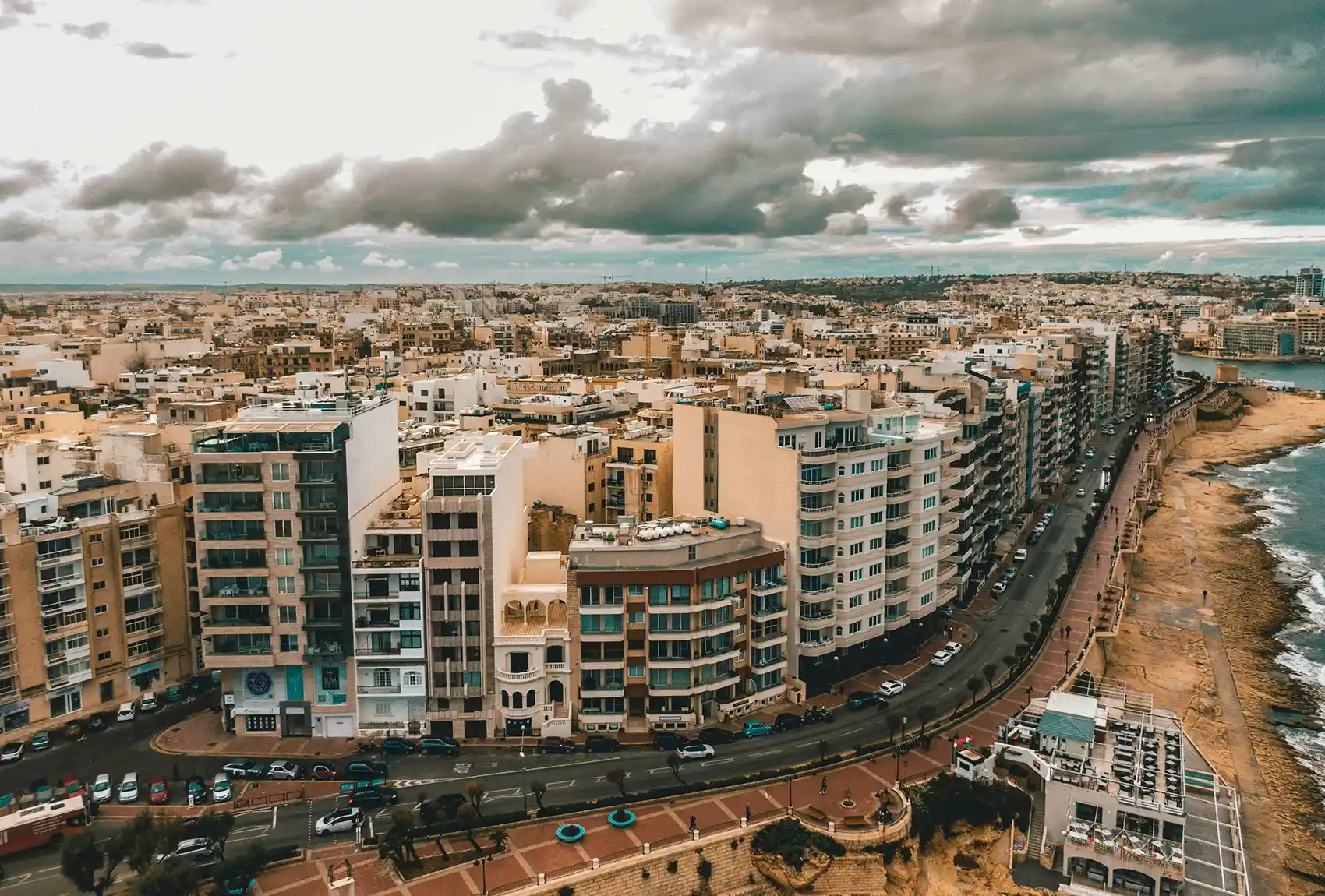 Urban roads around Sliema
| Where You Stay | Do You Usually Need a Car? | Why |
|---|---|---|
| Valletta | Usually no | Valletta is compact and well connected by buses, ferries and taxis. Parking can also be more trouble than the car is worth for many visitors. |
| Sliema or Gżira | Usually no | Frequent buses, ferries and taxis make it easy to reach many popular areas without driving every day. |
| St Julian's | Usually no | Most visitors staying around the main hotel and nightlife areas can manage without a car, especially if their itinerary focuses on nearby towns and organised trips. |
| St Paul's Bay, Buġibba or Qawra | It depends | These areas have good transport connections, but a car becomes more useful if you plan frequent trips to beaches, rural areas or several places in one day. If you decide to rent locally, see our guide to car hire in Buġibba. |
| Mellieħa | Often useful | A car can make it easier to reach beaches, viewpoints and more spread-out places, particularly if your accommodation is away from the main road. |
| Quieter villages or rural areas | Often useful | Public transport may still be available, but a car usually gives you more flexibility for less central places and multi-stop days. |
| Gozo | Often useful for exploring | A car can be very convenient if you want to explore several villages, beaches and countryside locations independently rather than relying on buses or taxis. |
Your Itinerary Changes the Answer
Where you are staying is only part of the decision. A car becomes more useful when your plans involve several spread-out places in one day, while a more compact itinerary around the main towns can often be handled comfortably using buses, ferries and taxis.
A car is more likely to be useful if your plans include:
- Several stops spread across Malta in the same day.
- Rural areas, quieter beaches or viewpoints that are less convenient to combine by public transport.
- Frequent independent day trips rather than organised tours.
- Exploring Gozo at your own pace.
- Carrying children, beach equipment or luggage between stops.
You may not need a car if your plans mainly include:
- Valletta, Sliema, Gżira and St Julian's.
- Places that are easy to combine by bus, ferry or taxi.
- Organised tours with transport included.
- Only one or two major sightseeing stops per day.
- Relaxed days where saving driving time is less important than avoiding parking.
When Having a Car in Malta Can Make Life Easier
Malta and Gozo are relatively small, but that doesn't always mean every place is easy to reach by public transport. A rental car can be especially useful when you want to visit several spread-out places in the same day or explore areas away from the main transport routes.
Having your own car also gives you more flexibility over when you leave, how long you stay and whether you change your plans during the day. This can be useful for quieter beaches, rural areas, viewpoints, and independent sightseeing, where relying on several bus connections could slow the day.
A car can also make evenings easier if you are staying somewhere with limited late transport, although this advantage depends heavily on where your accommodation is located and what you plan to do.
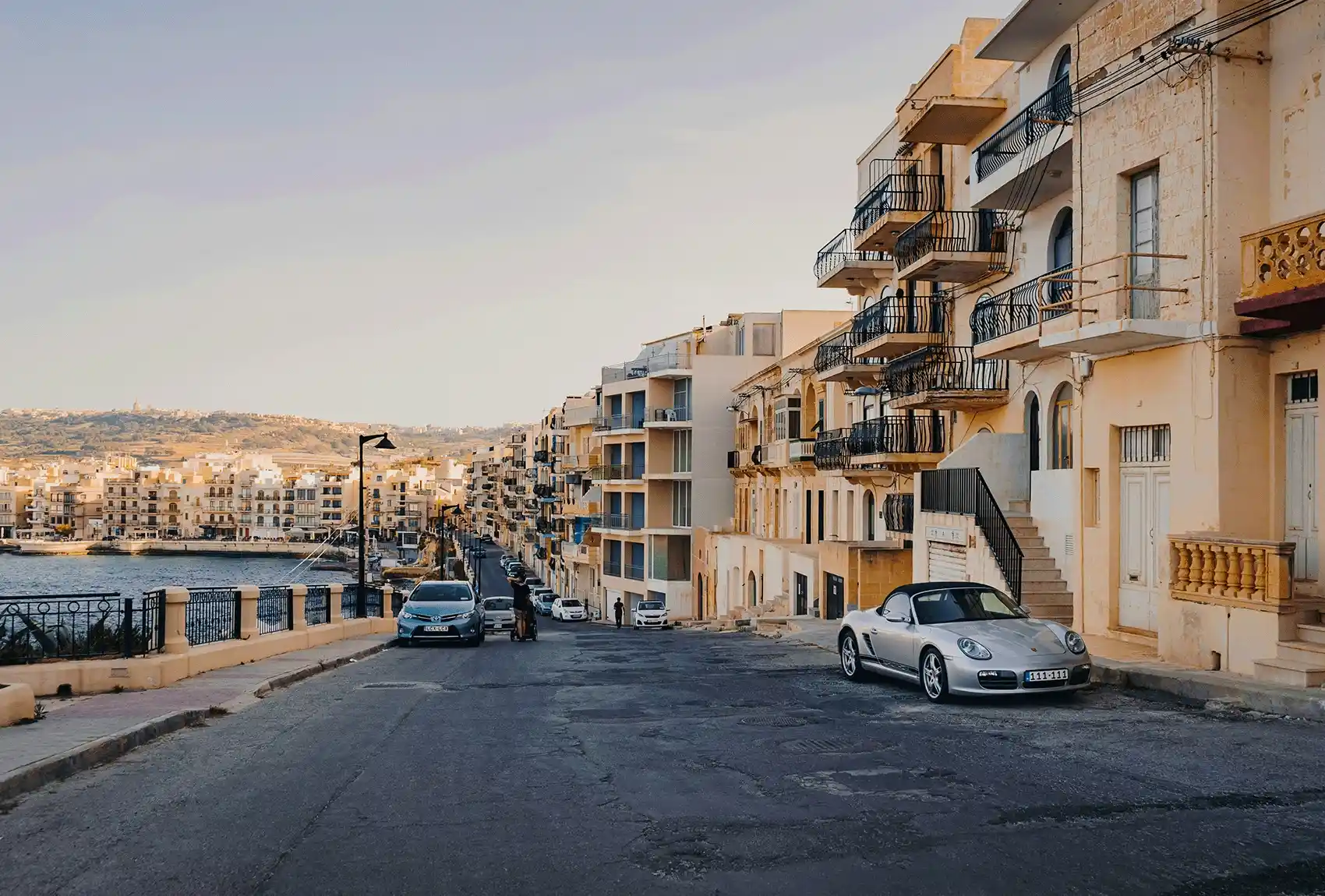 Quiet road near Marsalforn coast
When Renting a Car Can Add More Stress
Having a car gives you freedom, but traffic and parking can sometimes offset some of that advantage. Busy roads are common around the main urban areas, especially at peak times, and reaching your destination does not always mean you will immediately find somewhere convenient to park.
Parking can be particularly frustrating around popular places such as Valletta, Sliema and Mdina. Paid car parks are available in some areas, but at other times you may need to drive around looking for a space, which can take time and add unnecessary stress to a sightseeing day.
Malta's roads can also feel unfamiliar to first-time visitors. Junctions, narrow village streets and local driving conditions may take some getting used to, so if you are already uncomfortable driving abroad, renting a car may make your holiday less relaxing rather than easier.
Parking, Traffic and Driving Confidence
Before renting a car, think about where you will actually park it each day. If your accommodation includes convenient parking, having a car becomes much easier. If you are staying in a busy area and will need to search for street parking every evening, the inconvenience can quickly outweigh the freedom.
Traffic is another factor, particularly around the main urban areas and during busier times of day. A journey that looks short on the map can take longer than expected, so having a car does not always mean every trip will be faster.
Malta drives on the left-hand side of the road, and some visitors may also find narrow streets, unfamiliar junctions and heavy local traffic stressful at first. If you are not confident driving abroad, it is worth asking whether buses, ferries and taxis would make your holiday more relaxed.
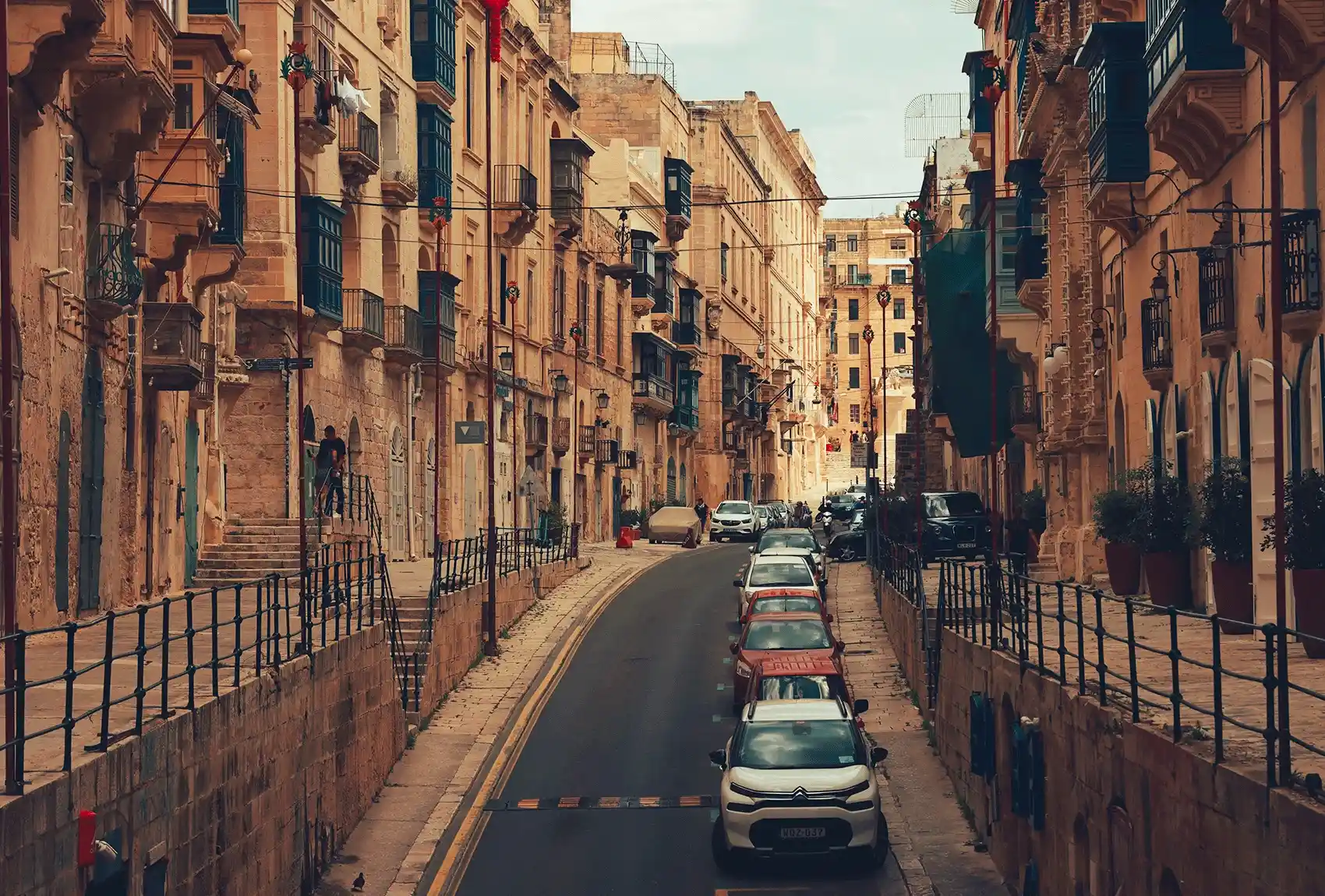 Cars parked in Valletta
Nightlife Can Change the Decision
If bars, clubs or late evenings are an important part of your Malta holiday, a rental car may be less useful on those days than you expect. You may still need to leave the car behind and take a taxi or ride-hailing service on the way back to your accommodation.
Never drink and drive. If several nights out form part of your plans, factor the cost and convenience of taxis into your decision before renting a car for the entire holiday.
What Can You Use Instead of a Rental Car?
If you decide not to rent a car, you do not have to rely on one type of transport for your whole holiday. Many visitors combine buses, ferries and occasional taxis depending on where they are going.
Buses can work well for many everyday journeys, while ferries are particularly useful for certain routes around Valletta, Sliema and the Three Cities. Taxis and ride-hailing services can then fill the gaps when public transport is less convenient, you are travelling late, or you simply want a more direct journey.
For some itineraries, using public transport most days and paying for the occasional taxi can be easier than dealing with a rental car, parking and traffic every day.
For a fuller comparison of Malta's transport options, see our guide to getting around Malta.
You May Only Need a Car for Part of Your Trip
You do not necessarily need to choose between renting a car for your entire holiday and not renting one at all. For some trips, hiring a car for just one or two days can be the most practical option.
You could use buses, ferries and taxis while staying around the main towns, then rent a car for the days when you want to explore more spread-out places, quieter beaches or rural areas independently.
This can give you the flexibility of having a car without paying for it on days when it would mainly sit parked.
 Traveller relaxing beside rental car
If You Decide to Rent a Car
If a rental car looks like the right choice for your holiday, the next step is understanding the practical side of hiring one. Our guide to renting a car in Malta covers what to check before booking, including documents, insurance, deposits, pickup, parking and other useful rental advice.
Compare Car Rental Prices in Malta
Planning to rent a car in Malta? We use Discover Cars to compare rental companies, vehicle options and booking conditions in one place. Check the deposit, excess and insurance details carefully before booking, as these can vary between cars and suppliers.
Frequently Asked Questions About Renting a Car in Malta
Do you need a car in Malta?
Do you need a car in Malta?
No, not every visitor needs a car in Malta. If you are staying in a well-connected area such as Valletta, Sliema, Gżira or St Julian's, you can often manage comfortably with buses, ferries and taxis. A car becomes more useful if you want to explore rural areas, quieter beaches, several spread-out places in one day or more of Gozo independently.
Is it better to rent a car or take the bus in Malta?
Is it better to rent a car or take the bus in Malta?
It depends on your itinerary. Buses can work well for straightforward journeys between the main towns, while a rental car gives you more flexibility for multi-stop days and places that are less convenient to combine by public transport. Some visitors find the best balance is to use buses, ferries and taxis most of the time and rent a car only for selected days.
Do you need a car if you stay in Valletta, Sliema or St Julian's?
Do you need a car if you stay in Valletta, Sliema or St Julian's?
Usually not. These areas are among the easiest places in Malta to stay without a car because they have good access to buses, taxis and, in some cases, ferries. Parking can also be inconvenient, so a rental car may spend more time parked than being useful unless your itinerary includes frequent trips away from the main urban areas.
Is a rental car useful for exploring Gozo?
Is a rental car useful for exploring Gozo?
Yes, it can be very useful if you want to explore Gozo independently. A car makes it easier to combine villages, beaches, countryside locations and viewpoints in the same day without depending on bus connections or taxis. If you only plan to visit a few main attractions or are joining an organised tour, however, you may not need one.
Other Related Pages That Might Interest You
New York to Malta Flights: JFK Nonstop & Connections
Compare New York to Malta flights, including the seasonal JFK–MLA nonstop, one-stop routes, flight times and practical arrival options in Malta.
Cheap Car Hire Bugibba Malta | Book Your Car Here
Why not book your car from here and pick it up from Bugibba. With Discover cars you can definitely do that and we will guide you here.
How to Get to Malta: Flights, Ferries and No-Fly Options
Learn how to get to Malta by plane, ferry or cruise, including the Sicily ferry, no-fly options, travelling with a car and airport arrival tips.






Disclaimer — We may earn a commission if you book via certain links on the website. No extra cost to you.
🎉 What’s On In Malta?
Updated for September • Local picks
Discover events, village feasts, fireworks, festivals and seasonal things to do this September.
📅 See What’s Happening This September ⛪ Malta Village Feasts 🌞 Things To Do In Malta 🗓️ Events By Month❤️ Enjoying Malta Info Guide?
If our free local guides made planning your Malta trip easier, you can say thanks with a small beer.
Written by two locals. Always free.

✈️ Planning your Malta trip?
✈️ Flights to Malta
Compare airlines and find the best prices today.
Check today’s cheapest flights →🏨 Hotels in Malta
Find available rooms, trusted stays and good locations for your Malta trip.
See available hotels this week →🚗 Car Rental in Malta
Compare prices, pick-up points and car options before you book.
Compare car rental prices →Planning London too?
Discover where to stay, what to do, and when to visit London.
Explore London Guide →Recent Articles


-
Christmas Pantos in Malta 2026/27 - Dates, Venues & Tickets
Sep 14, 26 12:07 PM
Find Christmas pantos in Malta and Gozo for 2026/27, with confirmed dates, venues, language, age guidance, booking status and official ticket links. -
Dog Friendly Beaches Malta & Gozo: 16 Official Locations
Sep 13, 26 04:09 AM
Find the 16 official dog friendly beaches in Malta and Gozo, plus the rules on where dogs can swim and what owners need to know before visiting. -
Xlendi Bay Gozo: Local Guide to Swimming, Beach & Tips
Sep 11, 26 03:26 PM
Local guide to Xlendi Bay in Gozo, with advice on swimming, the small beach, restaurants, parking, buses, summer crowds and who Xlendi suits best.