- Home
- Getting Around Malta
How to Get Around Malta
A Local Guide to Buses, Ferries, Taxis & Car Hire
Getting around Malta is relatively easy, and you do not necessarily need to rent a car. Buses cover most of Malta and Gozo, ferries are useful for several popular routes, while taxis and car hire can save time or make harder-to-reach places easier to visit. The best option depends mainly on where you are staying, your budget and how much flexibility you want during your trip.
✍️ Written by Albert and Benjamin Magro, Malta locals sharing practical advice based on living on and exploring the islands.
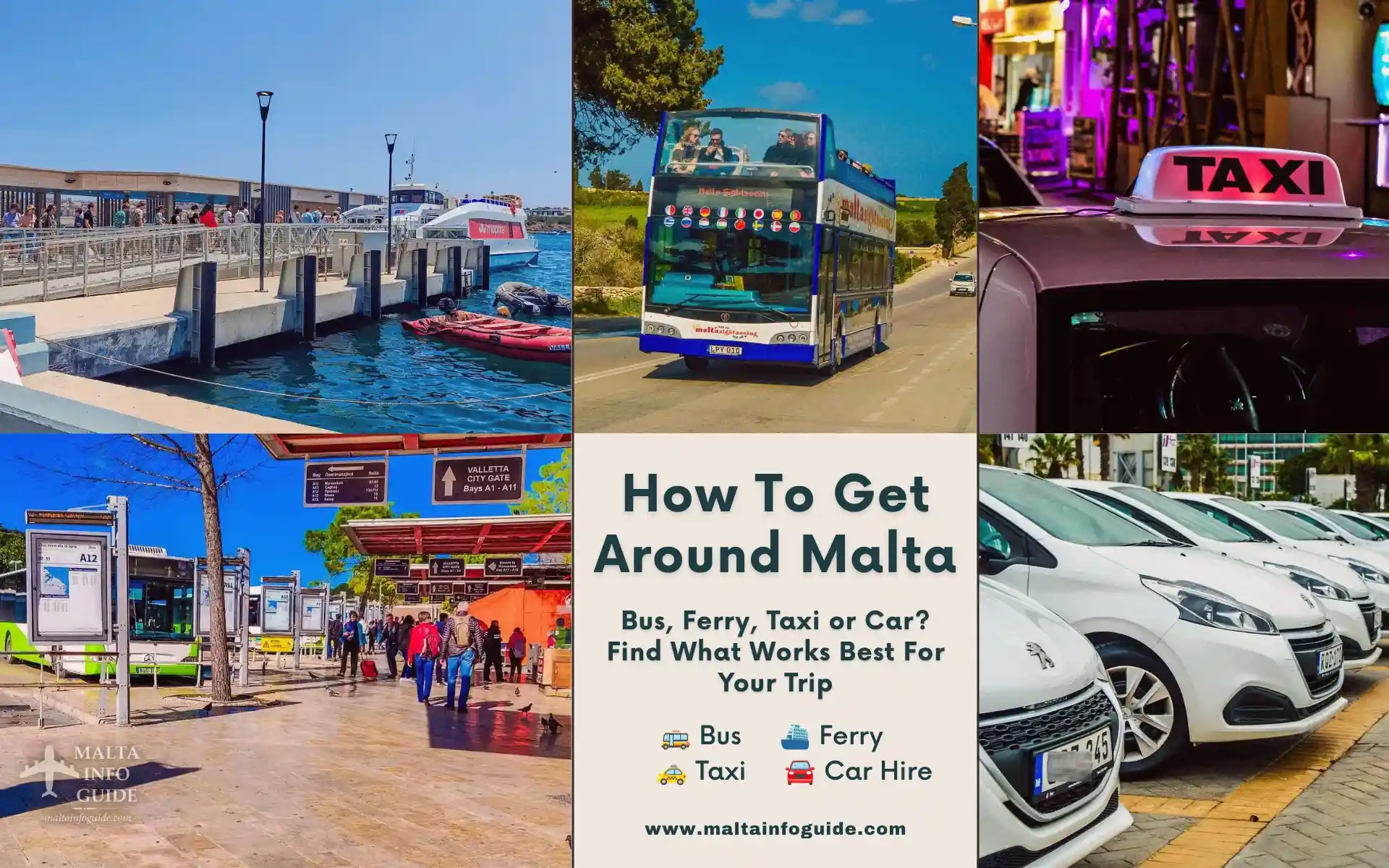
What Is the Best Way to Get Around Malta?
There is no single best way to get around Malta for every visitor. Most travellers can combine buses, ferries and taxis without renting a car, while car hire gives you more freedom if you want to explore places that are less convenient by public transport.
- Best for keeping costs down: Malta's public buses cover most towns, villages, beaches and major attractions, although journey times can be affected by traffic.
- Best for flexibility: Renting a car makes it easier to explore at your own pace and reach places where public transport is less convenient.
- Best for convenience: Taxis and ride-hailing services are useful when you want to travel directly without waiting for a bus.
- Best for certain coastal journeys: Ferries can be a convenient alternative between places such as Valletta, Sliema, the Three Cities and Gozo.
- Staying in a well-connected tourist area? You can usually enjoy Malta without hiring a car and use a combination of public transport, ferries and occasional taxis instead.
Jump to a transport option:
- Renting a Car in Malta
- What Is Driving in Malta Like?
- Malta Public Transport: Getting Around by Bus
- Getting From Malta Airport to Your Accommodation
- Malta Hop-On Hop-Off Buses
- Taxis and Ride-Hailing in Malta
- Malta to Gozo by Ferry
- Ferries Between Sliema, Valletta and the Three Cities
- Cycling Around Malta
- Can You Get Around Malta Without a Car?
- Horse-Drawn Carriages in Malta
- Frequently Asked Questions
Renting A Car To Drive Around Malta
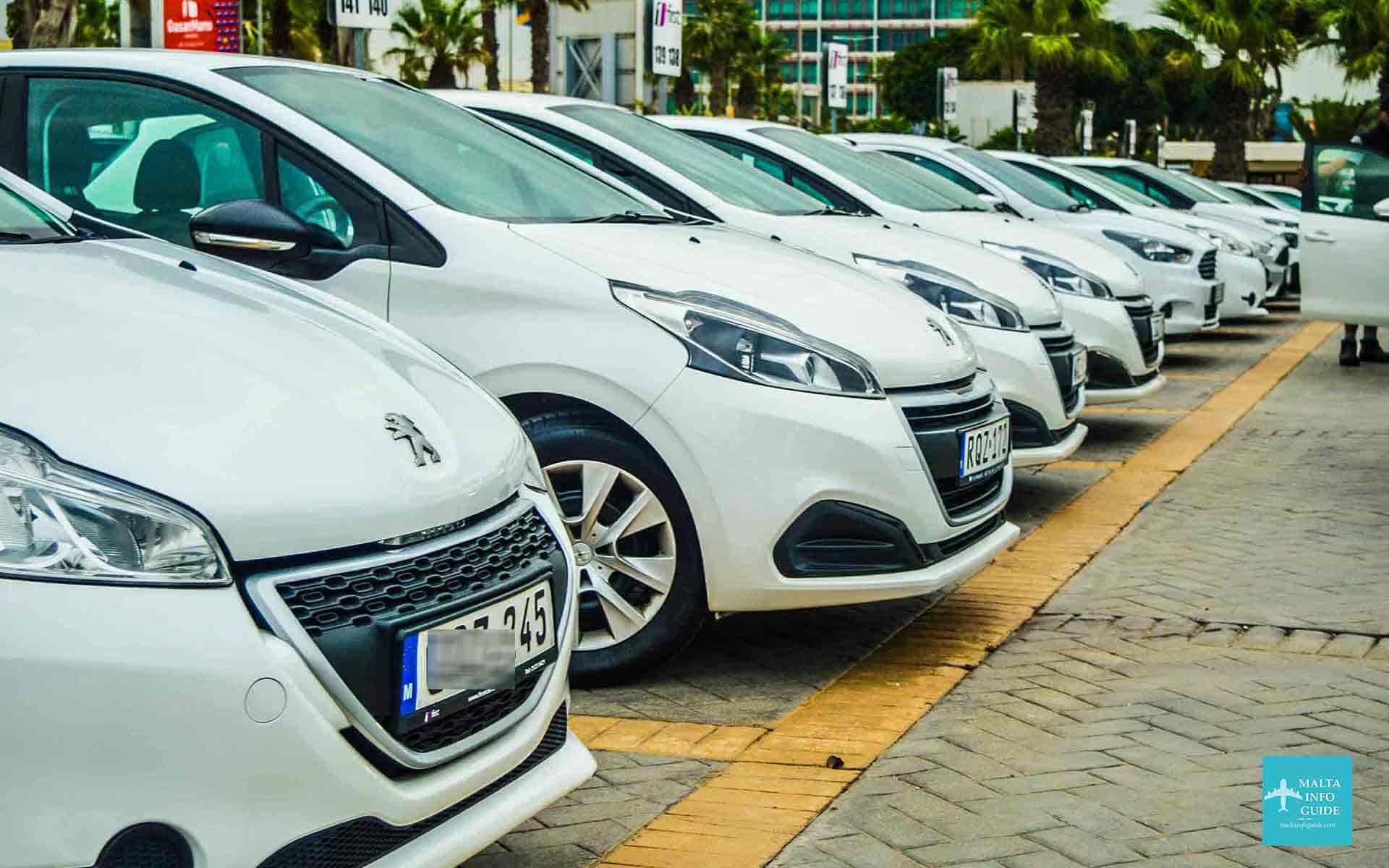 Renting a car gives you flexibility when getting around Malta
There are various car hire companies in Malta, and you can either book your rental car before travelling or arrange one after you arrive. Booking in advance gives you more time to compare prices, rental conditions and vehicle options before your trip. You can also read our top tips about renting a car in Malta before booking.
If you prefer to collect a rental car somewhere other than Malta International Airport, such as Buġibba, check the available pickup locations when making your booking.
What Is Driving in Malta Like?
Wondering what it is like to drive on the Maltese roads? With Malta having over 3000 km of roads, here are several facts about driving in Malta.
Here we drive on the left, like in the UK, Ireland and Australia. There are plenty of petrol service stations around, so it is easy to fill up your car. You will also find several speed cameras around the islands that you should be aware of.
Nowadays, Google Maps makes it easy to find your way around Malta and get directions. You may also wish to look at a Map of Malta before your trip so you can familiarise yourself with the main towns, roads and locations before you arrive.
Although the Maltese Islands are small, having suitable transport makes it much easier to explore different parts of Malta and Gozo. Land transport remains the main way of travelling around both islands.
There are different opinions about driving in Malta, and much depends on how confident you are behind the wheel.
Some visitors find Maltese driving quite hectic, while others drive here without any major problems. Driving styles can sometimes feel unfamiliar, but if you remain alert, take your time and drive carefully, there is generally no need to be overly concerned.
If you are considering hiring a car, read our guide to driving in Malta before deciding.
Malta Public Transport: Getting Around Malta by Bus
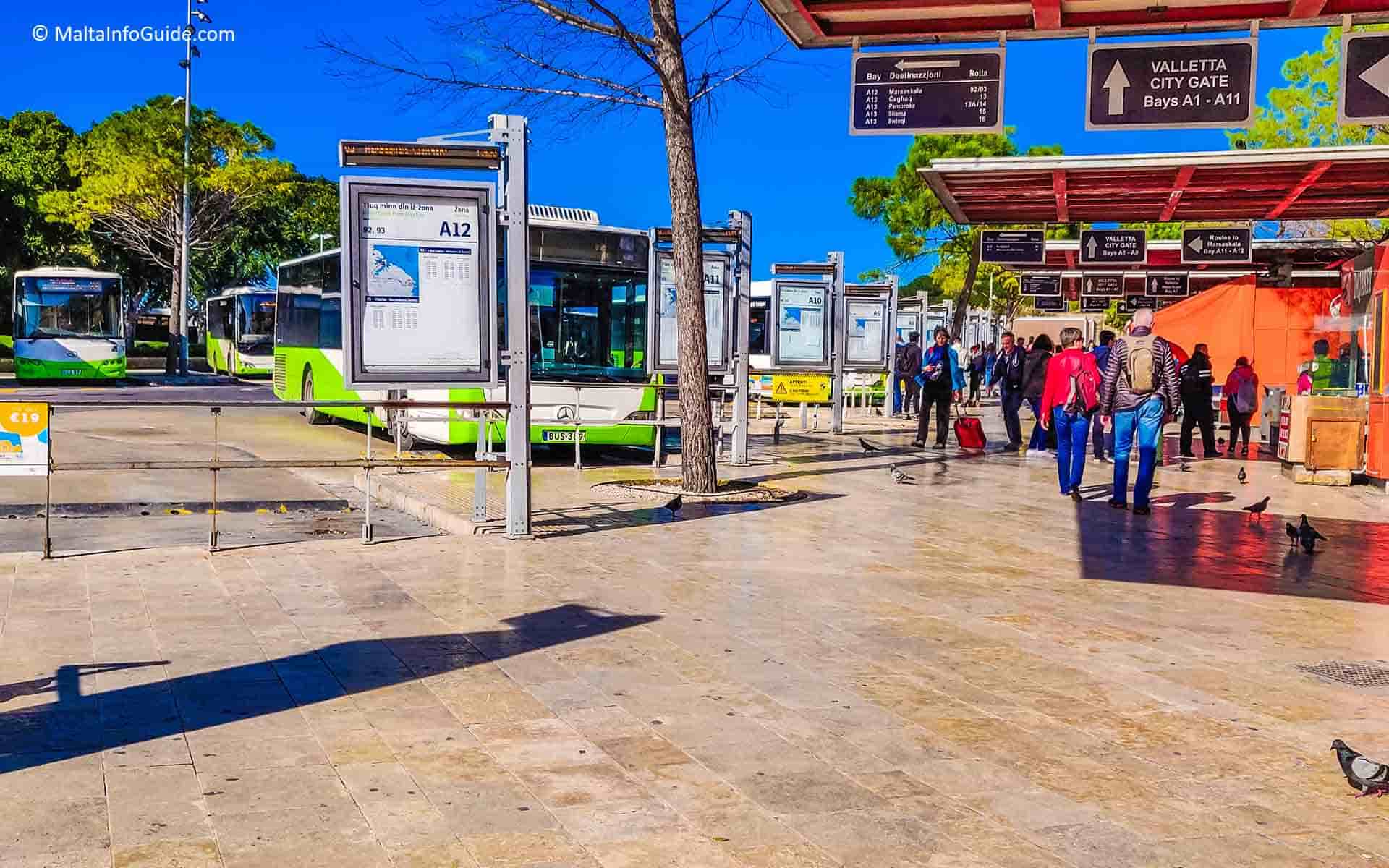 Valletta bus terminal, Malta’s main and largest public transport hub
Is It Worth Using the Bus in Malta?
For many visitors, using the bus is a practical and affordable way to get around Malta, especially if you are staying in a well-connected area and do not want to rent a car.
If you already know where you want to go, our Malta bus routes by locality guide can help you find the routes serving different towns and villages.
The main disadvantage is that journey times can be affected by Malta's traffic. Buses can also become busy during peak commuting times and on popular routes, particularly when many people are travelling to beaches, tourist areas or major events.
During the warmer months, buses are also commonly used to reach Malta's beaches. Our Malta and Gozo beach bus routes guide can help you identify the routes serving popular beach areas.
If you are planning an important journey, allow some extra time rather than relying on the bus arriving at exactly the expected time. It is also worth checking the latest route and service information before leaving, as Malta Public Transport provides current timetables, journey planning and service alerts.
Public transport is generally easier to use from well-connected areas such as Valletta, Sliema, St Julian's, Buġibba and Qawra. If you are staying in a more isolated location, you may have fewer convenient connections, particularly later in the evening.
For this reason, many visitors find that a combination of buses, ferries and occasional taxis works well, rather than relying exclusively on one form of transport throughout their holiday.
Practical Tip: Malta's buses can work very well for sightseeing, but allow extra time for traffic and busy services. If you have an important booking, airport journey or timed attraction, avoid planning a connection with no spare time.
How Much Do Buses Cost in Malta?
If you are buying a single journey directly on the bus, the standard daytime fare is currently €2 in winter and €2.50 in summer. A single ticket is valid for two hours, allowing you to change buses during that period without buying another ticket.
You can buy your ticket from the driver using cash, a contactless bank card or a compatible smartphone payment method.
Night routes and some special or direct services have different fares, so it is worth checking the latest Malta Public Transport prices before travelling. If you expect to use buses regularly during your holiday, a travel card may work out better than buying individual tickets each time.
Tallinja Cards and Bus Tickets for Tourists
If you plan to use buses regularly during your stay, a travel card can be more convenient than buying a separate ticket every time you board. Malta Public Transport currently offers several options for visitors, so the best choice depends on how long you are staying and how often you expect to use the bus.
- 12 Single Day Journeys Card – €19: includes 12 daytime bus journeys, with transfers allowed within two hours of each journey. Unlike most travel cards, this card can be shared between more than one traveller.
- Explore Adult 7-Day Card – €25: gives one person unlimited travel for seven days on regular day and night bus routes and selected special services.
- Explore Flex Card: offers different packages depending on your trip. Current bus-only options include 4 days for €21 and 7 days for €27, with Airport Direct and selected other services included.
If you are only planning a few bus journeys, paying for individual tickets may still be the simpler option. For a longer stay or frequent sightseeing by bus, compare the available Tallinja travel cards before deciding which offers the best value for your plans.
Travel-card prices and packages can change, so check the latest Malta Public Transport fares before buying.
How to Plan Your Bus Journeys in Malta
Before travelling, it is a good idea to check your route rather than relying only on a fixed timetable or remembering a bus number. Routes, departure times and temporary diversions can change, particularly when there are roadworks, events or other disruptions.
The official Malta Public Transport Journey Planner allows you to enter your starting point and destination and see suggested bus routes, nearby stops, estimated journey times and any connections you may need.
You can also use the tallinja app while you are in Malta. It includes journey planning, real-time bus tracking and service alerts, which can be particularly useful when you are waiting at a bus stop or deciding when to leave your accommodation.
Even if you plan your journeys in advance, allow some extra time when travelling by bus, especially during busy periods when traffic can affect journey times.
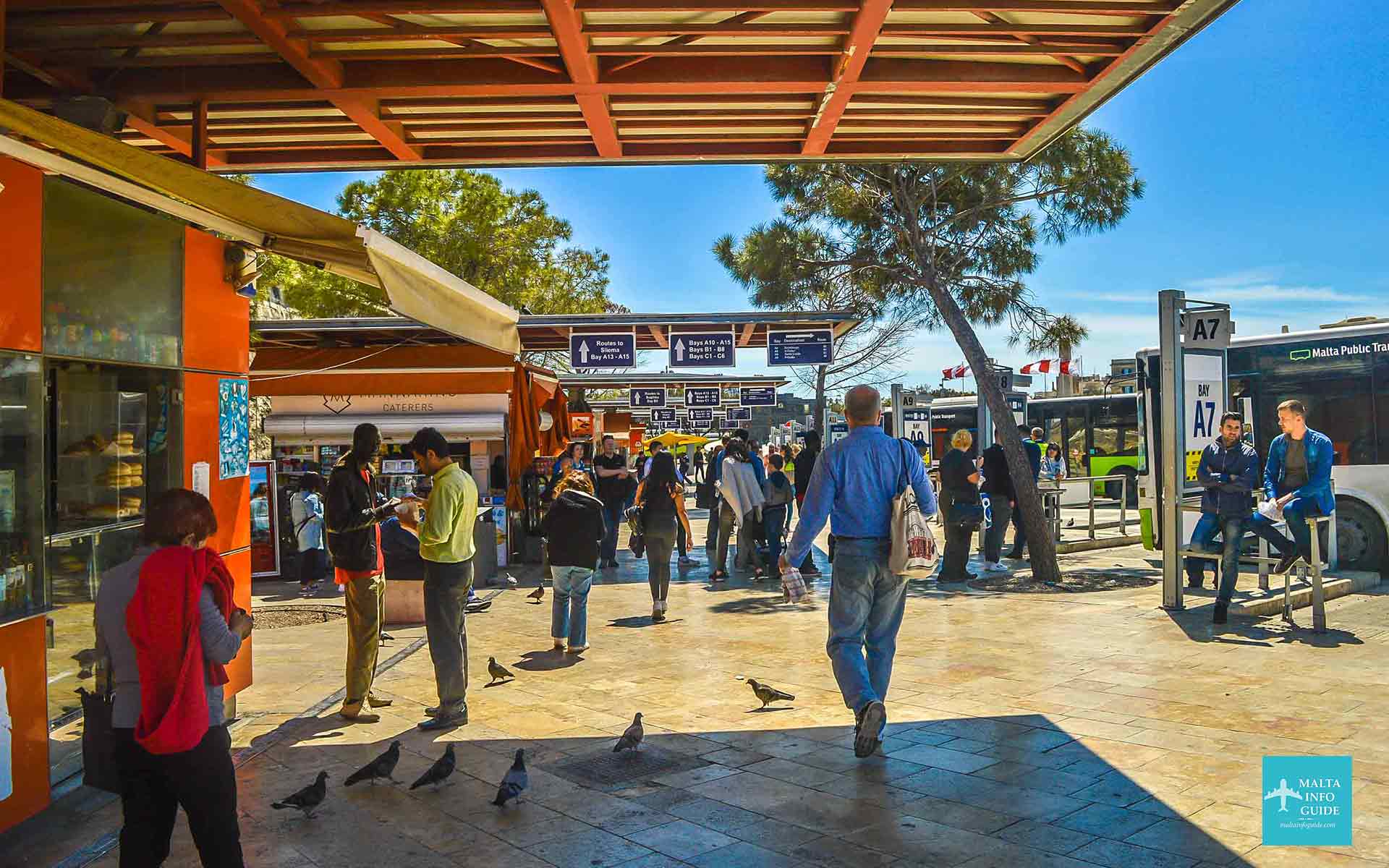 Valletta bus terminal, Malta’s main and largest public transport hub
Night Buses in Malta
Malta Public Transport operates a night bus network for travellers who need to get around after the regular daytime services end. Night routes are identified by the letter “N” followed by the route number.
The night network now serves several popular areas and nightlife locations, including Valletta, Sliema, St Julian's, Buġibba and a number of surrounding towns and villages. There is also a night route operating in Gozo.
Night buses are less extensive than the daytime network, so check your route and departure time before heading out, particularly if your accommodation is outside one of the main tourist areas.
For concerts, festivals and other major events, Malta Public Transport may also operate additional or extended services. Always check the latest official routes and service information when planning a late-night journey.
Getting From Malta Airport to Your Accommodation
Malta International Airport is well connected by public transport, and taking the bus can be a practical and affordable way to reach many of Malta's main tourist areas.
Bus stops are located outside the airport terminal, and Malta Public Transport operates Airport Direct services connecting the airport with several popular destinations, including Valletta, St Julian's, Sliema, Gżira, Buġibba, Mellieħa and Ċirkewwa.
If you are staying in a well-connected area such as Valletta, Sliema, St Julian's, Buġibba, Qawra or St Paul's Bay, using the bus from the airport may be convenient. However, if your accommodation requires several connections, you are arriving late or you have a lot of luggage, a taxi or airport transfer may be easier.
If you are travelling directly to Gozo, you can travel from the airport towards the Gozo Ferry at Ċirkewwa and then continue across to Gozo. There are also other ways of reaching Gozo from Malta, which we explain further down this page.
Important: If an older website, blog or map tells you to take the X1, X2, X3 or X4 from Malta Airport, check again before travelling. These old airport routes were replaced in April 2025.
Looking for the Old X1, X2, X3 or X4 Airport Bus Routes?
If you have found older Malta travel information mentioning the X1, X2, X3 or X4 airport buses, these routes were replaced in April 2025. Malta Public Transport introduced different routes to maintain connections between the airport and the areas previously served.
The main replacements include:
- Old X1: travellers between Malta Airport and areas towards Mellieħa and Ċirkewwa can now use services including TD1, while other replacement routes cover different parts of the former X1 journey.
- Old X2: airport connections towards St Julian's, Paceville, Sliema and Gżira are now served by routes including TD2 and TD3.
- Old X3: connections between the airport, Buġibba, Qawra and surrounding areas are now available through routes including TD1 and 214.
- Old X4: airport and Valletta connections are now served by routes including TD4 and other services covering the former X4 corridor.
Because bus routes can change, do not rely on an old X1, X2, X3 or X4 timetable when planning your journey. Check the current Malta Public Transport Journey Planner for the best route between the airport and your accommodation.
Bus, Taxi, Transfer or Rental Car From Malta Airport?
The best way to travel from Malta Airport depends on where you are staying, when you arrive and how much luggage you have.
- Choose the bus if you are keeping costs down and your accommodation is well connected by a direct or convenient route. This can work particularly well if you are staying in one of Malta's main tourist areas.
- Choose a taxi if you want to travel directly to your accommodation without waiting for a bus or changing routes. This can be especially convenient after a late flight or when travelling with several bags.
- Choose a pre-booked transfer if you prefer to have your airport journey arranged before you arrive, particularly when travelling as a family or group.
- Collect a rental car at the airport if you already plan to use a car throughout your holiday and want to start driving as soon as you arrive.
For many visitors staying in a well-connected area, there is no need to rent a car simply for the airport transfer. A bus, taxi or pre-booked transfer can get you to your accommodation, and you can then decide which combination of transport works best for the rest of your trip.
Malta Hop-On Hop-Off Buses
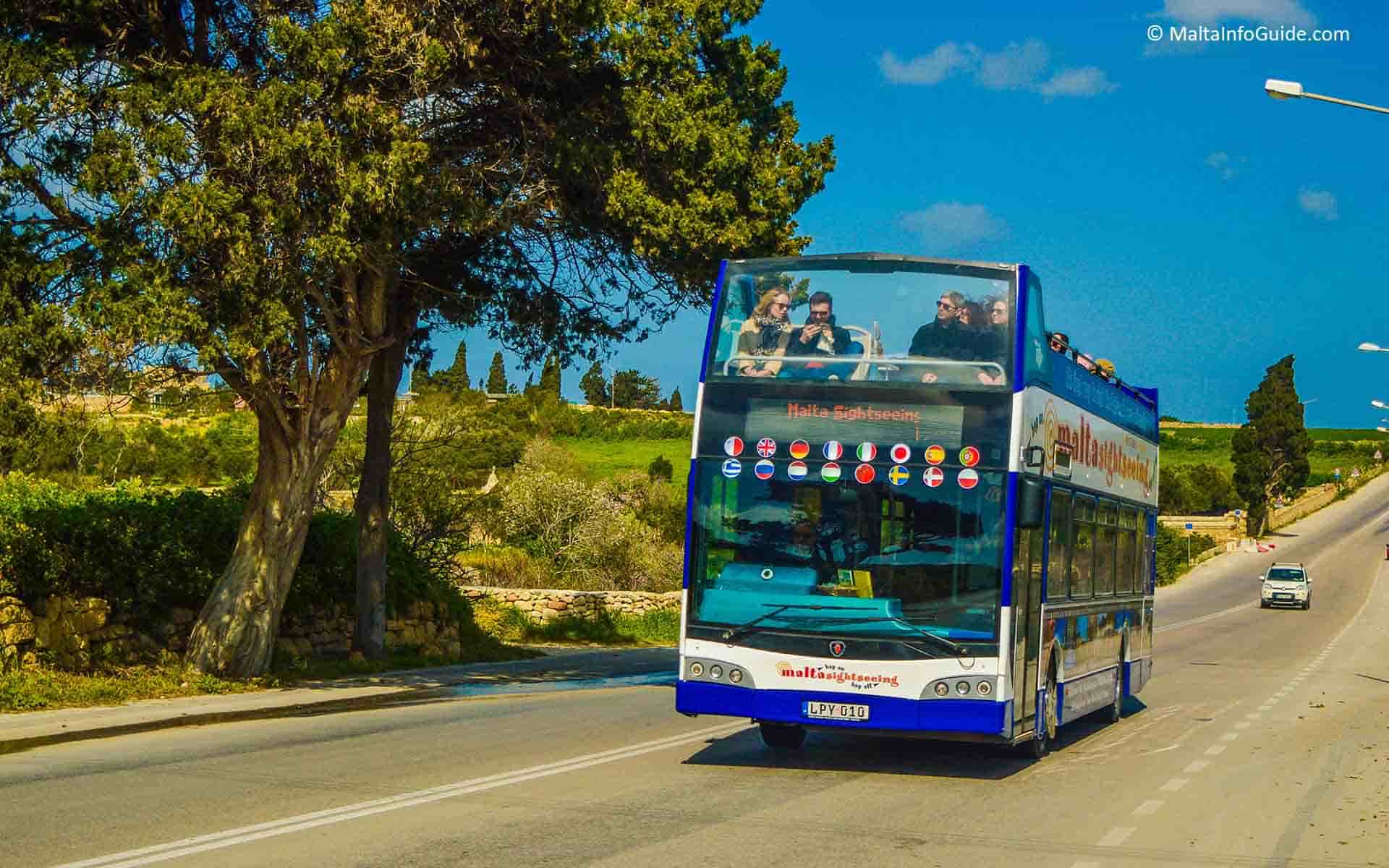 Hop-on hop-off sightseeing buses are another way to explore Malta’s main attractions
Hop-on hop-off buses can be a convenient option if you want to visit several of Malta's main attractions in one day without planning individual public bus connections. They operate as sightseeing tours rather than part of Malta's regular public transport network.
Current tours cover different parts of the island, with routes taking visitors to popular places such as Valletta, Mdina, Mosta, the Three Cities, Marsaxlokk and the Blue Grotto, depending on the route you choose. You can leave the bus at selected stops, explore the area and then continue your sightseeing when another bus arrives.
For general day-to-day travel between your accommodation, restaurants and individual attractions, Malta Public Transport, ferries or taxis may be more flexible. The hop-on hop-off is most useful when you specifically want a sightseeing day with several stops already organised along a set route.
You can see the different Malta hop-on hop-off routes, stops and ticket options in our complete hop-on hop-off Malta guide.
Taxis In Malta
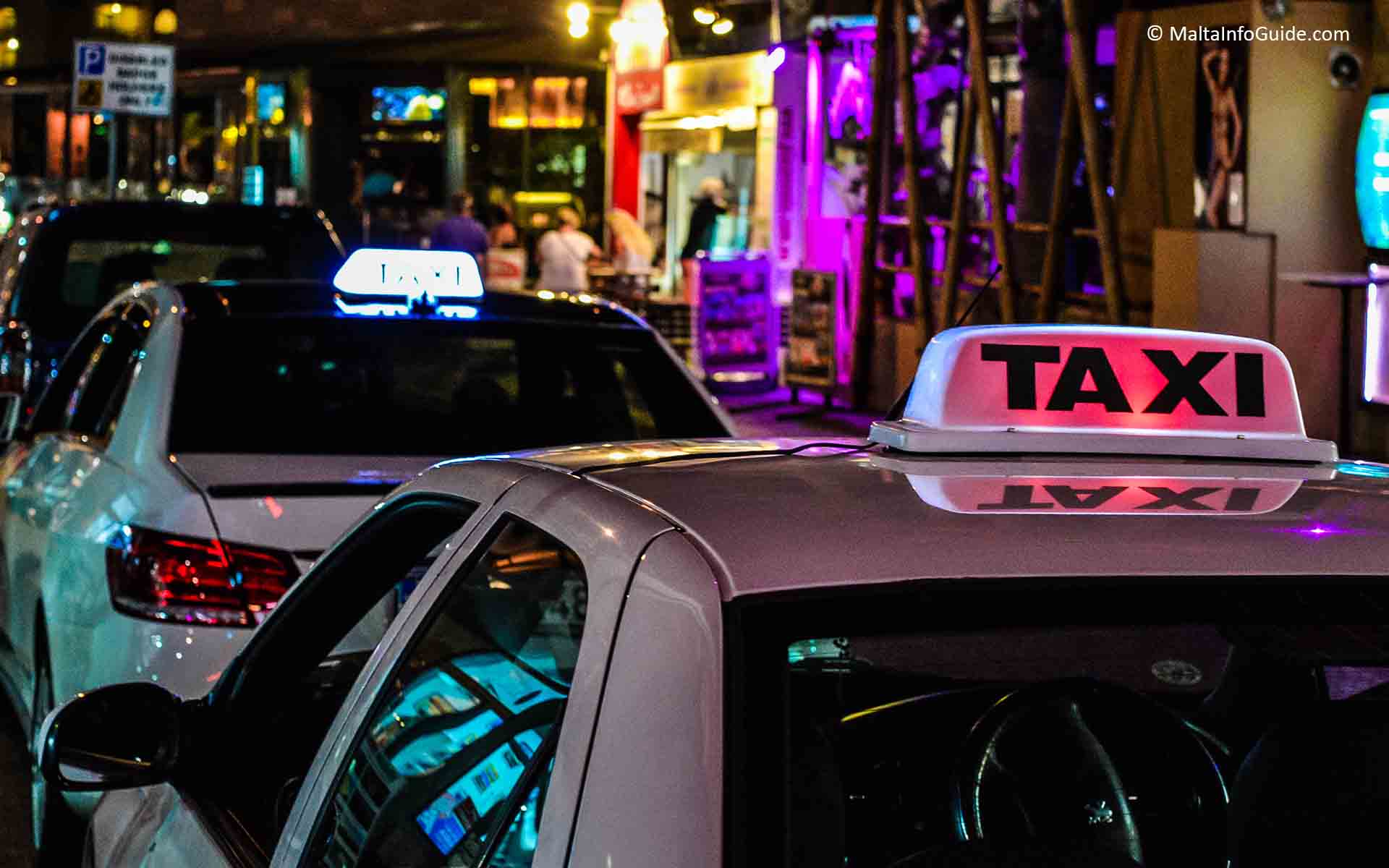
Taxis in Malta are a convenient way to get around when you want to travel directly between two places without waiting for a bus or looking for parking. They can be particularly useful in the evening, when travelling with luggage or when visiting somewhere that is less convenient by public transport.
Traditional taxis are available around the islands, and you can also pre-book a taxi for a specific journey. At Malta International Airport, official taxi services operate 24 hours a day, with prepaid fixed-rate journeys available from the taxi booth in the arrivals area. For airport journeys, you can also book an airport transfer in advance if you prefer to have your transport arranged before you arrive in Malta.
If you are travelling onwards to Gozo, check our Gozo ferry information before planning the rest of your journey. You can also take a rental car across on the vehicle ferry if you are driving during your stay.
Alongside traditional taxis, app-based ride-hailing services are now widely used in Malta and can be another convenient option for getting around. We explain these in the next section.
Ride-Hailing Apps in Malta
App-based ride-hailing is widely used in Malta and can be one of the easiest ways to arrange a taxi-style journey from your phone. Bolt, Uber and eCabs are among the main ride-hailing services currently operating in Malta.
Using an app allows you to enter your pickup point and destination before requesting a ride, making it easy to arrange transport between your accommodation, attractions, restaurants, beaches and other locations around the islands.
Ride-hailing can be particularly useful in the evening, when travelling with luggage, or when a destination is inconvenient to reach by bus. It can also work well alongside public transport, allowing you to use buses and ferries for most journeys and book a ride only when it saves you significant time or inconvenience.
Prices and availability can vary according to the journey, time and demand, so check the fare shown in the app before confirming your ride.
Malta to Gozo by Ferry
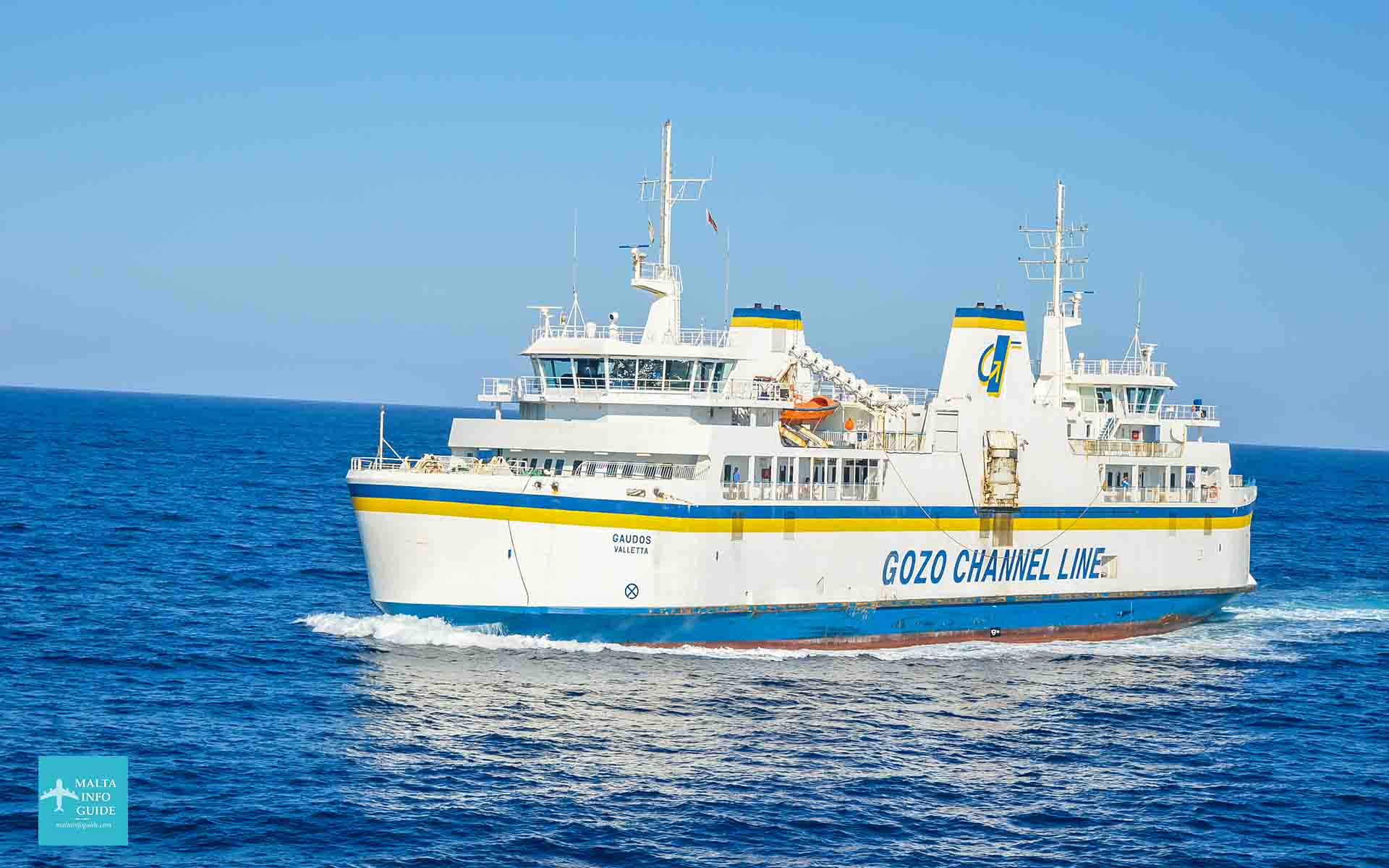
The Gozo Channel ferry connects Ċirkewwa in the north of Malta with Mġarr Harbour in Gozo. The crossing takes approximately 25 minutes and operates daily throughout the year.
This is the main ferry to use if you are taking a rental car or other vehicle to Gozo, although foot passengers can use the service too. Vehicles, motorcycles and bicycles can all be carried on the ferry.
If you are travelling without a car, you can reach Ċirkewwa by bus and board as a foot passenger. Once you arrive at Mġarr in Gozo, buses and taxis are available for travelling onwards around the island.
Ferries run regularly, but departure times can vary according to the timetable, so check the current Gozo Channel schedule before travelling, particularly if you have another journey or booking planned afterwards.
If you are travelling to Gozo without a vehicle, there is also a fast passenger ferry option from Valletta, which we explain in the next section.
Gozo Highspeed Fast Ferry
Gozo Highspeed operates a fast passenger ferry between Valletta and Mġarr Harbour in Gozo. It is useful if you are travelling without a car and want to reach Gozo directly from Valletta rather than first travelling north to Ċirkewwa.
The service is for foot passengers only, so you cannot take a car across on this ferry. Bicycles may be accepted subject to the operator's current conditions.
The journey is considerably faster than travelling by road to Ċirkewwa and then taking the vehicle ferry, which can make it a convenient option if you are staying in or near Valletta, Sliema, Gżira or other central areas.
Services and departure times can vary, so check the latest Gozo Highspeed timetable before travelling, especially if you have onward transport or a booking in Gozo.
Ferries Between Sliema, Valletta and the Three Cities

Passenger ferries are a convenient way to travel across Malta's two main harbours and can help you avoid some of the road traffic around Valletta.
The Sliema to Valletta ferry crosses Marsamxett Harbour and is particularly useful if you are staying in Sliema and want to visit the capital without travelling around the harbour by road.
A separate ferry operates between Valletta and Cospicua (Bormla) across the Grand Harbour, making it a convenient way to reach the Three Cities area, including Birgu (Vittoriosa) and Senglea (Isla).
Both ferry routes operate throughout the year, with more extensive evening services during the summer period. Check the latest timetable before travelling, especially if you are planning to use the ferry later in the evening or need to make a connection afterwards.
Apart from being practical transport, the ferries also give you excellent views of Valletta and Malta's historic harbours during the crossing.
Cycling Around Malta
Cycling can be an enjoyable way to explore parts of Malta and Gozo, particularly if you want to experience the countryside and quieter areas at a slower pace.
However, cycling is not equally convenient on every road. Dedicated cycling infrastructure is still limited in many areas, and you may need to share the road with other traffic, so take extra care when choosing your route.
If you decide to cycle in Malta, wear a helmet, remain alert to surrounding traffic and make sure the bicycle's brakes, lights and other safety equipment are working properly.
For most visitors, cycling is better considered as an additional way to explore selected areas rather than the main form of transport for an entire Malta holiday.
Can You Get Around Malta Without a Car?
Yes, you can enjoy Malta without renting a car, especially if you stay in an area with good bus and ferry connections.
Areas such as Valletta, Sliema and St Julian's are convenient bases for travellers relying on public transport because there are several transport options nearby. Buġibba and Qawra can also work well if you plan to use buses for sightseeing around the island.
For many visitors, the most practical solution is to combine different types of transport rather than rely on buses for every journey. You might use buses for sightseeing during the day, ferries where they provide a convenient connection, and an occasional taxi or ride-hailing service when travelling late in the evening or to somewhere less convenient by public transport.
Where you choose to stay makes a big difference. If avoiding car hire is important to you, check the transport connections around your accommodation before booking, rather than looking only at the distance between places on a map.
You do not need a car simply because you want to explore Malta, but renting one can still give you more flexibility if your accommodation or the places you want to visit are away from the main public transport routes.
Horse-Drawn Carriages in Malta
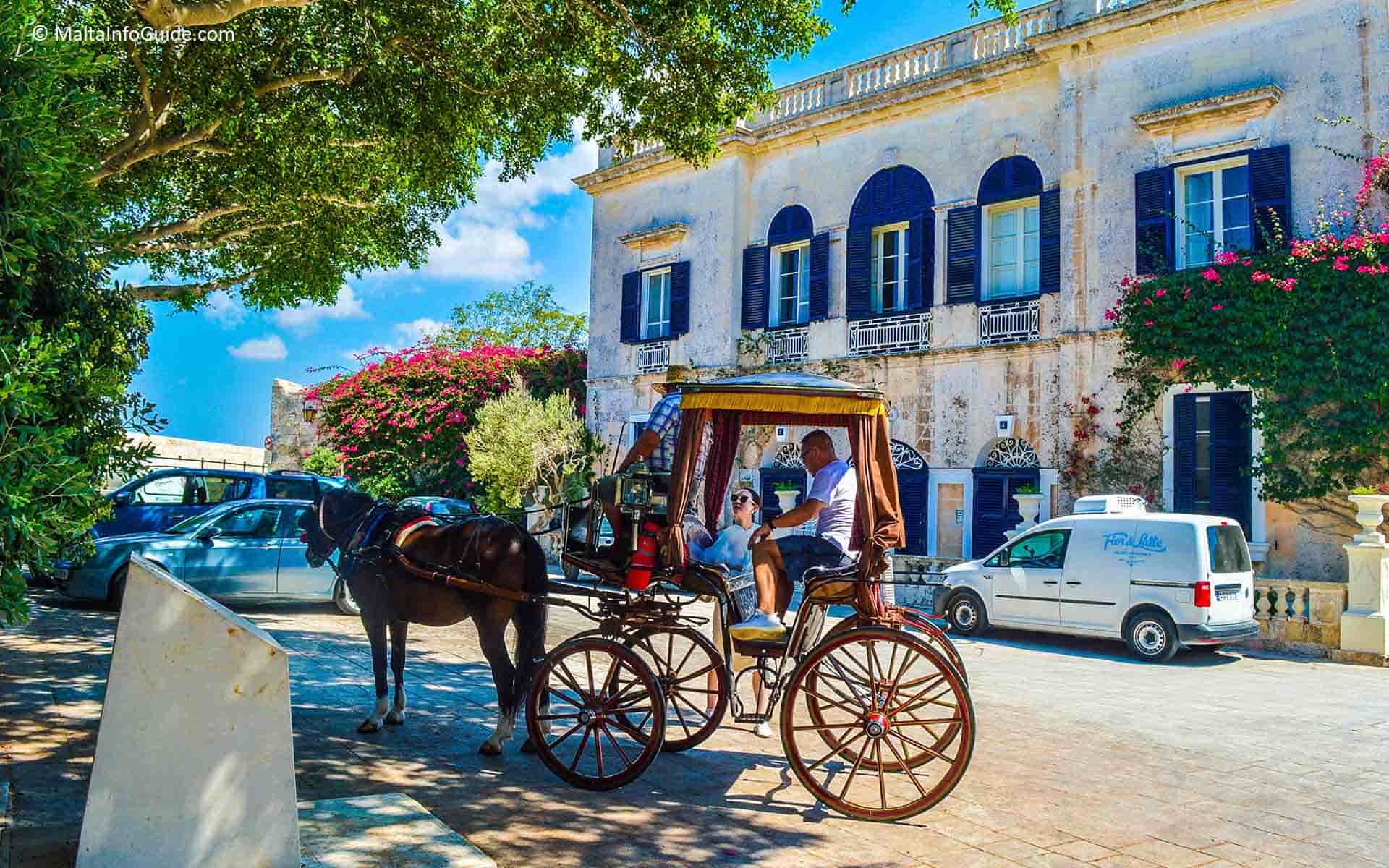
The traditional Maltese horse-drawn carriage, known locally as a karrozzin, dates back to the mid-19th century and is now mainly used as a sightseeing experience rather than everyday transport.
You can still find karrozzini in several popular visitor areas, including Valletta, Mdina and Rabat, Sliema and St Julian's, and Buġibba and Qawra. They offer a slower way to see parts of these areas while experiencing one of Malta's traditional forms of transport.
If you decide to take a carriage ride, ask about the route and price before the journey begins so you know what is included.
Frequently Asked Questions About Getting Around Malta
Can You Get Around Malta Without a Car?
Can You Get Around Malta Without a Car?
Yes. Many visitors get around Malta using a combination of buses, ferries, taxis and ride-hailing services. Staying in a well-connected area such as Valletta, Sliema, St Julian's, Buġibba or Qawra makes travelling without a car easier. Renting a car can still be useful if you want more flexibility or plan to visit places that are less convenient by public transport.
How Much Is a Bus Ticket in Malta?
How Much Is a Bus Ticket in Malta?
A standard daytime bus ticket currently costs €2 in winter and €2.50 in summer and is valid for two hours, including transfers during that period. Night and direct services have different fares. If you plan to use buses frequently, one of the visitor travel cards may offer better value.
Is Malta Public Transport Free for Tourists?
Is Malta Public Transport Free for Tourists?
Not generally. Free bus travel applies to eligible passengers using a personalised Tallinja Card. Most visitors will need to buy individual tickets or use one of the travel cards available for tourists.
Do Buses Run at Night in Malta?
Do Buses Run at Night in Malta?
Yes. Malta Public Transport operates a night bus network, with routes identified by the letter N. Night services are less extensive than the daytime network, so check the current route and timetable before planning a late journey.
Where Are the Main Bus Terminals in Malta and Gozo?
Where Are the Main Bus Terminals in Malta and Gozo?
The main Malta Public Transport terminals include Valletta, Buġibba and Ċirkewwa in Malta, and Victoria in Gozo. There are also many other important bus stops and interchange points around the islands, so use the Journey Planner to find the most convenient connection for your destination.
Do the X1, X2, X3 and X4 Airport Buses Still Operate?
Do the X1, X2, X3 and X4 Airport Buses Still Operate?
No. The old X1, X2, X3 and X4 routes were replaced in April 2025. If you find these route numbers in older Malta travel information, do not rely on the old timetable. Use the current Malta Public Transport Journey Planner or Airport Direct services to find the correct route for your accommodation.
Disclaimer — We may earn a commission if you book via certain links on the website. No extra cost to you.
🎉 What’s On In Malta?
Updated for September • Local picks
Discover events, village feasts, fireworks, festivals and seasonal things to do this September.
📅 See What’s Happening This September ⛪ Malta Village Feasts 🌞 Things To Do In Malta 🗓️ Events By Month❤️ Enjoying Malta Info Guide?
If our free local guides made planning your Malta trip easier, you can say thanks with a small beer.
Written by two locals. Always free.

✈️ Planning your Malta trip?
✈️ Flights to Malta
Compare airlines and find the best prices today.
Check today’s cheapest flights →🏨 Hotels in Malta
Find available rooms, trusted stays and good locations for your Malta trip.
See available hotels this week →🚗 Car Rental in Malta
Compare prices, pick-up points and car options before you book.
Compare car rental prices →Planning London too?
Discover where to stay, what to do, and when to visit London.
Explore London Guide →Recent Articles


-
Christmas Pantos in Malta 2026/27 - Dates, Venues & Tickets
Sep 14, 26 12:07 PM
Find Christmas pantos in Malta and Gozo for 2026/27, with confirmed dates, venues, language, age guidance, booking status and official ticket links. -
Dog Friendly Beaches Malta & Gozo: 16 Official Locations
Sep 13, 26 04:09 AM
Find the 16 official dog friendly beaches in Malta and Gozo, plus the rules on where dogs can swim and what owners need to know before visiting. -
Xlendi Bay Gozo: Local Guide to Swimming, Beach & Tips
Sep 11, 26 03:26 PM
Local guide to Xlendi Bay in Gozo, with advice on swimming, the small beach, restaurants, parking, buses, summer crowds and who Xlendi suits best.