- Home
- Malta Events Calendar 2026
- Activities in Malta May
- Medieval Mdina Festival Malta
Medieval Mdina Malta 2026
Maltese Songs, Live Orchestra
Medieval Mdina is one of Malta’s most memorable cultural events. The Silent City comes alive with costumes, re-enactments, music, heritage displays, and activities for all ages.
This event is special because of its location. Mdina feels historic every day, but during the festival, its narrow streets, stone walls, courtyards, and old gateways make it feel even more like you’ve stepped into the past.
When Medieval Mdina returns, it is worth checking for more events in Malta in May to plan a historic spring visit.
Event details at a glance
- Organiser: Mdina Local Council
- Venue: Mdina, Malta
- When: Not held in 2026. Will return in 2027.
- Time: Usually starts around 11:00
- Entry: Free entry in recent editions
Official Medieval Mdina Links
- Social page: Medieval Mdina Festival Facebook
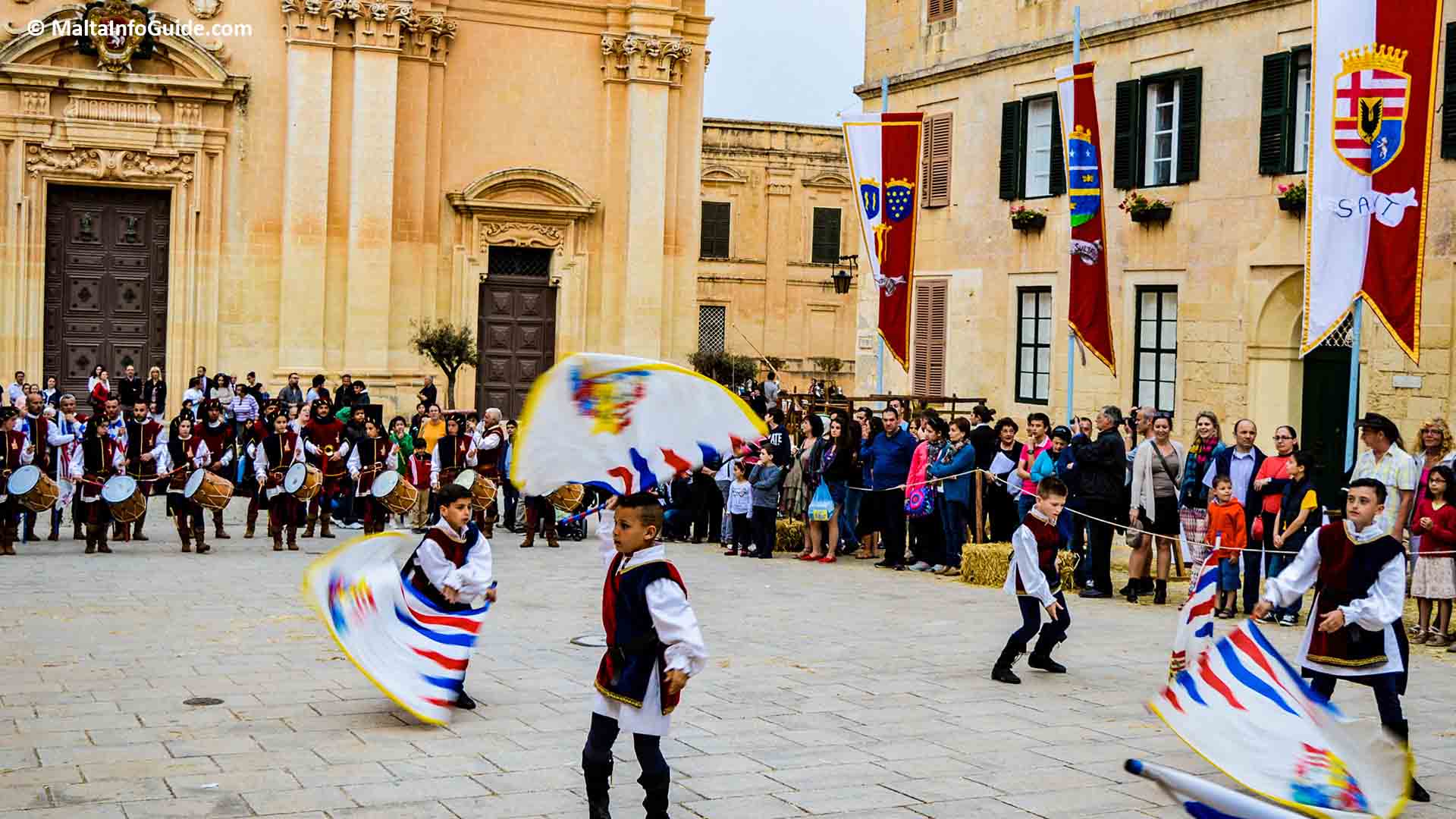 Children Performing During Medieval Festival
Table of Contents
- Why Mdina gives this event its character
- What Medieval Mdina is all about
- What the festival experience feels like
- Visitor tips before you go
- How to reach Medieval Mdina
- Nearby places and local ideas
- How to explore Medieval Mdina
- Where to stay for the event
- Why Medieval Mdina is worth visiting
- Useful FAQs about Medieval Mdina
Why does Mdina give this event its character
Medieval Mdina works so well because the city itself shares its own story. You don’t have to add anything to make it feel historic—Mdina’s stone lanes, old walls, noble houses, quiet corners, and dramatic gateways already make the experience feel authentic.
The Silent City brings a special charm to the festival that’s rare to find. Costumed performers, medieval music, battle scenes, and market-style activities all fit perfectly in one of Malta’s most beautiful old towns.
What Medieval Mdina is all about
Medieval Mdina is a festival that celebrates Malta’s medieval past with re-enactments, pageantry, performances, and traditional displays. The event aims to give visitors a sense of what Mdina was like when it was a key center for power, defense, and daily life on the island.
The festival combines entertainment with heritage, offering more than just a typical street event. It attracts families, history fans, photographers, locals, and tourists who want to experience Mdina in a lively and memorable way.
What the festival experience feels like
The event is lively and full of sights, and you can enjoy it at your own pace. You can stroll through the streets, pause at interesting spots, watch re-enactment groups, listen to music, see medieval-style shows, and soak up the atmosphere in the main squares and entrances.
You will see lots of colour, costumes, flags, armour, music, and moments for the whole family. It is also a great event for photography, as Mdina’s architecture provides a natural historic backdrop in every corner.
Visitor tips before you go
If you arrive early, you will have a calmer start and more time to explore before the crowds build up. The streets in Mdina are narrow, so it can get crowded near popular performances and by the main gate.
It is best to wear comfortable shoes since some areas have uneven ground, and you might be walking for a long time. If you are bringing children, try to plan a few short breaks in Rabat or in quieter spots nearby, as the festival is exciting but can get busy.
How to reach Medieval Mdina
🚗 Car: Drive towards Rabat and Mdina, then follow signs to parking areas outside the old city walls, as vehicles do not enter Mdina itself.
🚌 Bus: Public buses serve Rabat, which is the most convenient stop for reaching Mdina on foot.
⛴️ Ferry: The ferry is not useful for reaching Mdina, as the event is inland and best reached by bus, car, taxi, or organised transport.
🚕 Taxi: A taxi or ride-hailing app can be convenient, especially in the evening, but allow extra time during busy festival hours.
🅿️ Parking: Parking is usually available around Rabat and the Mdina area, so arriving early helps avoid a longer walk. But it has become difficult during the last few years.
🅿️🚌 Park & Ride: A Park & Ride service for the festival, sometimes starting from the Ta’ Qali area. The exact location is usually announced closer to the event.
Nearby places and local ideas
📍 Rabat: A lively neighbouring town with cafés, churches, catacombs, and local streets to explore before or after the event.
📍 St Paul’s Catacombs: One of Malta’s most important underground heritage sites, ideal if you want to add more history to your visit
📍 Domvs Romana: A small but fascinating Roman site near Mdina, useful for visitors interested in Malta’s earlier layers of history.
📍 Mdina bastions: A beautiful viewpoint over Malta, especially good for photos and for a quiet pause during the day.
📍 St Paul’s Cathedral: One of Mdina’s most important landmarks and a must-visit for architecture and heritage lovers.
Local tip: Mdina and Rabat work very well together, so do not plan the event as a quick stop. Give yourself time to walk slowly, enjoy the setting, and take breaks when the streets become busier.
How to explore Medieval Mdina
One easy way to enjoy Medieval Mdina is to begin at the main gate and follow the path as it takes you through the city. Stop if you hear music, see performers, or notice a crowd around a display.
Once you have seen the main streets, head to the quieter lanes and bastion viewpoints for a change of pace. This way, you get both the lively festival mood and the classic medieval sights of Mdina.
If you are staying for several hours, take a break in Rabat before returning later. The event can feel different as the day changes, especially as the stone streets soften in the late afternoon light.
Where to stay for the event
If you are coming to Malta for Medieval Mdina, you might want to stay in Rabat for convenience, in central Malta for easy travel, or in Valletta and Sliema if you like having more restaurants, transport, and nightlife nearby. Check the map below to compare places to stay near Mdina and around the island.
👉 Make the most of your Malta holiday location
Why Medieval Mdina is worth visiting
Medieval Mdina is worth visiting because it brings together a stunning historic setting with an event that truly fits its location. You do more than just watch performances—you walk through one of Malta’s most atmospheric cities as history, color, and sound fill the streets.
Visitors get a memorable way to experience Mdina that goes beyond a typical sightseeing walk. Locals can enjoy one of Malta’s favorite heritage spots in a more festive and family-friendly atmosphere.
Explore More Events And Festivals
Browse more Malta and Gozo events by category.
Seasonal And Traditional Events
International Music Festivals
International Artists And Concerts
Wine, Food And Local Festivals
Culture, Arts And Music Events
Historic, Fairs And Spectacle Events
Gozo Events And Festivals
Useful FAQs about Medieval Mdina
When is Medieval Mdina Malta 2026?
When is Medieval Mdina Malta 2026?
The date for Medieval Mdina Malta 2026 hasn’t yet been confirmed. It is held every two years, so the next edition will be in 2027.
Where is Medieval Mdina held?
Where is Medieval Mdina held?
Medieval Mdina takes place in Mdina, Malta. Most activities take place in the streets, squares, and historic spots of the Silent City.
Is Medieval Mdina free to enter?
Is Medieval Mdina free to enter?
The event has been free to enter in recent years.
Is Medieval Mdina good for families?
Is Medieval Mdina good for families?
Yes, Medieval Mdina is usually family-friendly, especially for kids who like costumes, knights, music, battles, and historic settings. Parents should expect some crowds and uneven streets.
What can you usually see at Medieval Mdina?
What can you usually see at Medieval Mdina?
You can usually see re-enactments, medieval performances, costumes, music, market stalls, and heritage displays, depending on that year’s programme.
Do I need to book in advance?
Do I need to book in advance?
You usually do not need to book in advance for general entry if the event is free. Special tours, museum activities, or limited experiences might need separate bookings.
What should I wear for Medieval Mdina?
What should I wear for Medieval Mdina?
Wear comfortable shoes and light layers, especially if you’ll be walking around Mdina and Rabat for a few hours. The streets are lovely but can be uneven in some areas.
Can I visit Rabat on the same day?
Can I visit Rabat on the same day?
Yes, Rabat is right next to Mdina and is a great place to visit alongside the event. You’ll find more places to eat, rest, and explore before or after the festival.

Disclaimer — We may earn a commission if you book via certain links on the website. No extra cost to you.
🎉 What’s On In Malta?
Updated for October • Local picks
Discover events, village feasts, fireworks, festivals and seasonal things to do this October.
📅 See What’s Happening This October ⛪ Malta Village Feasts 🌞 Things To Do In Malta 🗓️ Events By Month❤️ Enjoying Malta Info Guide?
If our free local guides made planning your Malta trip easier, you can say thanks with a small beer.
Written by two locals. Always free.

Malta Events
- Activities In Malta
- Activities in January
- Activities in February
- Activities in March
- Activities in April
- Activities in May
- Activities in June
- Activities in July
- Activities in August
- Activities in September
- Activities in October
- Activities in November
- Activities in December
- Carnival In Malta
- Easter Sunday In Malta
- Holy Week
- First Night Malta
- Good Friday Processions Schedule
- Good Friday Processions
- Isle Of MTV
- Malta Night Parties
- Malta Public Holidays
- St. Patrick's Day Malta
- Summer Music Festivals
✈️ Planning your Malta trip?
✈️ Flights to Malta
Compare airlines and find the best prices today.
Check today’s cheapest flights →🏨 Hotels in Malta
Find available rooms, trusted stays and good locations for your Malta trip.
See available hotels this week →🚗 Car Rental in Malta
Compare prices, pick-up points and car options before you book.
Compare car rental prices →Planning London too?
Discover where to stay, what to do, and when to visit London.
Explore London Guide →Recent Articles


-
Weather in Malta in December 2026 | Temperatures & Tips
Oct 03, 26 05:55 AM
Planning Malta in December? See average temperatures, rainfall, sea temperature, what to wear, swimming conditions, Christmas weather and practical local tips. -
Malta Weather in November: Temperatures, Rain & What to Wear
Oct 03, 26 05:00 AM
Planning a trip to Malta in November? See temperatures, rainfall, early and late November weather, what to wear, whether you can swim and what to expect. -
Malta Weather in October: Temperature, Rain & What to Wear
Oct 02, 26 03:15 PM
Planning a trip to Malta in October? See temperatures, rainfall, sea temperature, early and late October weather, what to wear and whether you can still swim.