- Home
- Malta Events Calendar 2026
- Easter Holy Week
- Good Friday Processions Malta
Good Friday Processions Malta 2027 Times & Locations
The Most Spiritual Holiday Of The Year
Date Last Updated: 22nd October 2026
Good Friday processions in Malta have been held since at least the 16th century. A procession carries statues of the Passion of Christ, symbolising Jesus' sacrifice of his life for all. This day commemorates Jesus Christ's death on the cross.
Good Friday is an important day in Malta’s religious calendar, bringing communities together to reflect on Christ’s suffering through church services, prayer and traditional processions.
How Is The Good Friday Processions in Malta Sectioned?
- Malta Good Friday Procession Schedule 2027
- Gozo Good Friday Procession Schedule 2027
- A Graphical Map Showing The Locations Of Processions
- Processions Itinerary
- How Does Malta Spend Good Friday?
- What To Do On Good Friday In Malta
- Getting To The Processions
- Meditations for Good Friday | Via Crucis
- Traditions Of Good Friday In Malta
- Frequently Asked Questions About Good Friday
Watch the Good Friday Procession Come To Life
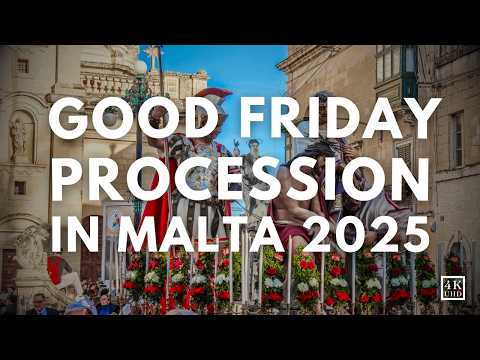
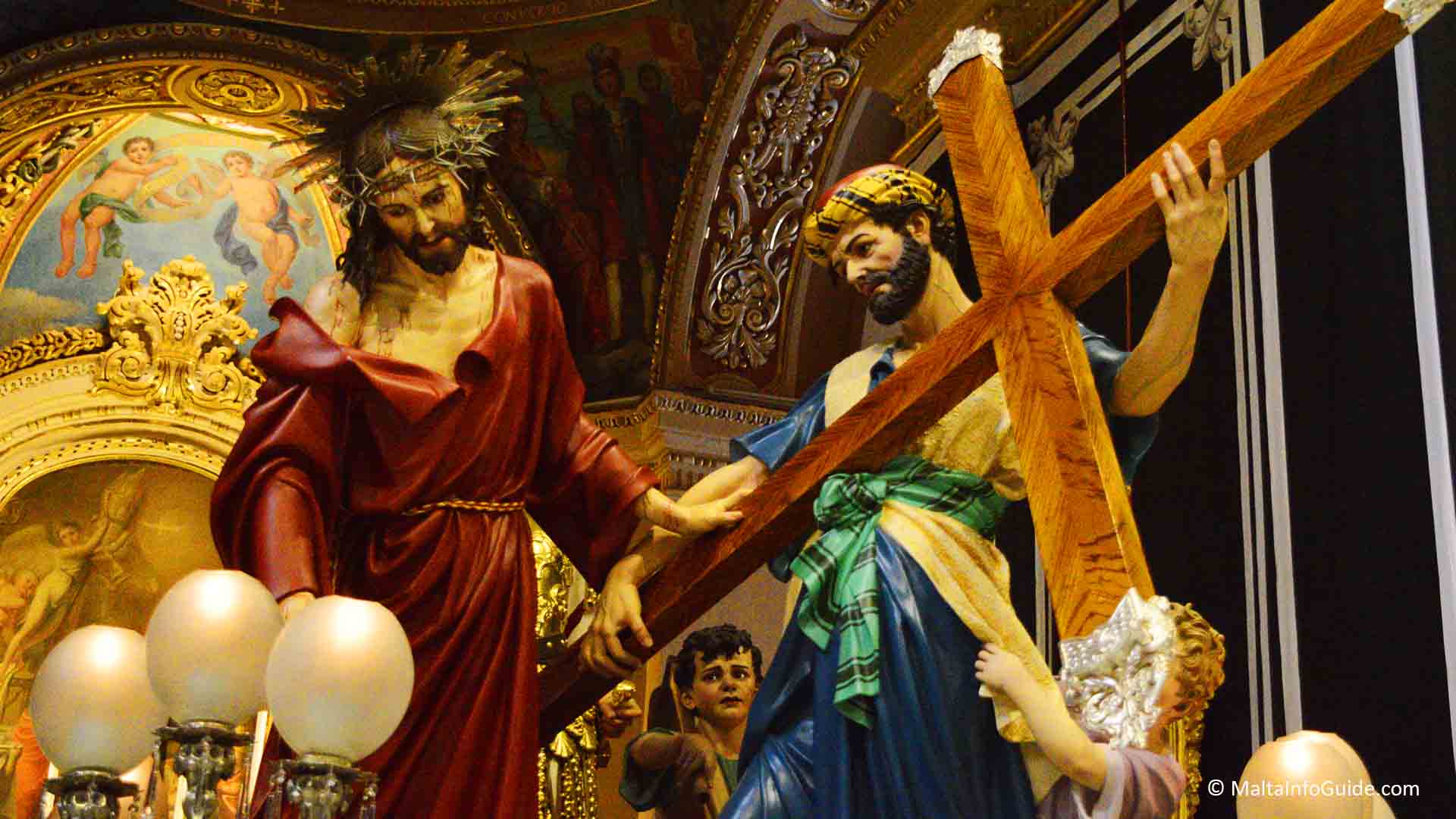
Churches around the islands celebrate Good Friday with an afternoon service. Afterwards, processions are held in various villages with life-size statues. They are taken out from the parish church in a procession around the village streets.
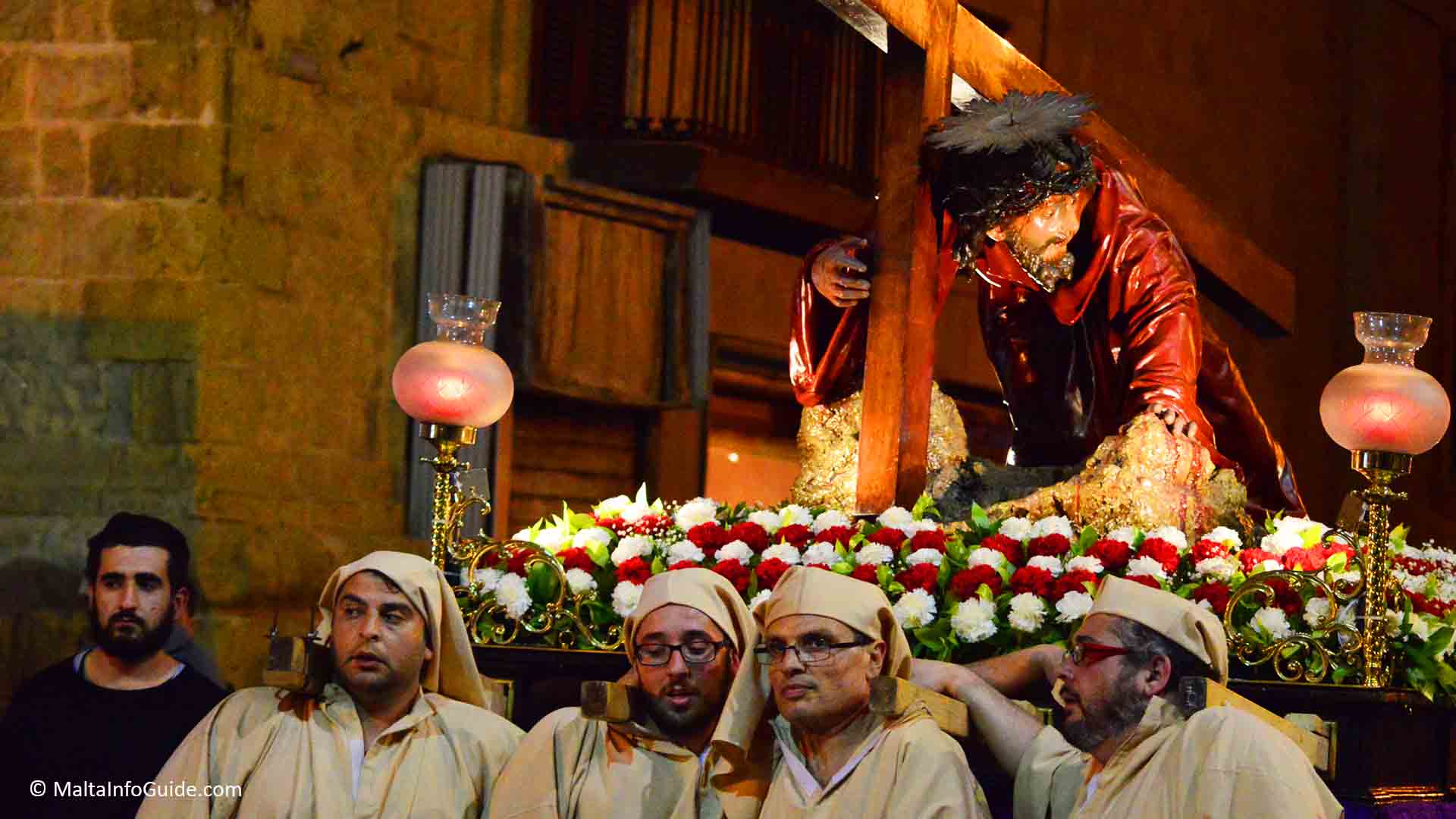
Each statue represents an episode from the Passion of Christ. Depending on its size, each statue is carried by a group of 6 to 10 bearers.
Good Friday Processions in Malta 2027
- Palm Sunday is held on 21st March 2027
- Good Friday is held on 26th March 2027
Good Friday procession times in each town and village generally remain the same from year to year, with only minor adjustments. We will update the 2027 times closer to Good Friday, once the final schedules are confirmed.
Good Friday Processions On Palm Sunday
Some Passion processions take place on Palm Sunday, the Sunday before Good Friday.
- Ħal Għaxaq - 17:00
- Ħal Għargħur - 16:30
- Ħal Qormi - 10:30 - Children's Processions With Good Friday Statues
Good Friday Processions Malta
To see the procession route on Google Maps click the village in the red colour.
- Il-Birgu | Vittoriosa - 18:00
- Il-Bormla | Cospicua - 17:30
- L-Isla | Senglea - 18:00
- Ħal Luqa - 18:15 - (Fl 17:45 Il-Parata Rumana)
- Il-Mosta - 17:30
- In-Naxxar - 17:30
- Raħal Ġdid Kristu Re - 17:15
- Ħal Qormi - San Ġorġ - 17:30
- Ir-Rabat - Paroċċa ta' San Pawl - 17:30
- Il-Belt Valletta, Ta' Ġieżu - 18:00
- Ħaż Żebbug - 17:30
- Iż-Żejtun - 17:00
good friday processions malta tour
Experience Good Friday at Zejtun's heart, witnessing a solemn procession of life-size statues and Old Testament scenes. Enjoy individual seating and convenient transportation for guided, organised participation in the significant ceremony, 'Il-Ġimgħa l-Kbira.'
Elevate your Good Friday with organised participation and embrace the cultural richness of this profound ceremony!
Book your Zejtun Good Friday procession Tour here.
The routes and timings below are based on previous editions. We will update them as 2027 parish programmes become available. Check the latest arrangements before attending.
Good Friday Processions in Gozo 2027
- In-Nadur - 18:00
- Ix-Xagħra - 18:00
- Iż-Żebbug - 18:00
- Basilica ta' San Ġorġ, Rabat - 17:30
Explore More Events And Festivals
Browse more Malta and Gozo events by category.
Seasonal And Traditional Events
International Music Festivals
International Artists And Concerts
Wine, Food And Local Festivals
Culture, Arts And Music Events
Historic, Fairs And Spectacle Events
Gozo Events And Festivals
Procession Route Round the Villages
Zejtun Good Friday Procession Malta
- The Good Friday Zejtun procession starts at 17:00 and finishes at 22:30.
- It takes around 1 hour 30 minutes for all the procession to exit the church.
- After going round all the streets, the procession starts to enter the church at around 21:30.
The Zejtun Good Friday procession walks through the following streets:
- Exit St. Catherine's Church
- Goes down Bon Kunsill
- Turns right on San Girgor Street
- Goes down Santu Wistin Street
- Turns on Sant Antnin Street
- Keeps straights onto Bugharbiel Street
- Turns right on Felicia Abela Street
- Goes down G. Curmi Street
- Takes a right onto L-Isqof Emmanuel Galea Street
- Left on San Girgor Street
- Right on Beland Street
- Right on Luqa Briffa Street (St. Thomas More College Zejtun)
- Left on Santa Marija Street
- Turn right on St. Mary's Church
- Right on St. Paul's Street
- Passes Misrah Karlu Diacono
- Goes up Bon Kunsill Street
- Passes Misrah Gregorio Bonici
- Enters back in St. Catherine's Church
Valletta Good Friday Procession Malta
- It starts at 18:00
- The procession takes around 3 hours and 30 minutes.
- It takes around 1 hour 30 minutes for all the procession to exit the church.
The route it take is as follows:
- Starts from Ta' Giezu church in San Gwann Street
- Left on St. Ursola Street
- Left on Archbishop Street
- Left on Merchant Street
- Left on Melita Street
- Left on St. Paul’s Street
- Right on St. Lucy’s Street
Qormi San Gorg Good Friday Procession
The procession starts at 17:30
- Walk down Triq il-Kbira
- Right on Pjazza San Frangisk
- Straight on Santa Katarina Street
- Right on Pinto Street
- Left on Dun Gwakkin Schembri Street
- Left on Il-Vitorja Street
- Left on Anici Street
- Left on Triq Il-Kbira heading back to the church
Zebbug Good Friday Procession Malta
- At 16:30 there will be a parade of soldiers and all the people taking part in procession.
- At 17:30 the procession starts exiting the church.
- By 19:00 all statues are out from church
- At 21:00 the first statue starts entering back in the church
The route it take is as follows:
- Starts exiting the church onto Misrah San Filep
- Walks up Sciortino Street
- Right on Vjal Il Helsien
- Right on Imghazel Street
- Right on Triq Il-Kbira
- Right on Misrah San Filep to church
Naxxar Good Friday Procession Malta
Procession starts at 17:30
- Exits church and goes down Triq Il- Kbira
- Right on Main Street
- Right on L-Imdina Street
- Right on Salib Street
- Left on Gdida Street
- Right on Labour Street
- Left on 21st September Street
- Right on Zenqa Street
- Right on Lucija Street and straight to the church
For a better look at the route, see the map below.
Ħal-Għaxaq Good Friday Procession Route
- Exits church and goes down Triq Santa Marija
- Left on Triq San Filippu
- Left on Triq M Gerada
- Left on Triq Dun M Sciriha/Triq Ġewwinija
- Left on Dawret Ħal-Għaxaq and straight
- Left on Triq Santa Tereza
- Left on Triq Santa Marija and straight to the church
How Does Malta Spend Good Friday?
Good Friday traditionally has a quieter, more reflective atmosphere in Malta. Many people attend church services and processions, while others spend time with family or enjoy a day out. Entertainment venues may open, but check individual programmes and opening hours.
Good Friday is a public holiday in Malta. Accommodation and essential travel services continue operating, while many offices, businesses and shops close or reduce their hours. Some restaurants and attractions remain open.
Buses and ferries operate, but holiday timetables and procession-related road closures may affect journeys. Check the latest schedules before travelling.
Government departments, businesses and schools are closed on this day.
The Gozo ferry operating between the islands runs on its normal schedule, and it is likely to add additional trips due to the large number of Maltese visiting Gozo over the weekend.
What To Do On Good Friday In Malta
On Maundy Thursday evening and Good Friday morning, you can visit parish churches across Malta and Gozo, as well as many other churches within towns and villages, to pray before the Blessed Sacrament at the Altar of Repose, known locally as Is-Sepulkru. These altars are often decorated with flowers and candles. Opening hours vary by church, so check the parish programme before visiting.
During Holy Week, towns and villages host exhibitions featuring miniature Passion statues, Last Supper displays and other devotional works. Look around parish centres and nearby streets, where displays may be held in halls, clubs and private homes. Opening dates and hours vary by organiser.
Some of the exhibitions will be located around the parish church. So it will be easy to locate.
In the afternoon, you can attend a procession. Click here to look at the list of villages and towns.
Things to know if you intend to visit
- Some processions take place on the Sunday before and start at different times.
- Processions start and finish at their organising church, which may be a parish church or another church, such as Ta’ Ġieżu in Valletta.
- Most processions take at least an hour to exit the church due to the number of statues and the many villagers participating.
- Some take almost two hours to exit the church, such as in Zejtun.
- All processions are beautiful to see. The most popular are those of Zejtun, Mosta and Qormi.
- Bring a camera; this experience is unique. You have to go to other countries to see similar processions, but every country has its own characteristics.
- Tour operators, hotels, and other providers offer reserved outdoor seating at selected Good Friday processions. Book beforehand; visitors and locals can use these services. You can also watch for free from public areas along the route.
How to Get To The Processions
If you're renting a car, parking may be difficult because the main streets leading to the centre will be closed for the procession. Also, many Maltese visit these processions. Look for parking on the nearby streets.
You can also use public transport, plan your route and leave your accommodation with enough time to arrive on time. Always ask about the last bus leaving the village for the Valletta terminus.
You can always call a taxi, and it will take you directly to the village or closest to the village core.
Use the map below to see which villages hold processions.
Traditions Of Good Friday In Malta
Participants
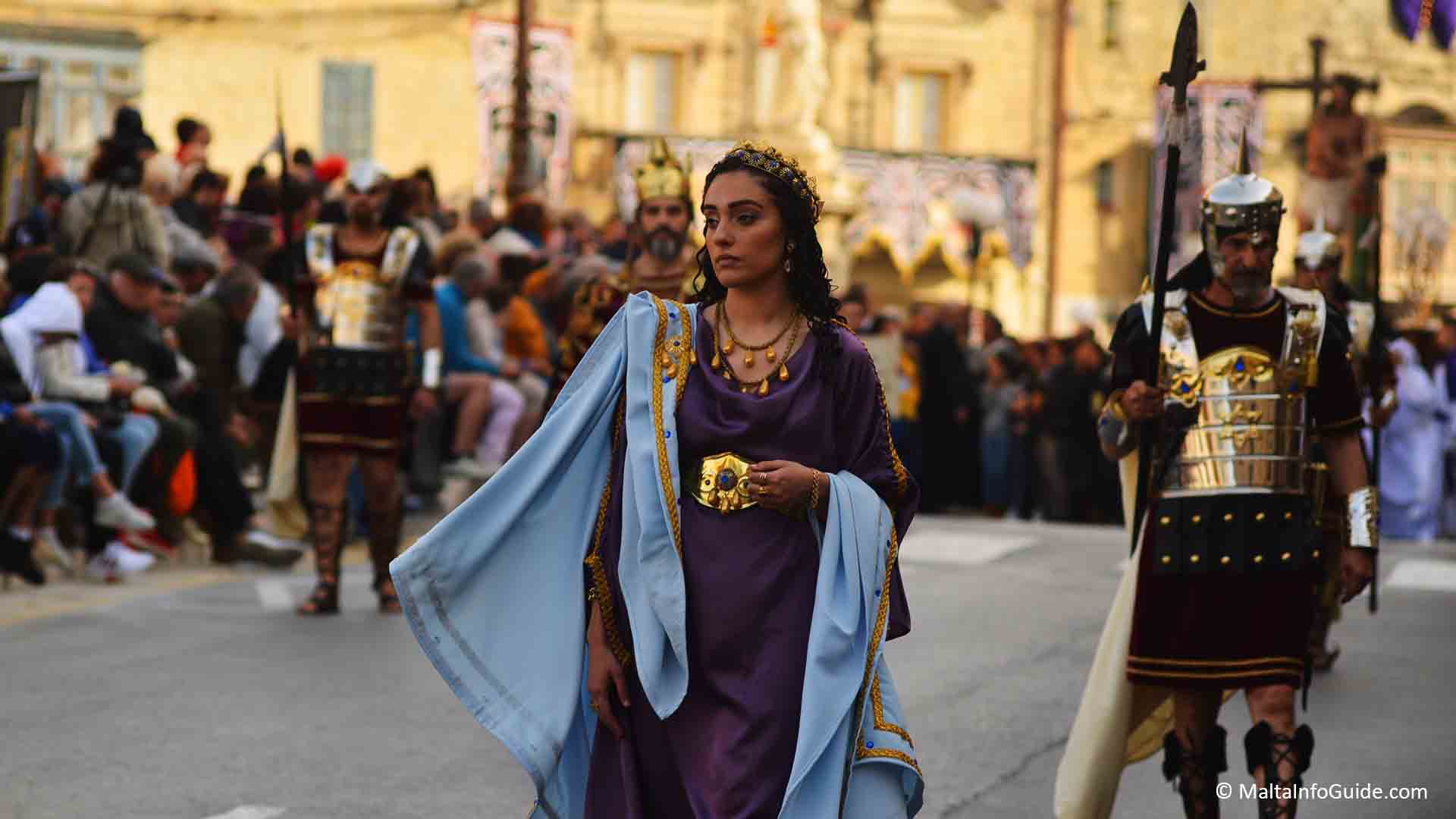
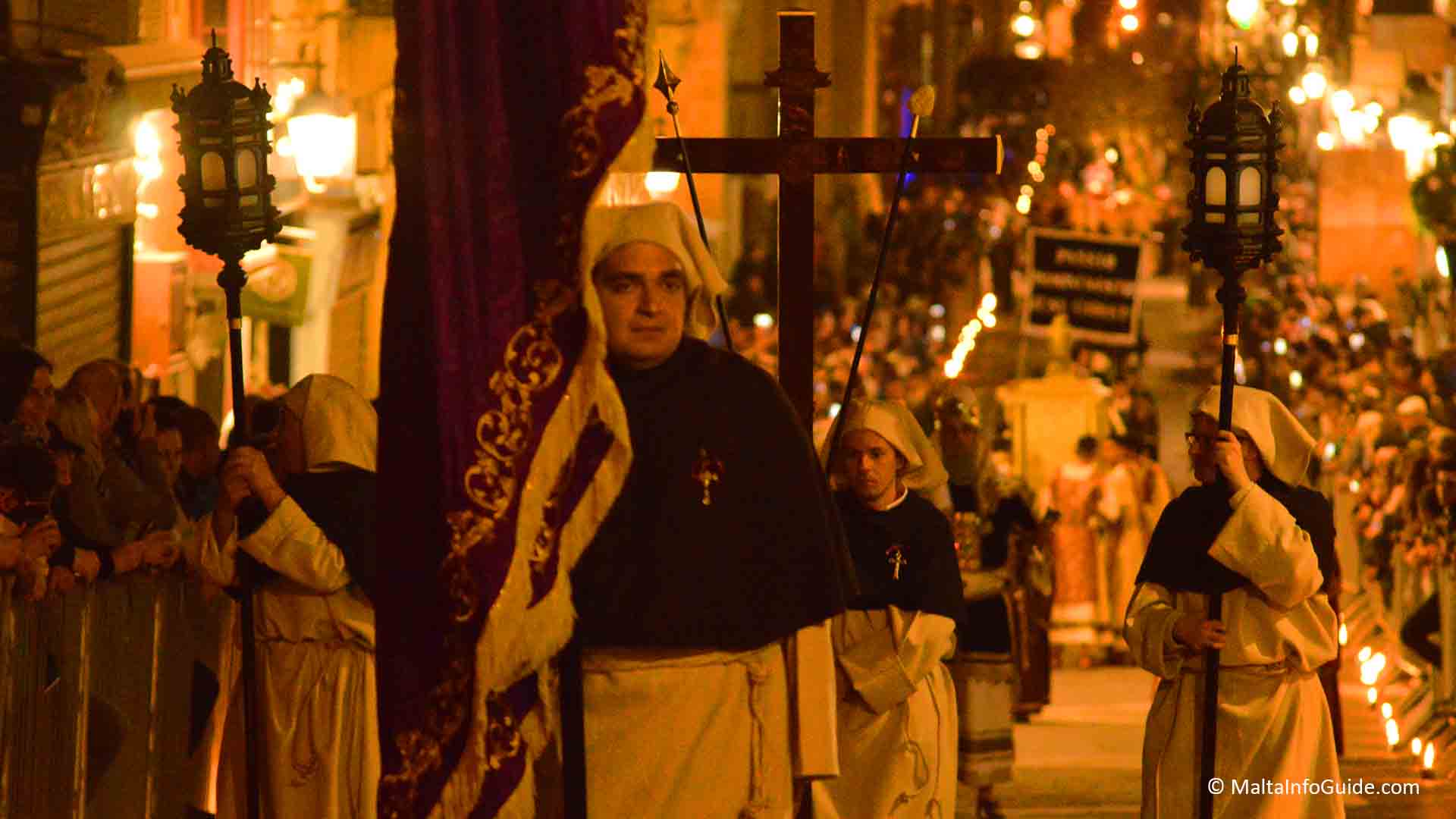
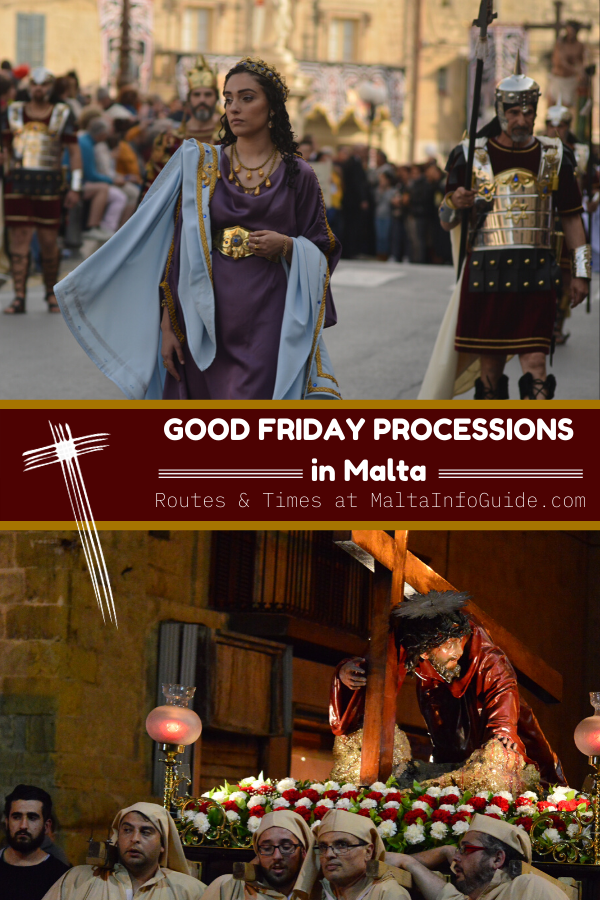
Men, women, and children wear a variety of costumes, including Roman soldiers and Biblical characters. They walk between the statues representing different stages of the Passion.
Hundreds of people from every village participate with sincere devotion and dedication, from young people to older ones who have participated year after year.
For more about the statues, biblical characters and their significance, read our guide to Good Friday processions and traditions.
Brass bands
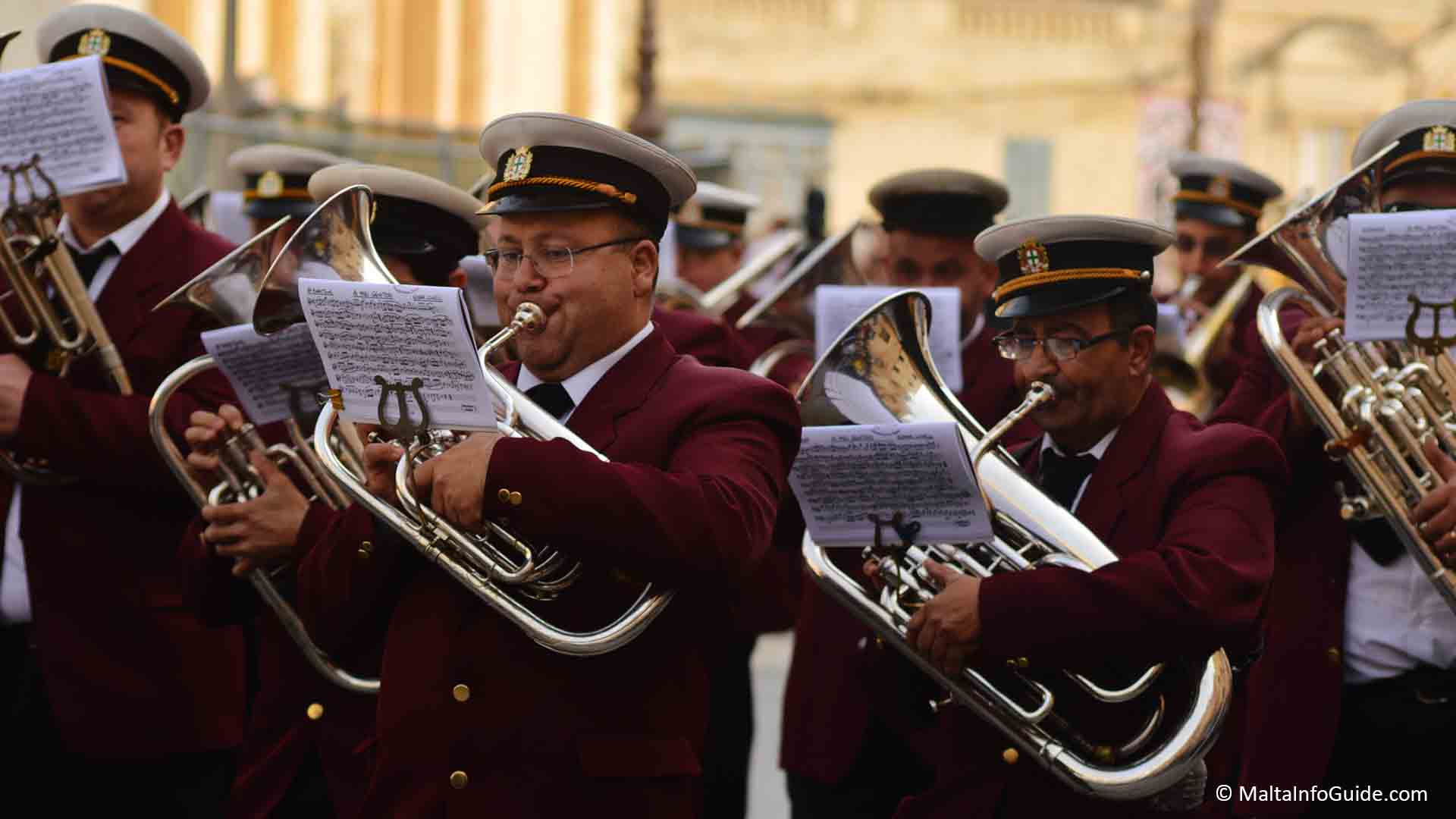
The village brass bands play solemn music written specifically for the occasion throughout the procession. These marches are very popular with locals.
Church bells and rattle
From the church bells rung every day of the year to the unusual sound of the cuqlajta (rattle), played as a sign of mourning from Maundy Thursday until Saturday evening, before the Easter church mass. For Maundy Thursday church services and other traditions, see our Holy Week in Malta guide.
The Local People
Many locals are drawn to go and see the processions in their own village or in another village. They return to see the procession passing through one of the streets. It offers a clear glimpse into Malta's history and values, and it also includes various medieval traditions.
Visitors also come to experience these religious traditions alongside local communities. Some book reserved seating for Good Friday processions, while others watch from public areas along the route.
The First Processions
The idea behind the processions in Malta started with Sicilian and Spanish influences. The first procession in Malta started in the early 16th century, with people dressing up in traditional costumes first in Rabat, then in Valletta.
During the 18th century, baptised slaves and condemned persons participated in the procession as a penance by walking during the procession, dragging chains tied to their bare feet as an act of faith or penance.
Other countries hold traditional celebrations similar to ours, such as in Italy, Spain, Puerto Rico and the Philippines.
Frequently Asked Questions About Good Friday
What is the date of Good Friday in 2027?
What is the date of Good Friday in 2027?
This year, Good Friday falls on 26 March 2027. It is always celebrated two days before Easter
Sunday, the day of Jesus Christ's resurrection.
What is the meaning of Good Friday?
What is the meaning of Good Friday?
For Christians, Good Friday commemorates Jesus Christ's Passion and death on the cross. Malta observes it as a solemn day of prayer and reflection, with church services and traditional processions.
What is the significance of fasting on Good Friday?
What is the significance of fasting on Good Friday?
Good Friday fasting is a way to honour Jesus' sacrifice, reflect on his suffering, and deepen one's relationship with God, reminding Christians of the significance of his crucifixion.
How Long Do Most Good Friday Processions in Malta Last?
How Long Do Most Good Friday Processions in Malta Last?
Good Friday processions can last about 3½ to 5 hours, including time to leave and re-enter the church. Duration varies by locality, and you can watch from one point along the route without staying for the entire procession.
Is Good Friday a holiday in Malta?
Is Good Friday a holiday in Malta?
Yes, Good Friday is always a public holiday in Malta, which always falls on a Friday.
Is there a procession on Good Friday in Malta?
Is there a procession on Good Friday in Malta?
In the afternoon, a procession is held in several villages on both islands, with life-size statues carried by statue bearers, accompanied by many other people dressed as biblical characters.
In Malta, what do the Maltese do on Good Friday?
In Malta, what do the Maltese do on Good Friday?
In the morning, many Maltese travel to several villages to pray at the sepulchre. At the same time, they visit churches adorned with statues for the procession.
Churches across Malta and Gozo hold an afternoon Celebration of the Lord’s Passion, comprising the Liturgy of the Word, Adoration of the Cross and Holy Communion. This service is not a Mass.
Afterwards, a procession takes place in several villages, with life-size statues carried by statue bearers, and many others dress as Roman soldiers and biblical characters.
What time is the Good Friday procession?
What time is the Good Friday procession?
Most Good Friday processions begin in the late afternoon or early evening, with starting times varying by locality. Some Passion processions take place on Palm Sunday instead. See the schedules above for individual locations and the latest available times.
Is the bus service in
Malta available on Good Friday?
Is the bus service in Malta available on Good Friday?
Yes, buses operate on Good Friday, but public holiday timetables and diversions may apply. Processions can affect routes through village centres, so check Malta Public Transport’s latest timetable and service notices before travelling.
What do Catholics do on Good Friday?
What do Catholics do on Good Friday?
Good Friday is one of the most solemn days in the Catholic Church's liturgical calendar. It is a day of fasting, prayer, and reflection on the crucifixion of Jesus Christ.
For more activities during your Easter visit this year, explore our March events in Malta.
Disclaimer — We may earn a commission if you book via certain links on the website. No extra cost to you.
🎉 What’s On In Malta?
Updated for November • Local picks
Discover events, village feasts, fireworks, festivals and seasonal things to do this November.
📅 See What’s Happening This November ⛪ Malta Village Feasts 🌞 Things To Do In Malta 🗓️ Events By Month🍺 Enjoying Malta Info Guide?
If our local guides helped you plan your Malta trip, you can say thanks by buying us a Cisk.
Made by two Malta locals. Always free.
Malta Events
- Activities In Malta
- Activities in January
- Activities in February
- Activities in March
- Activities in April
- Activities in May
- Activities in June
- Activities in July
- Activities in August
- Activities in September
- Activities in October
- Activities in November
- Activities in December
- Carnival In Malta
- Easter Sunday In Malta
- Holy Week
- First Night Malta
- Good Friday Processions Schedule
- Good Friday Processions
- Isle Of MTV
- Malta Night Parties
- Malta Public Holidays
- St. Patrick's Day Malta
- Summer Music Festivals

Recent Articles


-
Blue Lagoon Malta With Kids: A Practical Family Guide
Nov 15, 26 12:13 PM
Planning Blue Lagoon Malta with kids? Get local advice on boat trips, shade, rocky shores, toilets and what to pack before deciding if it suits your family. -
Blue Lagoon Malta Access Pass: How to Book & Entry Rules
Nov 14, 26 07:46 AM
Planning to visit Comino? Learn how to book your Blue Lagoon Malta access pass, choose a time slot, use your QR code and understand entry requirements. -
Captain Morgan Cruises Malta | Tours & Booking Guide
Nov 08, 26 08:43 AM
Explore Captain Morgan Cruises Malta, including Comino, Gozo and harbour tours. Compare cruise options, what to expect and useful advice before booking.